CARDNO EMERGING MARKETS USA, LTD.
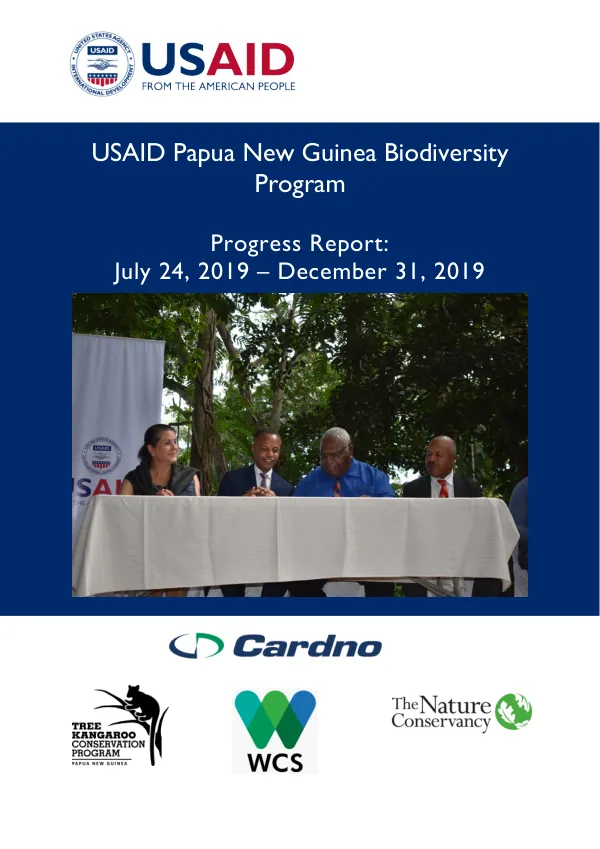
USAID PNG Biodiversity Program: Progress Report for July 24, 2019-December 31, 2019
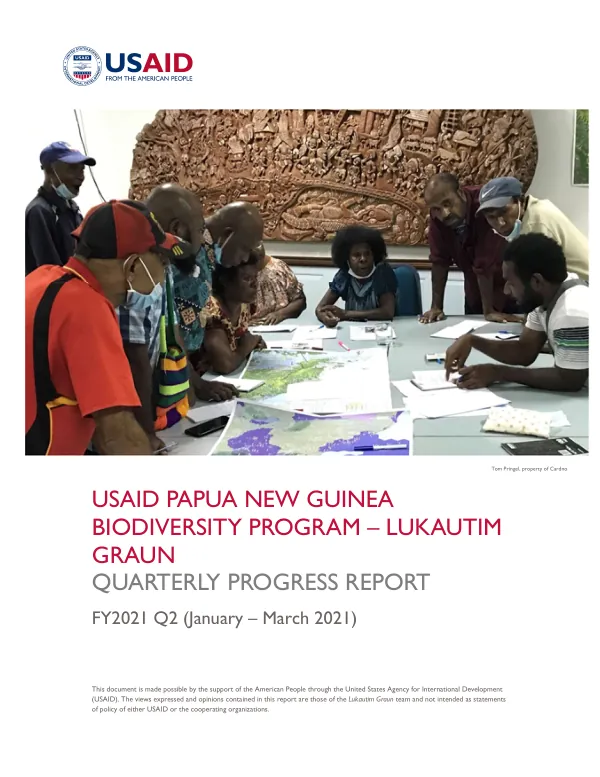
The USAID Papua New Guinea Biodiversity Program, also known as Lukautim Graun, is a five-year initiative aimed at conserving Papua New Guinea's rich biodiversity.
2019 · 33 pages
Sign in to readA free account is required to download.
Abstract
The program began on July 24, 2019, and is being implemented by Cardno Emerging Markets USA, Ltd. in partnership with The Nature Conservancy, Wildlife Conservation Society, and the Tree Kangaroo Conservation Program. The program's primary goal is to strengthen national and provincial-level governance to better manage conservation areas, while also supporting community-based natural resource management institutions at the clan level. Additionally, the program aims to form alliances with the private sector and non-traditional partners to support conservation activities. During the reporting period of July 24, 2019 to December 31, 2019, the program made significant progress in achieving its goals. The program's implementation status narrative highlights the progress made in each of the three goals. Goal 1 focused on strengthening national and provincial government institutions to support improved customary management of lands for biodiversity conservation and reduce key threats. The program established systems for transparent and accountable decision-making around natural resource ownership, allocation, and management. Goal 2 aimed to equip communities and local CSOs with knowledge and abilities on managing natural resources more sustainably. The program provided training and capacity-building activities to communities and local CSOs, enabling them to develop and implement sustainable natural resource management plans. Goal 3 focused on forming alliances with the private sector and non-traditional partners to support conservation activities. The program identified and developed partnerships with private sector companies and non-traditional partners who can support conservation activities. The program's project management and administration narrative highlights the progress made in setting up the program, including in-country compliance, human resources, banking, procurement, and monitoring, evaluation, knowledge management, and learning plan. The program also faced implementation challenges, which are being addressed through ongoing monitoring and evaluation. The program's integration of cross-cutting issues and USAID priorities includes addressing issues such as gender equality, youth engagement, and climate change. Stakeholder participation and involvement are also critical components of the program, with regular meetings and consultations with local communities, government agencies, and other stakeholders. Lessons learned from the program's first six months of implementation highlight the importance of building strong relationships with local communities and government agencies, as well as the need for ongoing monitoring and evaluation to ensure the program's effectiveness. Key planned activities and events for the second quarter of the program include the development of a theory of change, the establishment of a monitoring and evaluation framework, and the implementation of a knowledge management and learning plan. Financial information for the program is also provided, including a summary of expenditures and a breakdown of the program's budget. Overall, the USAID Papua New Guinea Biodiversity Program is making significant progress in achieving its goals and objectives, and is well-positioned to contribute to the conservation of Papua New Guinea's rich biodiversity.