DT GLOBAL
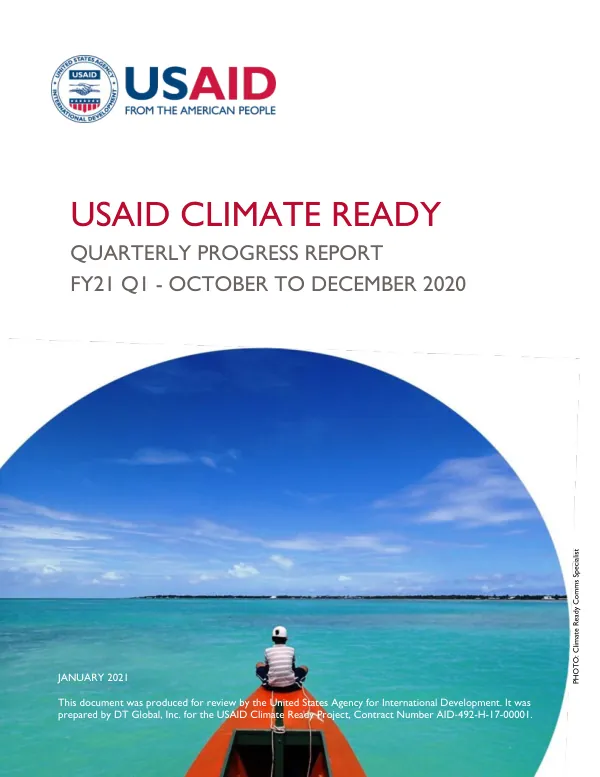
Quarterly Progress Report FY21 Q1: USAID Climate Ready
The USAID Climate Ready project is a comprehensive initiative aimed at enhancing the resilience of Pacific Island countries to climate change.
2021 · 168 pages
Sign in to readA free account is required to download.
Abstract
The project began in 2018 and is implemented by DT Global, Inc. under contract AID-492-H-17-00001. The project's primary objective is to support the development and implementation of national, sub-national, and sectoral policies, regulations, and legal frameworks necessary for achieving adaptation goals as identified in national adaptation plans. The project focuses on three key interventions: increasing access to international, multilateral climate change funds; building professional capacity and management systems to coordinate, manage, monitor, and report on adaptation projects; and providing supplemental technical assistance. The project's scope encompasses 14 Pacific Island countries, including Kiribati, the Marshall Islands, and Papua New Guinea. Technical progress under the project is being made in several areas. IR 1, which focuses on national, sub-national, and sectoral policies, regulations, and legal frameworks, has achieved significant milestones. A summary list of sub-activities under IR 1 indicates that the project has supported the development of national adaptation plans, institutional arrangements, and policies necessary for achieving adaptation goals. The project has also provided technical assistance to support the implementation of these plans. IR 2, which aims to increase access to international, multilateral climate change funds, has also made progress. A summary list of sub-activities under IR 2 indicates that the project has supported the development of proposals and applications for climate change funds, and has provided technical assistance to support the implementation of these funds. The project has also increased the capacity of Pacific Island countries to access and manage climate change funds. IR 3, which focuses on building professional capacity and management systems to coordinate, manage, monitor, and report on adaptation projects, has also achieved significant milestones. A summary list of sub-activities under IR 3 indicates that the project has provided training and capacity-building programs for government officials, and has supported the development of management systems to coordinate and monitor adaptation projects. Progress against indicator targets has also been made. The project has achieved significant milestones in several areas, including the development of national adaptation plans, the implementation of climate change policies and regulations, and the increase in access to climate change funds. The project has also made progress in building professional capacity and management systems to coordinate, manage, monitor, and report on adaptation projects. Cross-cutting issues, including gender equity and social inclusion, coordination with other donors, and public-private alliances, have also been addressed. The project has implemented several initiatives to promote gender equity and social inclusion, including the development of gender-sensitive climate change policies and the provision of training and capacity-building programs for women. The project has also coordinated with other donors to support the development and implementation of climate change policies and regulations. Implementation issues and recommended actions have been identified, and the project has developed a plan to address these issues. The project has also planned activities for the next quarter, including the development of national adaptation plans, the implementation of climate change policies and regulations, and the increase in access to climate change funds. The project has achieved several milestones, including the development of national adaptation plans, the implementation of climate change policies and regulations, and the increase in access to climate change funds. The project has also built professional capacity and management systems to coordinate, manage, monitor, and report on adaptation projects. The project has also promoted gender equity and social inclusion, and has coordinated with other donors to support the development and implementation of climate change policies and regulations.
Related documents