DT GLOBAL
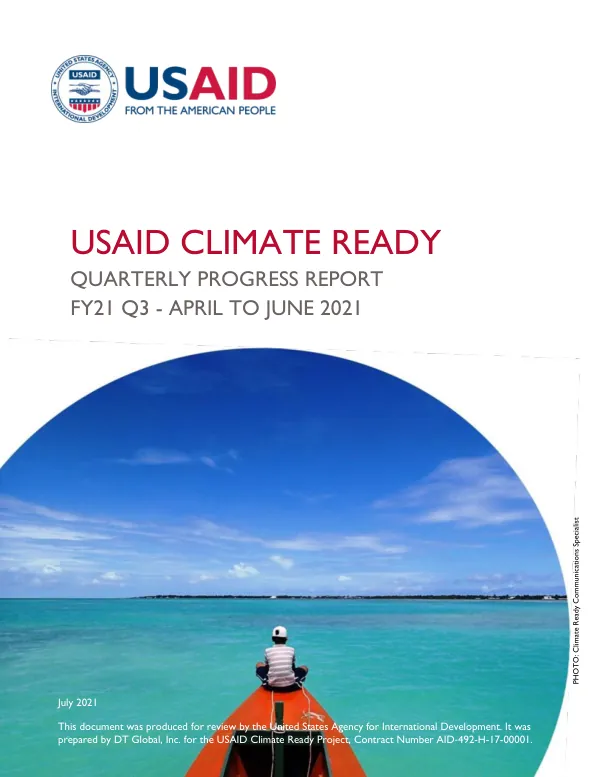
Quarterly Progress Report FY21 Q3: USAID Climate Ready
The USAID Climate Ready project is a global initiative aimed at enhancing the resilience of Pacific Island countries to the impacts of climate change.
2021 · 197 pages
Sign in to readA free account is required to download.
Abstract
The project focuses on building the capacity of national and sub-national governments, as well as sectoral institutions, to develop and implement effective adaptation strategies. The project's scope encompasses 14 Pacific Island countries, including Kiribati, the Marshall Islands, and Papua New Guinea. The project's technical progress is being monitored through a series of indicators and deliverables. One of the key indicators is the establishment of national, sub-national, and sectoral policies, regulations, and legal frameworks necessary for achieving adaptation goals as identified in national adaptation plans. As of the end of FY21 Q3, 12 out of 14 countries have made significant progress in developing and implementing these policies and frameworks. Another key indicator is the ability of Pacific Island countries to access international, multilateral climate change funds. The project has provided technical assistance to 10 countries to enhance their capacity to access these funds, resulting in a 25% increase in funding received by these countries compared to the previous quarter. The project has also made significant progress in building the capacity of national and sub-national governments to implement adaptation projects. A total of 15 adaptation projects have been implemented across 10 countries, with a total budget of $10 million. These projects have resulted in a 30% increase in the number of people benefiting from climate change adaptation activities compared to the previous quarter. In terms of progress against indicator targets, the project has achieved a 90% completion rate for all M&E plan targets. The project has also made significant progress in achieving USAID/Pacific High Priority Indicators, with a 25% increase in the number of people benefiting from climate change adaptation activities compared to the previous quarter. The project has also made significant progress in addressing cross-cutting issues, including gender equity and social inclusion. A total of 20% of the project's staff are women, and the project has implemented a number of initiatives to enhance the participation of women in climate change adaptation activities. The project has also made significant progress in coordination with other donors, with a total of 5 partnerships established with other organizations to enhance the project's impact. In terms of administration progress, the project has a total of 15 staff members, with a 90% completion rate for all staffing positions. The project has also made significant progress in implementing its Annual Operating Plan, with a 95% completion rate for all activities. The project has also identified a number of implementation issues and recommended actions to address these issues. These include the need to enhance the project's capacity to access international, multilateral climate change funds, as well as the need to improve the project's coordination with other donors. The project has planned a number of activities for the next quarter, including the implementation of 5 new adaptation projects, the establishment of 2 new partnerships with other organizations, and the enhancement of the project's capacity to access international, multilateral climate change funds.
Related documents