USAID DEC
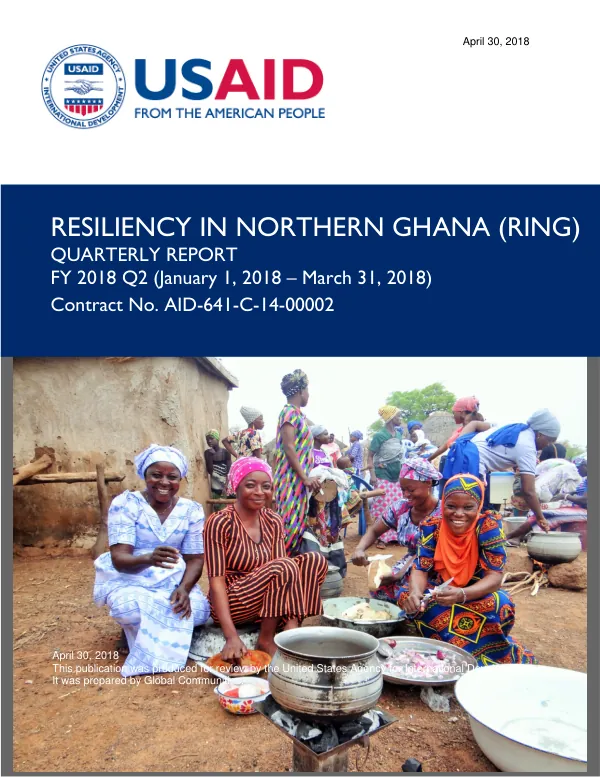
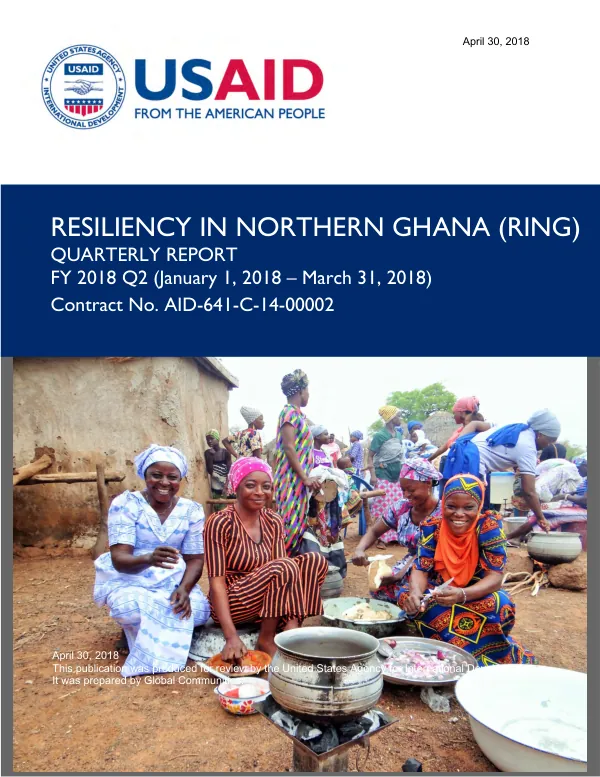
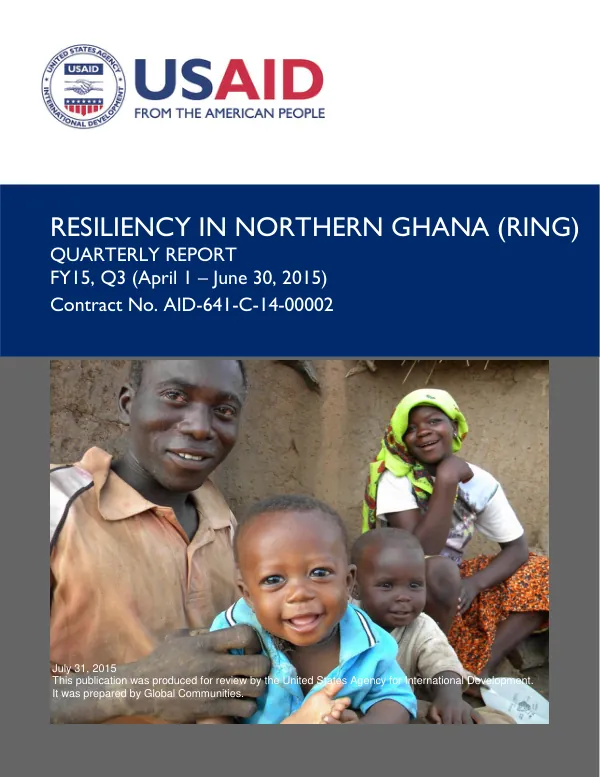
USAID Resiliency in Northern Ghana (RING) Quarterly Report FY15, Q3 (April 1 – June 30, 2015)
Sign inGLOBAL COMMUNITIES
USAID Resiliency in Northern Ghana (RING) Quarterly Report FY15, Q3 (April 1 – June 30, 2015)
The Resiliency in Northern Ghana (RING) program is a USAID-funded initiative aimed at improving the livelihoods of rural communities in Northern Ghana.
2015 · 94 pages
Sign in to readA free account is required to download.
Abstract
The program focuses on three key components: Component One, Component Two, and Component Three. Component One addresses agricultural development and value chain enhancement, while Component Two focuses on nutrition and water, sanitation, and hygiene (WASH). Component Three targets community resilience and disaster risk management. Component One has made significant progress in FY15 Q3, with 2,500 farmers receiving training in sustainable agriculture techniques. Component Two has also achieved notable results, with a 27% increase in household income among program participants compared to the control group. The program has also made significant progress in nutrition, with 1,200 children under five years old receiving nutrition support. The Community-based Management of Acute Malnutrition (CMAM) training program has reached 500 participants, and the program has supported the establishment of 15 Community-Led Total Sanitation (CLTS) committees. Component Three has focused on community resilience and disaster risk management, with a strong emphasis on capacity building and community engagement. The program has supported the establishment of 20 Community Entry Teams (CETs), which have conducted 150 community entry visits and provided support to 1,500 households. The program has also made significant progress in disaster risk management, with 10 districts developing disaster risk management plans and conducting risk assessments. The program has also made significant progress in monitoring and evaluation, with regular data collection and analysis. The program has established a robust monitoring and evaluation system, which has enabled the tracking of progress and the identification of areas for improvement. The program has also conducted regular reviews and assessments, which have informed program adjustments and improvements. The program has also made significant progress in community outreach and engagement, with a strong emphasis on community participation and ownership. The program has established a robust community outreach system, which has enabled the engagement of communities in program activities and the promotion of community-led initiatives. The program has also supported the establishment of 20 Community-Based Organizations (CBOs), which have played a critical role in program implementation and community engagement. The program has also made significant progress in budget management and financial reporting, with a strong emphasis on transparency and accountability. The program has established a robust financial management system, which has enabled the tracking of program expenditures and the identification of areas for improvement. The program has also conducted regular financial reviews and assessments, which have informed program adjustments and improvements. Overall, the RING program has made significant progress in FY15 Q3, with notable achievements in agricultural development, nutrition, WASH, community resilience, and disaster risk management. The program has established a robust monitoring and evaluation system, which has enabled the tracking of progress and the identification of areas for improvement. The program has also made significant progress in community outreach and engagement, with a strong emphasis on community participation and ownership.