USAID DEC
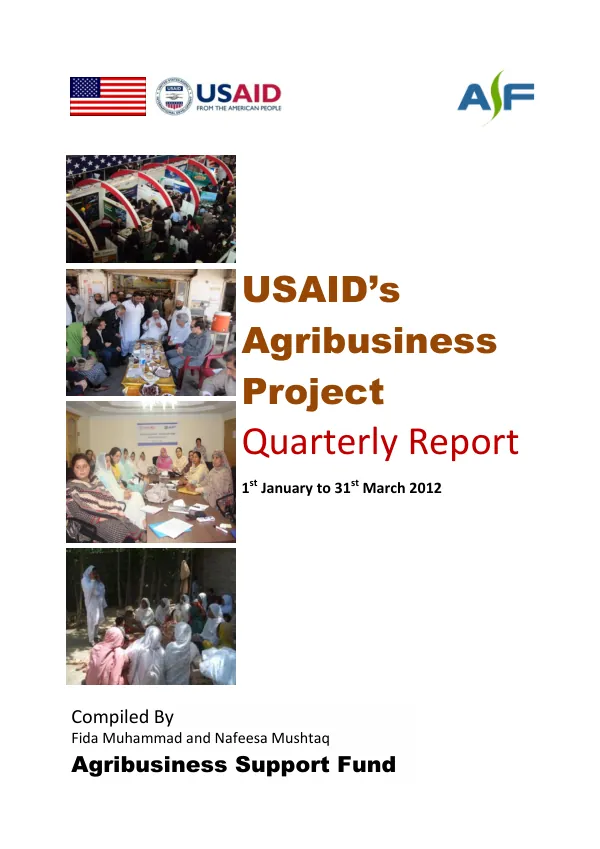
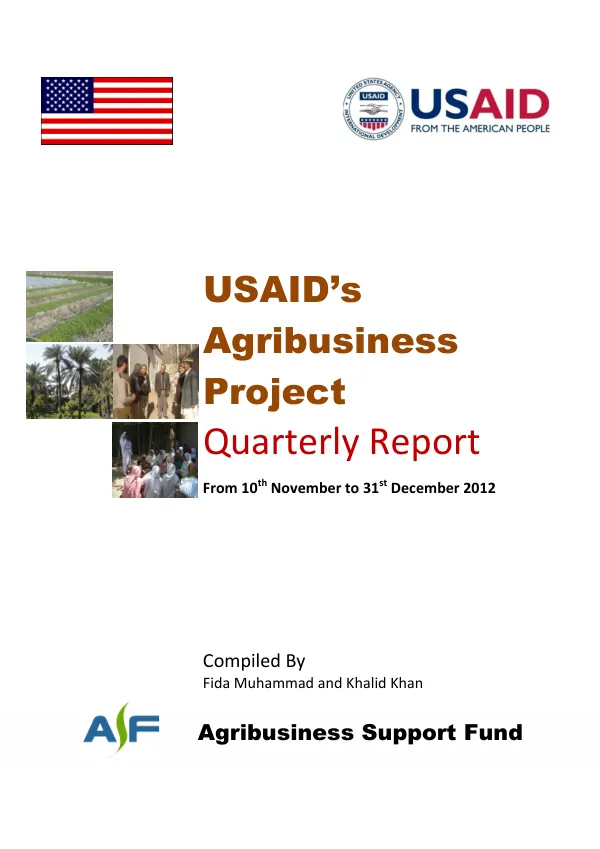
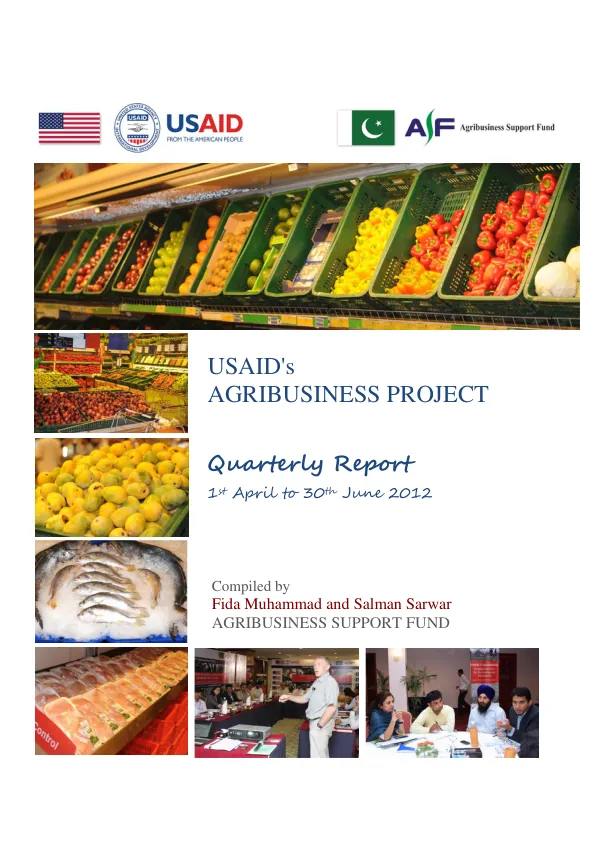
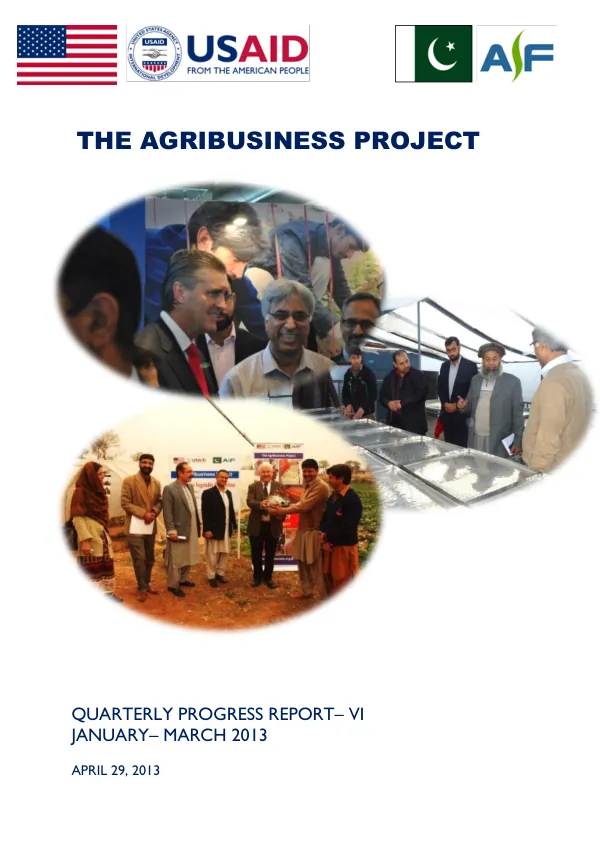
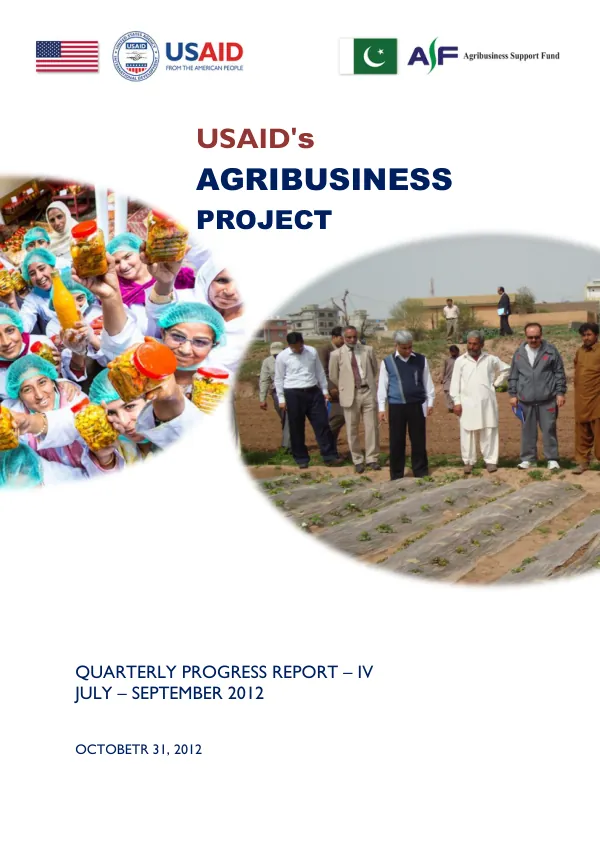
USAID's Agribusiness Project Quarterly Progress Report – IV (July – September 2012)
The USAID's Agribusiness Project is a five-year initiative funded by USAID Pakistan and implemented by the Agribusiness Support Fund (ASF) in collaboration with international and national partner organizations.
2012 · 21 pages
Sign in to readA free account is required to download.
Abstract
The project commenced on November 10, 2011, with the overall goal of supporting improved conditions for broad-based economic growth, creating employment opportunities, and contributing to poverty alleviation through increased competitiveness of horticulture and livestock value chains in partnership with all stakeholders. The project aims to address the priority problems and constraints impeding the development of the agriculture sector in Pakistan. Interventions under the project will focus on improving and strengthening off-farm and on-farm activities by enhancing the competitiveness of enterprises to explore and exploit their potential in both domestic and international markets. A sub-sector cluster approach is being adopted by the project, whereby areas with the greatest potential for value addition, employment creation, and outreach will be prioritized and targeted. The project's objectives are to strengthen the capacity in horticulture and livestock value chains to increase sales to domestic and foreign markets, strengthen the capacity of smallholders and farmer enterprises to operate autonomously and effectively, and increase agriculture efficiency and productivity through the adoption of new farming techniques and technological innovation among targeted beneficiaries. The project activities are organized into two project components: Technical Assistance (TA) for Capacity Building and Program Support, and Partnership Window-Cost-Sharing Grants. Component-1 provides on-going technical and capacity building assistance to upgrade and strengthen the priority value chains in horticulture and livestock sub-sectors through its four sub-components, including International Technical Assistance & Program Delivery Support, International Market Linkages Development, Kissan Field Schools (KFS), and Capacity Building, Training & Awareness. Component-2 involves launching a national cost-sharing grants program, offering a wide range of customized grant products to all players within the priority value chains. These cost-sharing grants will be provided in the priority value chains, including agribusinesses, farmers, and farmer enterprise groups for better integration into domestic and export market chains. Grants will also be provided to farmers' associations, processors, exporters, transporters, service providers, universities, and research institutes, Non-Governmental Organizations, Rural Support Programs (RSPs), and other key players to address weaknesses and market failures. The project proposes a holistic approach of value chain-wide interventions from production to marketing, focusing on creating capacities in the selected value chains to meet the requirements of domestic and international markets and value addition. The project monitoring and evaluation system is being developed to track the performance of the project, including periodic monitoring, progress reporting, and wider dissemination of results through various means of communication. The project's quarterly progress report highlights several key accomplishments, including the organization of meetings of the Strategic Management Committee (SMC) and the Planning and Review Committee (PRC), the procurement of goods and equipment, and the development of an integrated management information system. The report also highlights progress on technical assistance and capacity building support, including the provision of training and technical assistance to farmers, farmer enterprise groups, and business development service providers. The project has made significant progress in its first year, with a focus on building the capacity of smallholders and farmer enterprises to operate autonomously and effectively. The project has also made significant progress in its efforts to increase agriculture efficiency and productivity through the adoption of new farming techniques and technological innovation among targeted beneficiaries. The project's quarterly progress report provides a comprehensive overview of the project's progress and accomplishments, highlighting the project's commitment to supporting improved conditions for broad-based economic growth, creating employment opportunities, and contributing to poverty alleviation through increased competitiveness of horticulture and livestock value chains in partnership with all stakeholders.
Related documents