ABT ASSOCIATES
USAID’s Integrated Health Program Fiscal Year 2020 Quarterly Report 3
The USAID Integrated Health Program in the Democratic Republic of the Congo began implementing its activities in 2018 with the goal of improving health outcomes in the country.
2020 · 184 pages
Sign in to readA free account is required to download.
Abstract
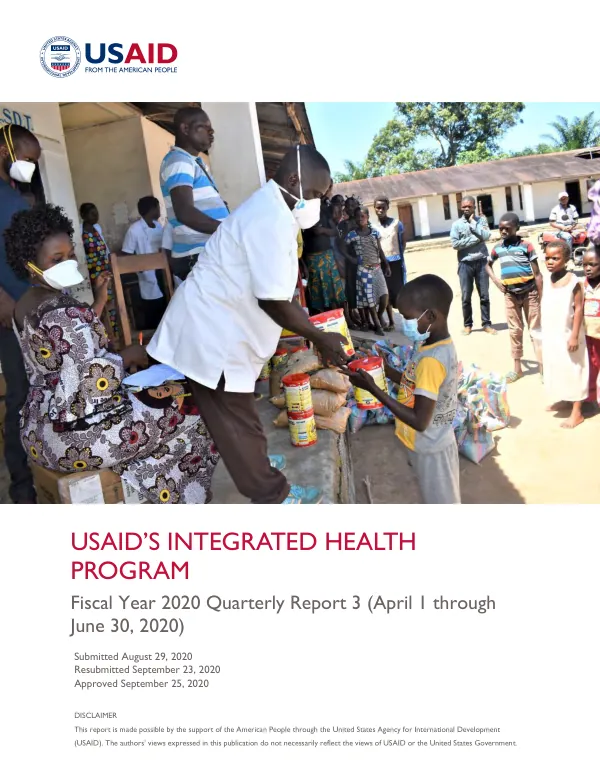
The program is led by Abt Associates, in partnership with several international organizations, including the International Rescue Committee, Pathfinder International, and BlueSquare. Implementation of the program's activities focused on several key areas, including malaria, maternal, newborn, and child health, immunization, child health, nutrition, reproductive health and family planning, tuberculosis, and water, sanitation, and hygiene. The program aimed to enhance the capacity of provincial, health zone, and facility levels to plan, implement, and monitor health services. One of the key objectives of the program was to improve the availability of quality, integrated facility-based health services. To achieve this objective, the program implemented several interventions, including the training of health providers in interpersonal skills and the provision of basic facility infrastructure and equipment. The program also aimed to increase the availability of quality, integrated community-based health services, including the establishment of community-based health platforms. The program's activities were implemented in several provinces, including Kinshasa, and involved the engagement of local communities, community service organizations, and community structures. The program's staff worked closely with provincial, health zone, and facility levels to ensure the effective implementation of the program's activities. The program's progress was monitored through regular assessments and evaluations, which provided valuable insights into the program's effectiveness and areas for improvement. The program's lessons learned and next steps were documented in the quarterly report, which served as a key tool for program management and decision-making. The program's impact was significant, with improvements in health outcomes, including a reduction in malaria cases and an increase in the use of facility-based health services. The program's activities also contributed to the strengthening of the health system, including the enhancement of the capacity of provincial, health zone, and facility levels to plan, implement, and monitor health services. The program's success was attributed to the effective collaboration between the program's staff, local communities, community service organizations, and community structures. The program's activities were also supported by the provision of essential commodities, including medicines and equipment, which were made available at provincial, health zone, facility, and community levels. The program's quarterly report provided a comprehensive overview of the program's progress, including its achievements, challenges, and lessons learned. The report served as a key tool for program management and decision-making, and its findings were used to inform the program's future activities and interventions.