ABT ASSOCIATES
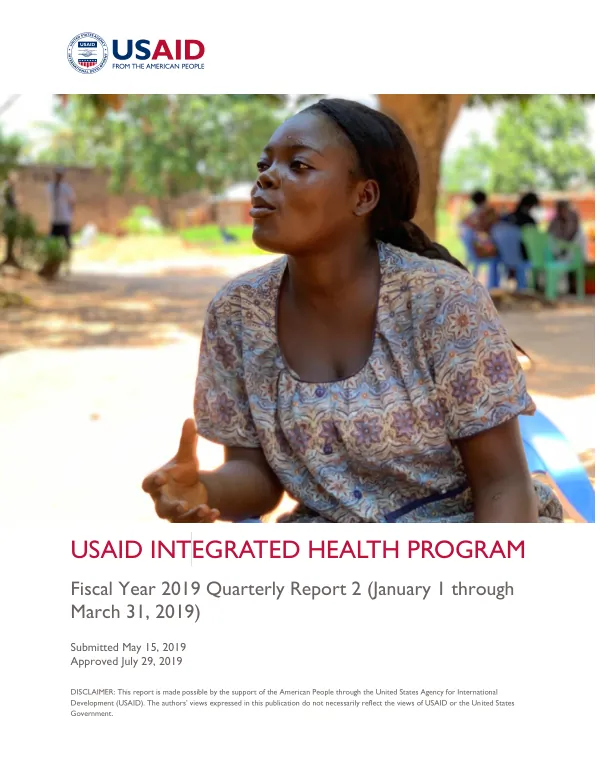
USAID Integrated Health Program: Fiscal Year 2019 Quarterly Report 2
The USAID Integrated Health Program (IHP) is a comprehensive initiative aimed at improving health outcomes in the Democratic Republic of the Congo (DRC).
2019 · 96 pages
Sign in to readA free account is required to download.
Abstract
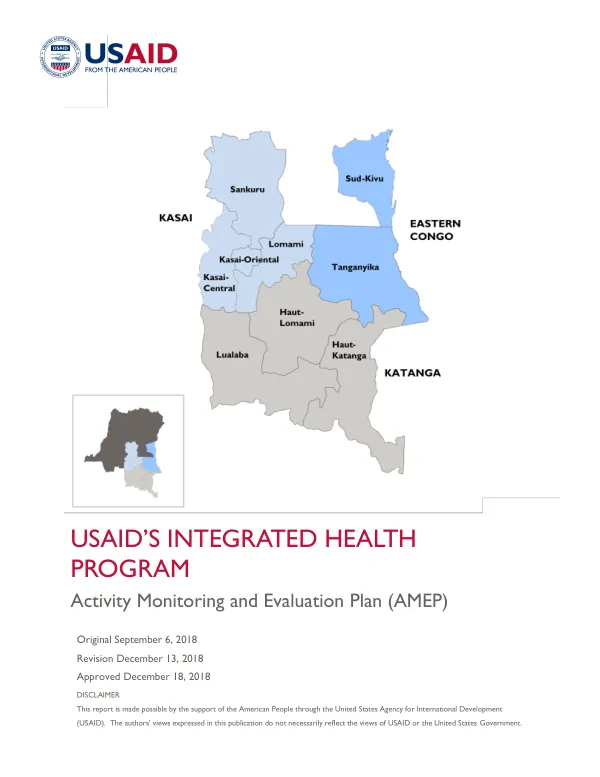
The program is implemented in collaboration with various partners, including the International Rescue Committee (IRC), Pathfinder International, and BlueShirt. The program's geographic scope encompasses 10 provinces, with a focus on strengthening health systems, improving maternal and child health, and enhancing access to family planning services. Programmatic Scope The IHP is designed to address the DRC's significant health challenges, including high maternal and child mortality rates, limited access to healthcare services, and inadequate health infrastructure. The program's objectives are aligned with the DRC's national health strategy, which aims to reduce maternal and child mortality rates by 50% by 2025. The IHP's programmatic scope includes: 1. Strengthening health systems: The program focuses on improving the capacity of the DRC's health system to deliver quality services, including the development of a functional health information system and the establishment of a network of health facilities. 2. Improving maternal and child health: The program aims to reduce maternal and child mortality rates by increasing access to emergency obstetric care, improving the quality of maternal and child health services, and enhancing the capacity of healthcare providers. 3. Enhancing access to family planning services: The program seeks to increase access to family planning services, including modern contraceptive methods, and to improve the quality of family planning services. Implementation The IHP is implemented through a range of activities, including: 1. Training and capacity building: The program provides training and capacity-building activities for healthcare providers, including healthcare workers, midwives, and community health workers. 2. Infrastructure development: The program supports the development of health infrastructure, including the construction of new health facilities and the renovation of existing ones. 3. Supply chain management: The program aims to improve the management of health commodities, including the distribution of essential medicines and medical equipment. 4. Community engagement: The program engages with communities to promote healthy behaviors, including the use of modern contraceptive methods and the practice of exclusive breastfeeding. Partnerships The IHP is implemented in collaboration with various partners, including: 1. International Rescue Committee (IRC) 2. Pathfinder International 3. BlueShirt 4. Abt Associates 5. International Organization for Migration (IOM) 6. World Health Organization (WHO) 7. United Nations Children's Fund (UNICEF) 8. United Nations Population Fund (UNFPA) Program Management The IHP is managed by a team of professionals, including a Chief of Party, a Deputy Chief of Party, and a range of technical advisors. The program's management structure includes: 1. Program Implementation Unit (PC) 2. Monitoring and Evaluation Unit (ME) 3. Finance and Administration Unit (FFA) 4. Human Resources Unit (HRS) The program's management structure is designed to ensure effective implementation, monitoring, and evaluation of the program's activities. Objectives The IHP has three main objectives: 1. To improve the capacity of the DRC's health system to deliver quality services. 2. To reduce maternal and child mortality rates. 3. To enhance access to family planning services. The program's objectives are aligned with the DRC's national health strategy and the USAID's Country Development Cooperation Strategy (CDCS). Cross-Cutting Areas The IHP addresses several cross-cutting areas, including: 1. Institutional capacity building: The program aims to strengthen the capacity of the DRC's health system to deliver quality services. 2. Conflict sensitivity: The program is designed to be sensitive to the DRC's conflict-affected context. 3. Capacity building: The program aims to build the capacity of healthcare providers and community health workers. 4. Environmental mitigation and monitoring: The program aims to minimize its environmental impact and to monitor its environmental performance. Activity Research, Monitoring, and Evaluation The IHP conducts regular research, monitoring, and evaluation activities to assess the program's performance and to identify areas for improvement. The program's research and evaluation activities include: 1. Baseline surveys: The program conducts baseline surveys to assess the health status of the target population. 2. Mid-term evaluations: The program conducts mid-term evaluations to assess the program's progress and to identify areas for improvement. 3. Final evaluations: The program conducts final evaluations to assess the program's overall performance and to identify lessons learned. Lessons Learned The IHP has learned several lessons, including: 1. The importance of community engagement: The program has learned that community engagement is critical to the success of the program. 2. The need for institutional capacity building: The program has learned that institutional capacity building is essential to the success of the program. 3. The importance of conflict sensitivity: The program has learned that conflict sensitivity is critical to the success of the program. Annexes The IHP has several annexes, including: 1. Annex A: Performance indicators, targets, and achievements. 2. Annex B: Success stories. 3