USAID DEC
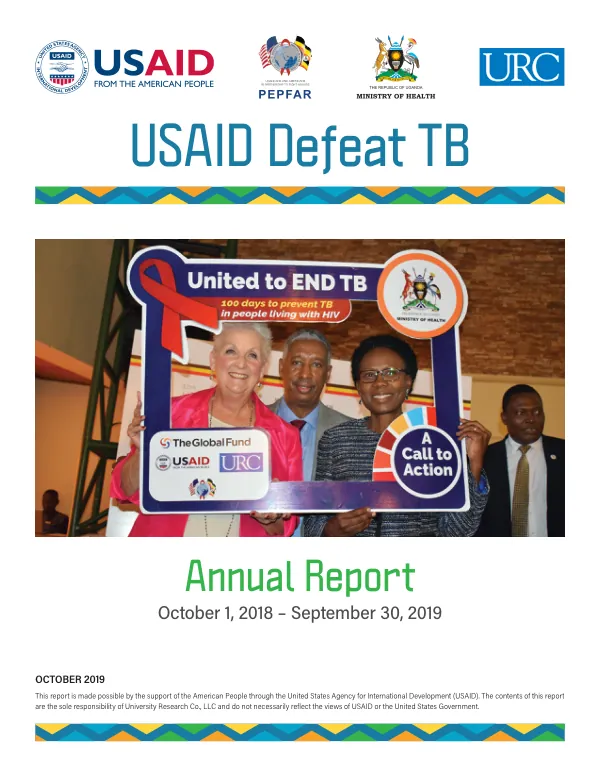
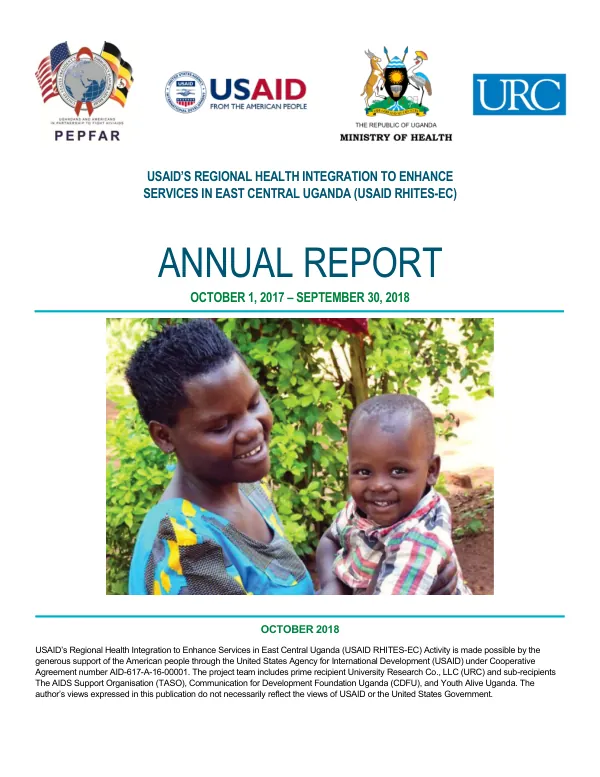
USAID’s Regional Health Integration to Enhance Services in East Central Uganda (USAID RHITES-EC), Annual Report October 1, 2017 – September 30, 2018
Sign inCOMMUNICATIONS FOR DEVELOPMENT FOUNDATION UGANDA
USAID’s Regional Health Integration to Enhance Services in East Central Uganda (USAID RHITES-EC), Annual Report October 1, 2017 – September 30, 2018
The USAID Regional Health Integration to Enhance Services in East Central Uganda (RHITES-EC) Activity is a five-year project aimed at improving the health outcomes of the East Central Region's population.
2018 · 72 pages
Sign in to readA free account is required to download.
Abstract
The project began on September 30, 2016, and is set to conclude on September 29, 2021. The project is implemented by University Research Co., LLC (URC) in partnership with The AIDS Support Organisation (TASO), Communication for Development Foundation Uganda (CDFU), and Youth Alive Uganda. The project's geographic coverage spans 12 districts in the East Central Region, including Bugiri, Bugweri, Busia, Buyende, Iganga, Jinja, Kaliro, Kamuli, Luuka, Mayuge, Namayingo, and Namutumba. The project's reporting period is from October 1, 2017, to September 30, 2018. The project's goal is to improve the health outcomes of the East Central Region's population by increasing access to quality health services, improving the capacity of the health system, and promoting healthy behaviors. The project's key interventions include improving access to antiretroviral therapy (ART) and other HIV services, increasing the use of family planning methods, improving maternal and newborn health, and reducing the incidence of malaria and tuberculosis. The project also focuses on improving the capacity of the health system by strengthening the management of health facilities, improving the availability of essential medicines, and enhancing the capacity of health workers. The project's progress is monitored through a variety of indicators, including the number of people accessing ART and other HIV services, the number of people using family planning methods, and the number of maternal and newborn deaths. The project also conducts regular assessments of the health system's capacity and the availability of essential medicines. The project's achievements during the reporting period include an increase in the number of people accessing ART and other HIV services, an increase in the use of family planning methods, and a reduction in the incidence of malaria and tuberculosis. The project also made significant progress in strengthening the management of health facilities, improving the availability of essential medicines, and enhancing the capacity of health workers. The project's challenges during the reporting period included limited resources, inadequate infrastructure, and a shortage of skilled health workers. The project also faced challenges in engaging with local communities and promoting healthy behaviors. The project's future plans include continuing to improve access to quality health services, strengthening the capacity of the health system, and promoting healthy behaviors. The project also plans to expand its interventions to include additional districts in the East Central Region and to focus on improving the health outcomes of vulnerable populations, including adolescents and young people. The project's budget for the reporting period was $9,397,461, which was allocated to various activities, including improving access to ART and other HIV services, increasing the use of family planning methods, improving maternal and newborn health, and reducing the incidence of malaria and tuberculosis. The project also received support from various partners, including the Uganda Ministry of Health, the Uganda Catholic Medical Bureau, and the Uganda Protestant Medical Bureau. The project's evaluation is conducted through regular assessments of the project's progress and achievements. The project's evaluation is also conducted through the use of various indicators, including the number of people accessing ART and other HIV services, the number of people using family planning methods, and the number of maternal and newborn deaths. The project's evaluation is also conducted through the use of surveys and focus group discussions to assess the project's impact on the health outcomes of the East Central Region's population. The project's sustainability is ensured through the development of a sustainability plan, which outlines the project's plans for continuing to improve access to quality health services, strengthening the capacity of the health system, and promoting healthy behaviors after the project's conclusion. The project's sustainability plan also outlines the project's plans for engaging with local communities and promoting healthy behaviors. The project's impact is significant, as it has improved the health outcomes of the East Central Region's population by increasing access to quality health services, improving the capacity of the health system, and promoting healthy behaviors. The project's impact is also evident in the reduction in the incidence of malaria and tuberculosis, as well as the increase in the use of family planning methods and the number of people accessing ART and other HIV services.