USAID DEC
USAID’s Work in Action: Reducing Demand for Wildlife Products and Strengthening Anti-Poaching Efforts in Africa
Sign inUSAID
USAID’s Work in Action: Reducing Demand for Wildlife Products and Strengthening Anti-Poaching Efforts in Africa
Wildlife trafficking is a significant threat to iconic species, including elephants, rhinos, tigers, sharks, and many others.
2014 · 2 pages
Sign in to readA free account is required to download.
Abstract
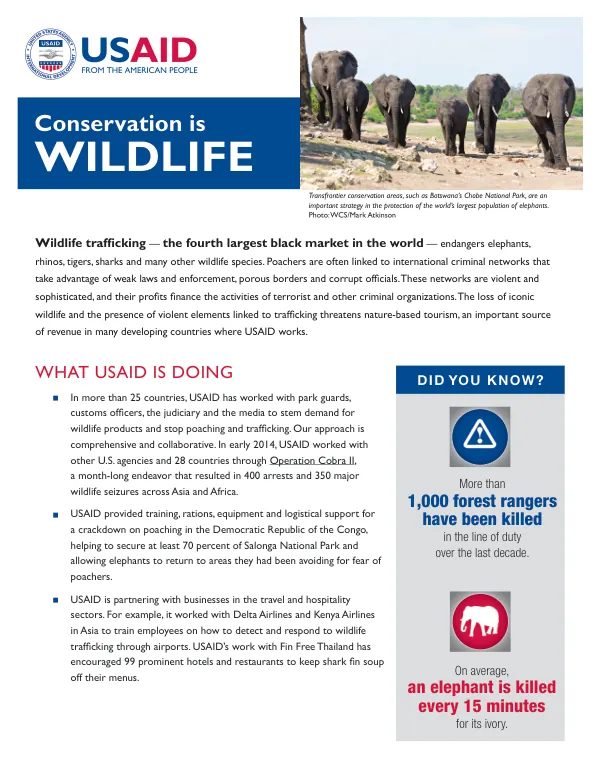
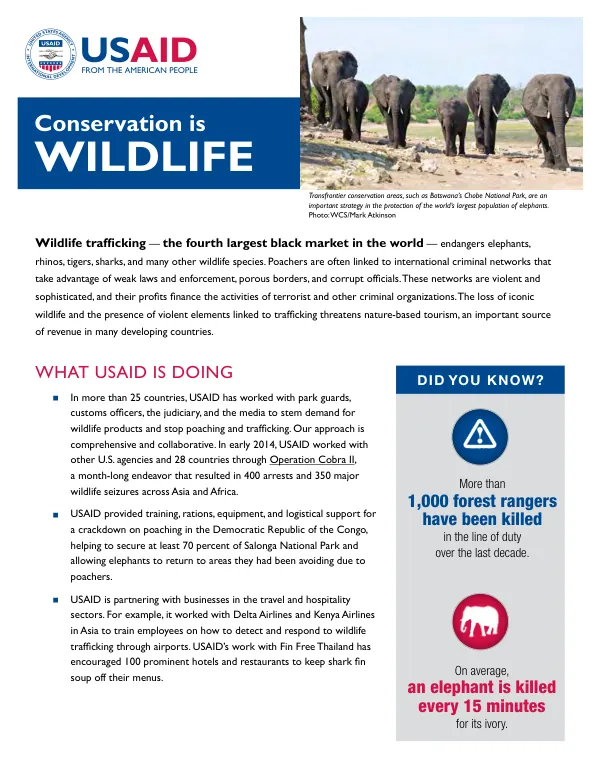
Poachers are often linked to international criminal networks that exploit weak enforcement, porous borders, and corrupt officials. These networks are violent and sophisticated, financing the activities of terrorist and other criminal organizations. The loss of iconic wildlife and the presence of violent elements threatens nature-based tourism, a vital source of revenue in many developing countries. In response, USAID has worked with park guards, customs officers, the judiciary, and the media in over 25 countries to stem demand for wildlife products and stop poaching. The approach is comprehensive and collaborative, involving collaboration with other U.S. agencies and international partners. For example, Operation Cobra II, a month-long effort in 2014, resulted in 400 arrests and 350 major wildlife seizures across Asia and Africa. USAID has also provided support for law enforcement efforts in the Democratic Republic of the Congo, helping to secure at least 70% of the protected area in the park. This has allowed elephants to return to areas they had been avoiding due to poachers. Additionally, USAID has partnered with businesses in the travel and hospitality sectors to train employees on how to identify and respond to wildlife trafficking through airports. For instance, USAID worked with Delta Airlines and Kenya Airlines to train employees on how to identify and respond to wildlife trafficking. The impact of wildlife trafficking is staggering, with over 1,000 forest rangers killed in the line of duty over the last decade. On average, an elephant is killed every 15 minutes for its ivory. To address this, USAID is supporting the establishment of transfrontier conservation areas, such as Botswana's Chobe National Park, which is home to the world's largest population of elephants. USAID's largest initiative to combat wildlife trafficking is the Asia's Regional Response to Endangered Species Trafficking (ARREST) program. This program draws on the expertise of the U.S. Fish and Wildlife Service, the Department of Justice, and other partners to reduce demand for illegal wildlife products, enhance law enforcement, and fortify cooperation in Asia. ARREST trains park rangers, customs officers, police, and lawyers in wildlife forensics and border inspections, as well as tactics for arrests and prosecutions. Since 2011, the ARREST program has trained over 8,500 local government officials in law enforcement, resulting in a tenfold increase in wildlife confiscations. In Africa, USAID's support of strengthened law enforcement has led to increased penalties for poaching and trafficking, with a recent example being a man being caught with a 7.5-pound tusk and ordered to pay a $230,000 fine or serve seven years in prison. Additionally, regional training workshops have introduced the use of the Monitoring and Reporting Tool (SMART) for making conservation patrols more strategic and effective. Overall, USAID's efforts to combat wildlife trafficking are paying off, with increased penalties for poaching and trafficking, and a significant increase in wildlife confiscations. The ARREST program is a key component of this effort, providing training and support to law enforcement agencies in Asia and Africa.
Related documents