FINTRAC
USAID-STAMP Paprika Farmer Wins First Prize
The USAID Smallholder Technology and Access to Markets Program (STAMP) aims to increase incomes and food security for smallholder farmers in the Mashonaland East province of Zimbabwe.
2012 · 1 pages
Sign in to readA free account is required to download.
Abstract
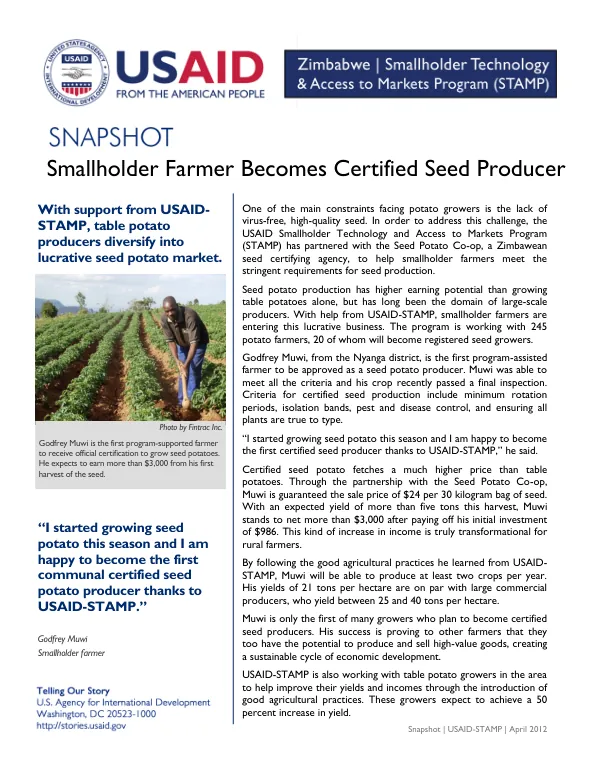
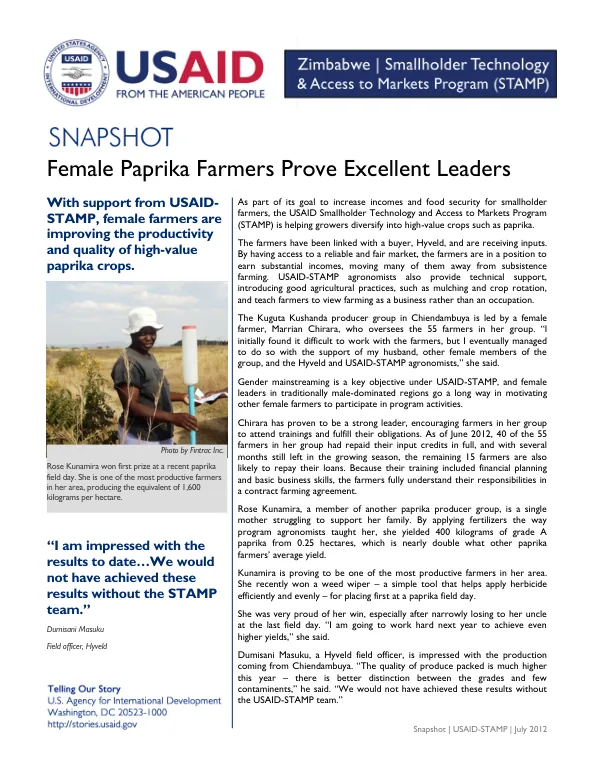
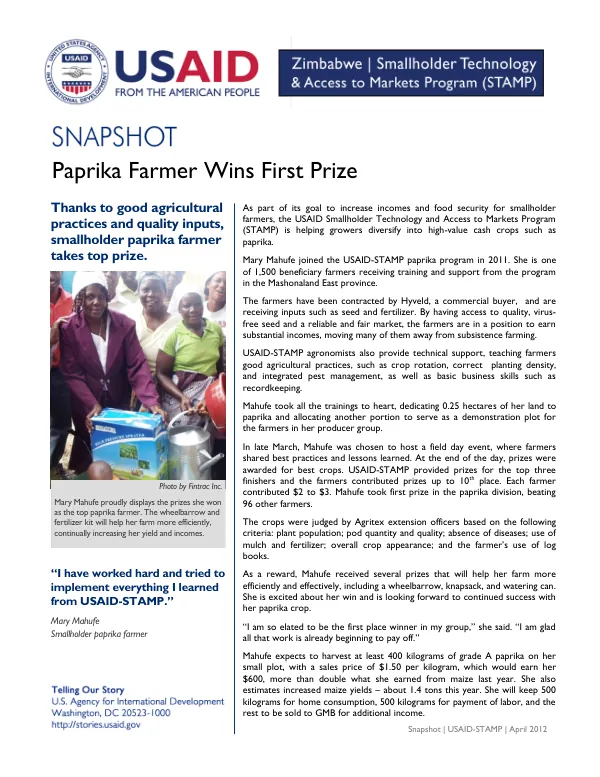
As part of this goal, the program is helping growers diversify into high-value cash crops such as paprika. Mary Mahufe, a smallholder paprika farmer, is one of 1,500 beneficiary farmers receiving training and support from the program. Mary Mahufe joined the USAID-STAMP paprika program in 2011 and has been contracted by Hyveld, a commercial buyer, to grow paprika. She has been provided with quality, virus-free seed and a reliable and fair market, enabling her to earn substantial incomes. USAID-STAMP agronomists also provide technical support, teaching farmers good agricultural practices such as crop rotation, correct planting density, and integrated pest management, as well as basic business skills such as recordkeeping. Mahufe took the trainings to heart, dedicating 0.25 hectares of her land to paprika and allocating another portion to serve as a demonstration plot for the farmers in her producer group. In late March, Mahufe was chosen to host a field day event, where farmers shared best practices and lessons learned. At the end of the day, prizes were awarded for best crops, with Mahufe taking first prize in the paprika division, beating 96 other farmers. The crops were judged by Agritex extension officers based on the following criteria: plant population; pod quantity and quality; absence of diseases; use of mulch and fertilizer; overall crop appearance; and the farmer's use of log books. As a reward, Mahufe received several prizes that will help her farm more efficiently and effectively, including a wheelbarrow, knapsack, and watering can. Mahufe expects to harvest at least 400 kilograms of grade A paprika on her small plot, with a sales price of $1.50 per kilogram, which would earn her $600, more than double what she earned from maize last year. She also estimates increased maize yields – about 1.4 tons this year. She will keep 500 kilograms for home consumption, 500 kilograms for payment of labor, and the rest to be sold to GMB for additional income.