FINTRAC
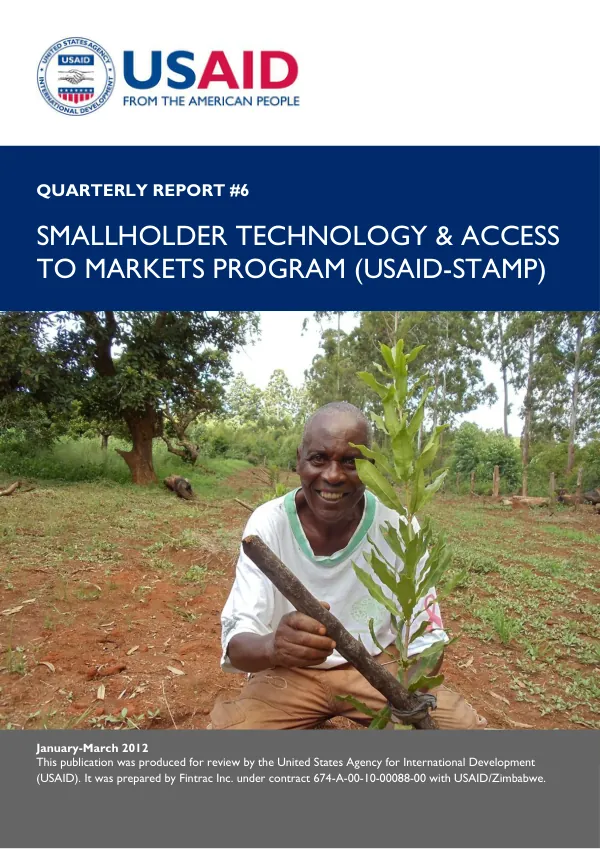
USAID-STAMP Quarterly Report #7, April-July 2012
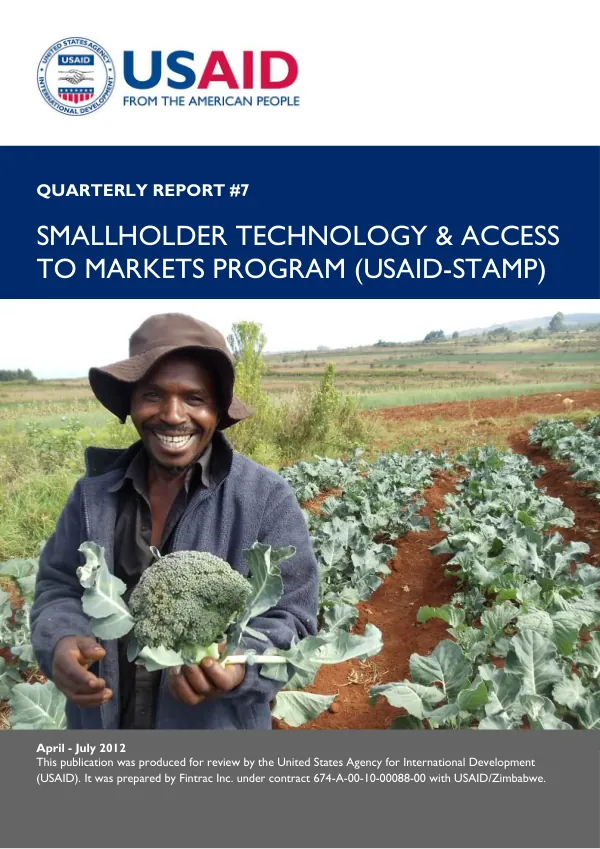
The Smallholder Technology and Access to Markets Program (USAID-STAMP) is a 22-month initiative aimed at increasing the food security of smallholder farmers in Zimbabwe.
2012 · 49 pages
Sign in to readA free account is required to download.
Abstract
The program is supported by the United States Agency for International Development and focuses on expanding market access and increasing productivity, resulting in improved income generation for rural families. USAID-STAMP's mission is to increase smallholder sales and incomes from the production and marketing of high-value horticultural crops and products using environmentally-friendly farm technologies and good agricultural practices. The program is being implemented in Mashonaland East and Manicaland provinces, with three field agronomists operating from Marondera, Nyanga, and Chipinge, managing seven partner alliances. During the seventh quarter (April-July 2012), significant achievements were made, including 2,259 smallholder farmers attending training in good agricultural practices, resulting in 1,153 unique trainings (48 percent women). Additionally, 2,413 unique smallholder farmers (71 percent women) participated in 143 health and nutrition trainings conducted by USAID-STAMP. Seven farmers were certified as seed potato producers, and 16 commercial organizations showcased their goods and services at an agricultural show held in Bende. The program also introduced a potential new filler flower for smallholder production, which will give a potential gross margin return of $8,938 per hectare. As a result of USAID-STAMP assistance, 16 hectares of macadamia will be left under production by smallholder farmers at the close-out of program activities, with continued support from Tanganda increasing to 80 ha over the next two years. USAID-STAMP's work with smallholder farmers and commercial partners was highlighted in three monthly bulletins, creating a high-level of interest in current field activities among key stakeholders. The program also produced three new snapshots that have been posted to the project's Web site and included in this report. Trainings and technical assistance visits on productivity focused on cementing the good agricultural practices introduced over the last 22 months, with a special focus on harvest and postharvest techniques and technologies. Paprika farmers attended agronomic training events and health and nutrition workshops, with training sessions focusing on support for harvesting techniques and improved grading and storage. The communal grazing period in Zimbabwe began two months earlier than expected, forcing some paprika farmers to harvest ahead of schedule. As a result, there is a strong likelihood that this paprika will be downgraded to premature or 'P' grade and will not be bought by Extracts under the prevailing market conditions. A final analysis of USAID-STAMP's impact on beneficiary paprika farmers will be included in the final report. The geographic focus for the 2011 to 2012 season focuses on five districts (Chipinge, Chimanimani, Nyanga, Makoni, and Marondera), which encompasses 22 wards in total. The program's work with smallholder farmers and commercial partners was highlighted in three monthly bulletins, creating a high-level of interest in current field activities among key stakeholders.
Related documents