FINTRAC
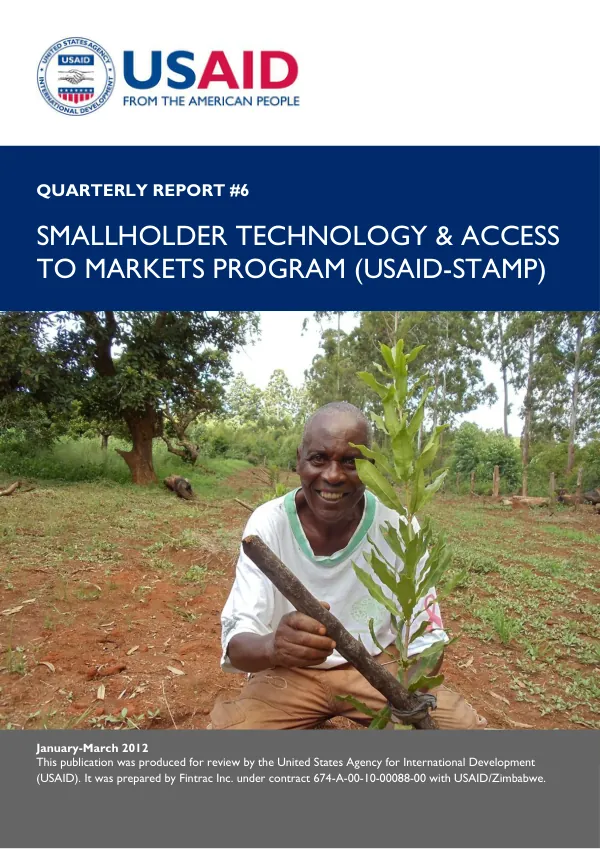
USAID-STAMP Quarterly Report #6, January-March 2012
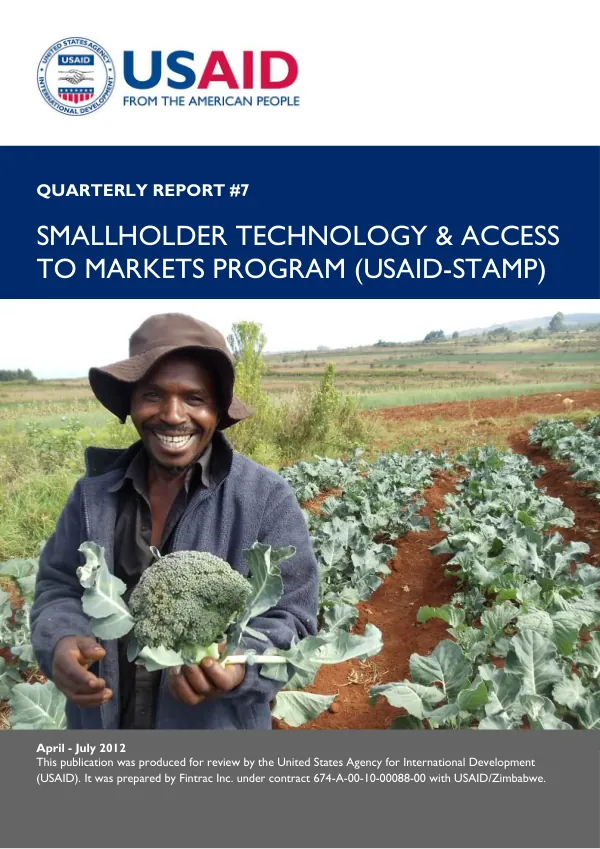
The Smallholder Technology and Access to Markets Program (USAID-STAMP) is a 21-month initiative aimed at increasing the food security of smallholder farmers in Zimbabwe.
2012 · 55 pages
Sign in to readA free account is required to download.
Abstract
The program focuses on expanding market access and increasing productivity, resulting in improved income generation and a significant impact on the lives of over 4,500 rural families. USAID-STAMP's mission is to increase smallholder sales and incomes from the production and marketing of high-value horticultural crops and products using environmentally-friendly farm technologies and good agricultural practices. The program is being implemented in Mashonaland East and Manicaland provinces, with three field agronomists operating from Marondera, Nyanga, and Chipinge, managing seven partner alliances. During the January-March 2012 quarter, USAID-STAMP achieved several key milestones. A total of 4,752 smallholder farmers attended 136 training events focusing on good agricultural practices, composting, farming as a business, and postharvest handling. The training events were supported by 513 technical assistance visits to farmers, with 980 visits made during the quarter to farmer groups, individuals, lead farmers, and partners to provide support on various aspects of crop production. The program also established 148 demonstration sites across USAID-STAMP operational districts, showcasing good agricultural practices for paprika, bananas, protea, and potatoes. Nine field days were held in conjunction with program partners, solidifying the relationship between buyers and smallholders and raising the profile of USAID-STAMP in the district. Market linkages were made between 106 smallholder farmers (43 percent women) and buyers from the formal sector in Harare, strengthening alliances and reinforcing field trainings. Fifteen hectares of macadamias were planted, which will link smallholder farmers to the export value chain and result in an expected gross margin return of $6,184 per hectare at full production. The program also implemented a gender mainstreaming policy to ensure men, women, young people, and disadvantaged groups are specifically considered in the planning of all program interventions. As a result, 37 percent of all beneficiaries receiving program assistance to date are women. To date, 5,230 farmers have benefited from USAID-STAMP input credit interventions. The program's geographic focus is on five districts (Chipinge, Chimanimani, Nyanga, Makoni, and Marondera), which encompasses 22 wards in total. USAID-STAMP's work with smallholder farmers and commercial partners was highlighted in three monthly bulletins that created a high-level of interest in current field activities among key stakeholders. The program is working with other USAID partners in Zimbabwe to identify and engage an institution in the testing of paprika to determine the presence of aflatoxins and E. coli prior to shipment. This is crucial to address the issue of microbial contaminants found at high levels in paprika, which could jeopardize the future of smallholder paprika production in Zimbabwe. The program's activities are focused on increasing agricultural productivity, expanding market access, and addressing cross-cutting themes such as gender, health and nutrition, and environment. The program's long-term sustainability will be achieved through partner alliances, and the program is scheduled to continue through July 2012.