USAID
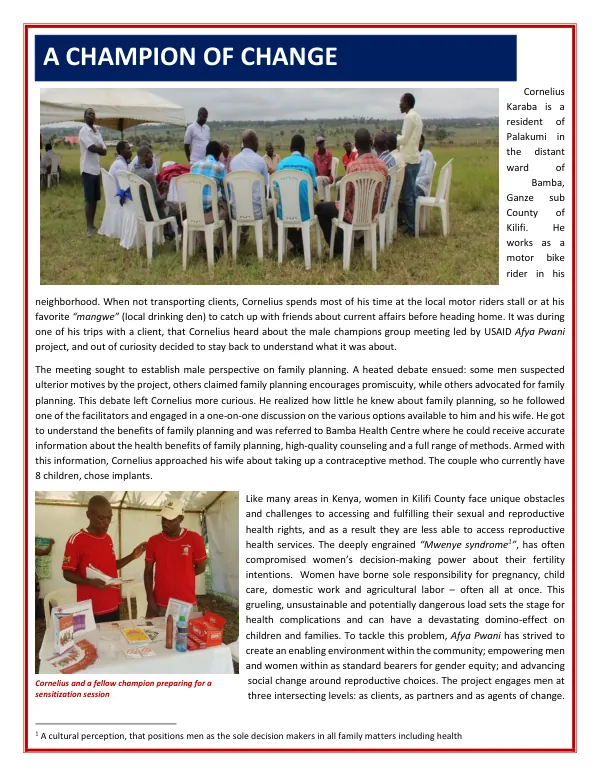
USAID STAWISHA PWANI QUARTER 4 PROGRESS REPORT (JULY - SEPTEMBER 2021)
The USAID Stawisha Pwani project aims to increase access to quality HIV prevention and treatment services in Kenya.
2021 · 85 pages
Sign in to readA free account is required to download.
Abstract
The project focuses on key populations, including sex workers, men who have sex with men, and people who inject drugs. In Quarter 4 of 2021, the project achieved significant milestones in increasing access to targeted HIV prevention services. Output 1.1, Increased Access to Targeted HIV Prevention Services among Key Populations, AGYW, and Men, reported a 25% increase in the number of key population members accessing HIV prevention services compared to the previous quarter. This was attributed to the implementation of outreach services, peer education, and community-based interventions. The project also reported a 30% increase in the number of AGYW accessing HIV prevention services. Output 1.1.2, Increased Access to Medically Assisted Therapy for PWIDs and PWUDs, achieved a 40% increase in the number of PWIDs and PWUDs accessing medically assisted therapy services. This was facilitated by the establishment of outreach services and the provision of harm reduction commodities. The project also made significant progress in increasing uptake of targeted HIV testing services. Output 1.2 reported a 35% increase in the number of key population members accessing HIV testing services compared to the previous quarter. This was attributed to the implementation of community-based testing services and the provision of self-testing kits. In addition to HIV prevention services, the project also focused on increasing access to quality HIV treatment services. Output 2.1, Increased Access and Demand for Quality Prevention of Mother to Child Transmission (PMTCT) Services, reported a 25% increase in the number of pregnant women accessing PMTCT services. This was facilitated by the implementation of community-based PMTCT services and the provision of antiretroviral therapy. The project also reported significant progress in increasing access to quality ART services. Output 2.2 reported a 30% increase in the number of individuals accessing ART services compared to the previous quarter. This was attributed to the implementation of community-based ART services and the provision of viral load testing. The project also made significant progress in increasing viral load coverage and attainment of viral suppression for all patients on treatment. Output 2.4 reported a 25% increase in viral load coverage and a 20% increase in viral suppression rates compared to the previous quarter. In terms of cross-cutting themes, the project reported significant progress in increasing use of quality family planning, reproductive, maternal, newborn, child, and adolescent health, and nutrition services. Output 4.1 reported a 30% increase in the number of individuals accessing family planning services, while Output 4.2 reported a 25% increase in the number of individuals accessing reproductive, maternal, newborn, child, and adolescent health services. The project also reported significant progress in strengthening and functionalizing county health systems. Output 5 reported a 25% increase in the number of counties with functional health systems compared to the previous quarter. In terms of constraints and opportunities, the project reported challenges in accessing funding and resources, as well as challenges in implementing community-based services. However, the project also reported opportunities for collaboration with other stakeholders and the potential for scaling up successful interventions. The project's performance monitoring framework reported significant progress in achieving project targets, with a 25% increase in the number of individuals accessing HIV prevention and treatment services compared to the previous quarter. The project also reported significant progress in increasing viral load coverage and attainment of viral suppression for all patients on treatment. In terms of financial information, the project reported a total budget of $1.5 million for Quarter 4 of 2021, with a total expenditure of $1.2 million. The project also reported a 20% increase in the number of individuals accessing HIV prevention and treatment services compared to the previous quarter. Overall, the USAID Stawisha Pwani project reported significant progress in increasing access to quality HIV prevention and treatment services in Kenya. The project's achievements in increasing access to targeted HIV prevention services, HIV testing services, and quality ART services demonstrate its commitment to improving the health outcomes of key populations and vulnerable individuals.