TETRA TECH
USAID Sustainable Ecosystems Advanced (USAID SEA) Project
The USAID Sustainable Ecosystems Advanced (USAID SEA) Project aims to advance sustainable fisheries management through conservation of marine biodiversity in Indonesia.
2016 · 2 pages
Sign in to readA free account is required to download.
Abstract
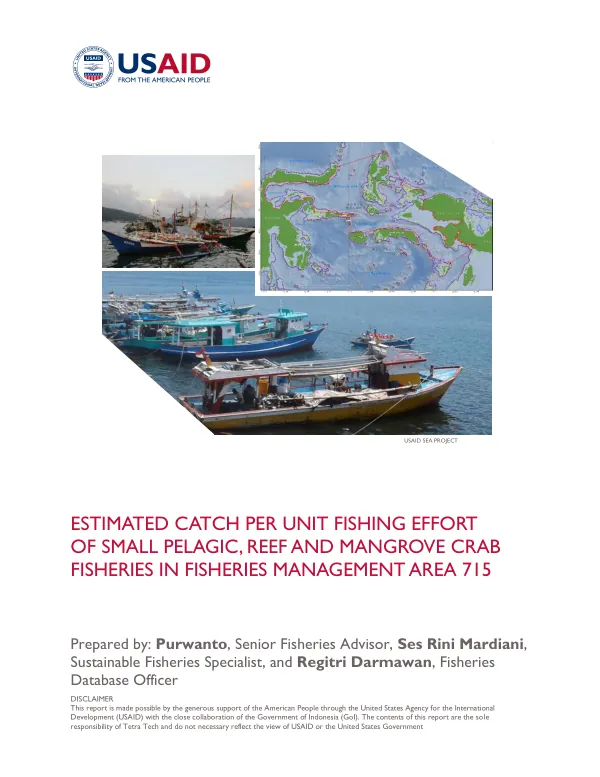
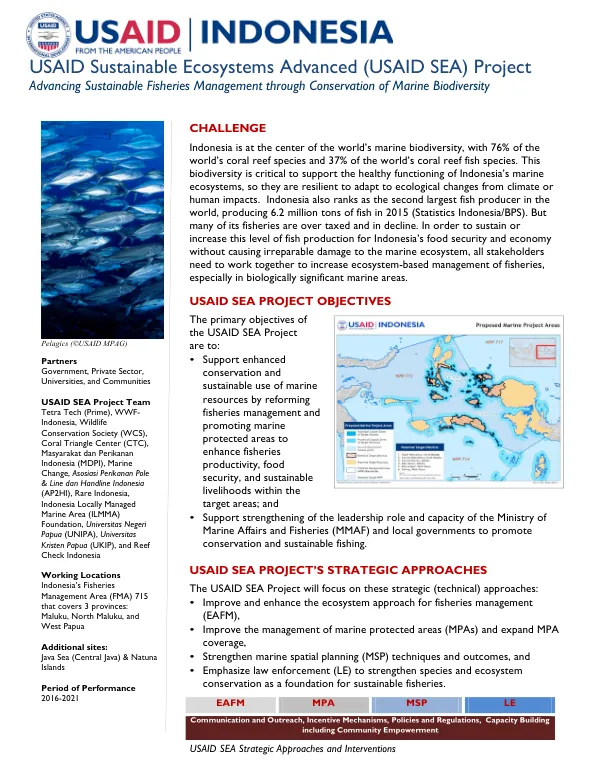
The project focuses on Fisheries Management Area (FMA) 715, which covers three provinces: Maluku, North Maluku, and West Papua. Additional sites include the Java Sea and Natuna Islands. Indonesia is home to 76% of the world's coral reef species and 37% of the world's coral reef fish species, making it a critical location for marine biodiversity. However, many of its fisheries are overtaxed and in decline, threatening the country's food security and economy. To address this challenge, the USAID SEA Project seeks to increase ecosystem-based management of fisheries, particularly in biologically significant marine areas. The project's primary objectives are to support enhanced conservation and sustainable use of marine resources by reforming fisheries management and promoting marine protected areas. Additionally, the project aims to strengthen the leadership role and capacity of the Ministry of Marine Affairs and Fisheries (MMAF) and local governments to promote conservation and sustainable fishing. The USAID SEA Project will employ a strategic approach to achieve its objectives. This includes improving and enhancing the ecosystem approach for fisheries management (EAFM), improving the management of marine protected areas (MPAs) and expanding MPA coverage, strengthening marine spatial planning (MSP) techniques and outcomes, and emphasizing law enforcement (LE) to strengthen species and ecosystem conservation. The project will contribute to Indonesia's ecological, social, and economic knowledge of the geographic focal areas through detailed baseline assessments. It will also build awareness and advocacy at national and local levels through a robust communications plan and audience-specific messages. Furthermore, the project will develop incentives for marine stewardship through markets, policies, and regulations, and strengthen the capacity of stakeholders and institutions to implement marine, coastal, and fisheries action plans. The expected results of the project include six million hectares in FMA 715 under improved fisheries management, at least six policies, laws, regulations, or operational protocols in support of marine conservation and sustainable fisheries management created, strengthened, promulgated, and enforced, and key drivers of marine biodiversity loss reduced. Additionally, data collection and systems that inform management in the target areas will be improved.
Related documents
Documents in this collection
 2018
2018USAID DEC
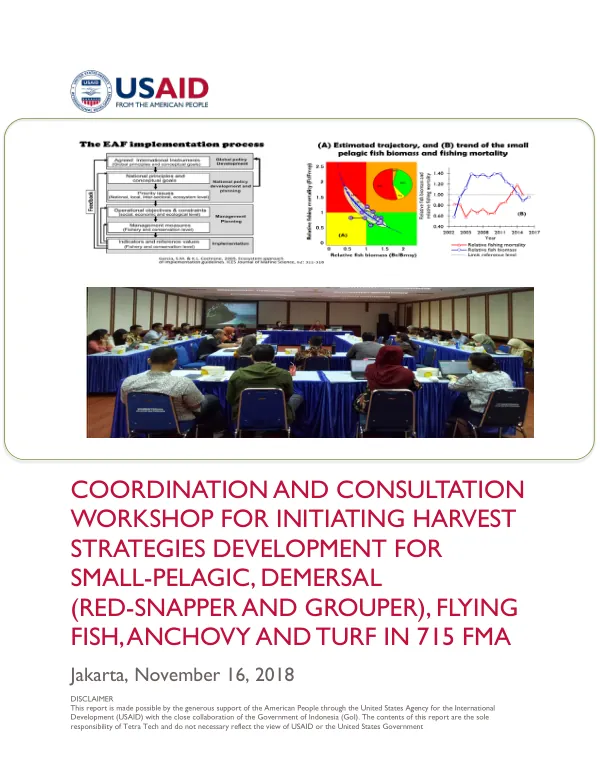
Coordination and Consultation Workshop for Initiating Harvest Strategies Development for Small-Pelagic, Demersal, Flying Fish, Anchovy, and Turf in 715 FMA
Open record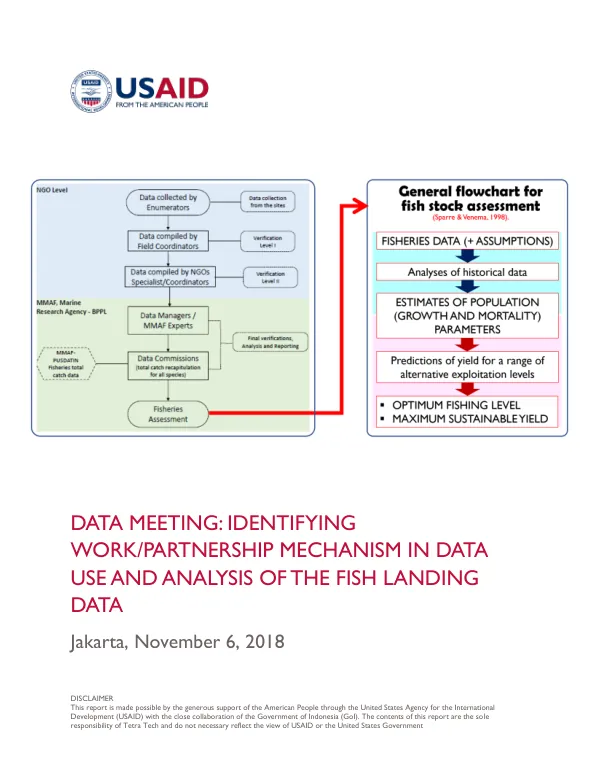 2018
2018USAID DEC
Data Meeting: Identifying Work/Partnership Mechanism in Data Use and Analysis of Fish Landing Data
Open record