USAID DEC
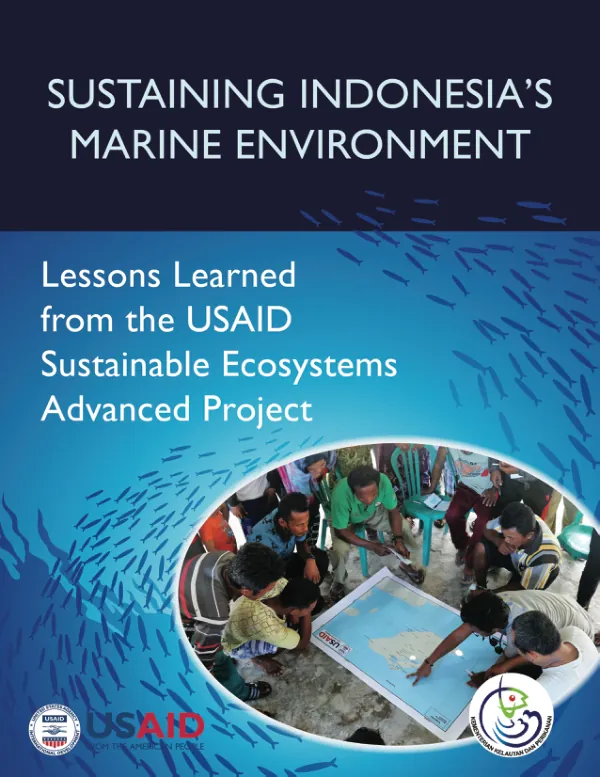
Sustaining Indonesia's Marine Environment: Lessons Learned from the USAID Sustainable Ecosystems Advanced Project
Sign inTHE NATURE CONSERVANCY
Sustaining Indonesia's Marine Environment: Lessons Learned from the USAID Sustainable Ecosystems Advanced Project
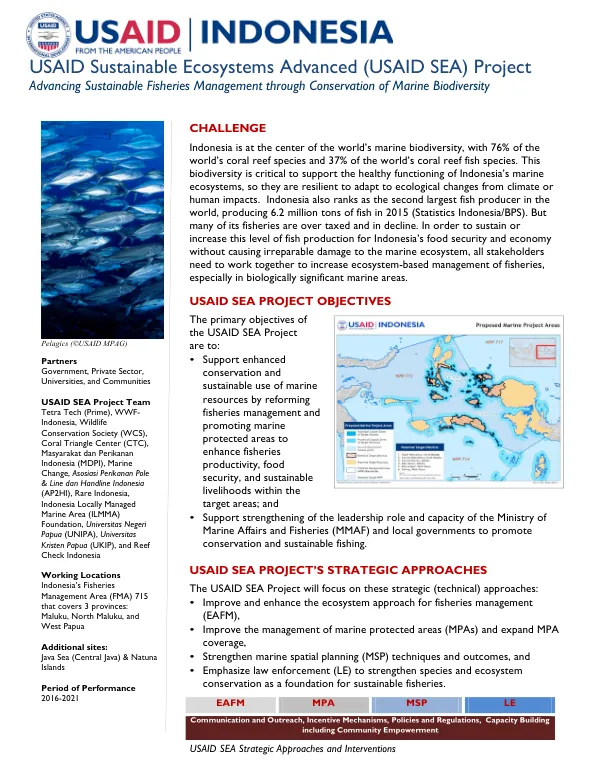
The USAID Sustainable Ecosystems Advanced (SEA) Project in Indonesia aimed to improve the management of marine resources and promote sustainable development in the country's marine environment.
2021 · 150 pages
Sign in to readA free account is required to download.
Abstract
The project was implemented from 2016 to 2021 and involved collaboration between the USAID SEA Project and the Ministry of Marine Affairs and Fisheries (MMAF) of Indonesia. The project focused on several key areas, including implementing an ecosystem approach to fisheries management, establishing and effectively managing marine protected areas (MPAs), and promoting law enforcement. The project also supported marine spatial planning for sustainable management, created demand through awareness raising and advocacy, and increased incentives for marine stewardship. One of the key outcomes of the project was the establishment of a marine protected area (MPA) management effectiveness assessment system, known as EKKP-3-K. This system was designed to evaluate the effectiveness of MPA management and provide recommendations for improvement. The project also supported the development of a provincial marine spatial plan, known as RZWP-3-K, which aimed to promote sustainable management of marine resources at the provincial level. The project also worked to strengthen the capacity of the MMAF and other stakeholders to manage marine resources sustainably. This included providing training and technical assistance to government officials, fishermen, and other stakeholders, as well as supporting the development of policies and regulations to promote sustainable marine management. The project also supported the development of public-private partnerships (PPPs) to promote sustainable marine management. PPPs were established with various stakeholders, including non-governmental organizations (NGOs), private companies, and community groups. These partnerships aimed to promote sustainable fishing practices, reduce bycatch and discarding, and support the development of marine protected areas. The project also supported the development of a community-based surveillance system, known as Siswasmas, which aimed to promote community involvement in marine resource management. The system was designed to provide real-time information on marine resource use and promote community-based monitoring and enforcement of marine regulations. The project also worked to promote awareness and understanding of the importance of marine conservation among the general public. This included supporting the development of educational materials, conducting public awareness campaigns, and promoting the involvement of local communities in marine conservation efforts. The project also supported the development of policies and regulations to promote sustainable marine management. This included supporting the development of a national policy on marine spatial planning, as well as the development of regulations to promote sustainable fishing practices and reduce bycatch and discarding. Overall, the USAID SEA Project in Indonesia made significant contributions to the improvement of marine resource management and the promotion of sustainable development in the country's marine environment. The project's outcomes and lessons learned will be useful for future initiatives aimed at promoting sustainable marine management in Indonesia and other countries.