CONSERVATION INTERNATIONAL FOUNDATION
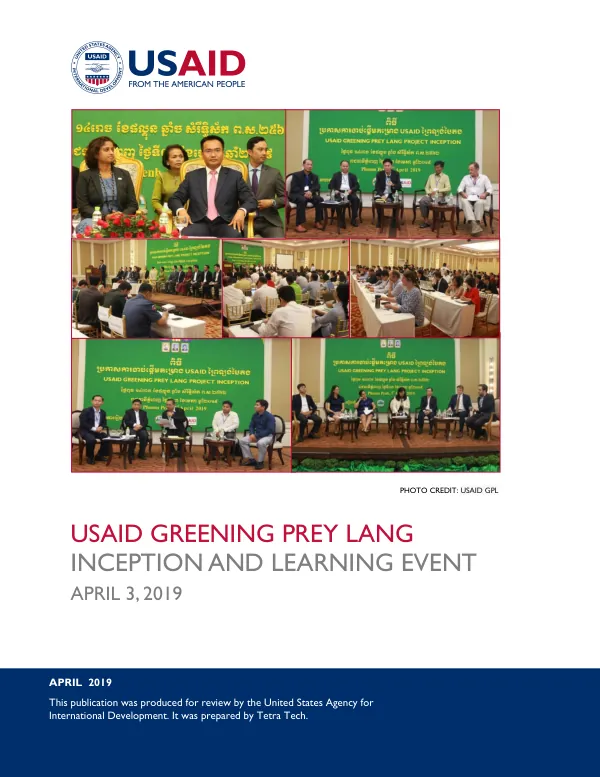
USAID Greening Prey Lang: Inception and Learning Event
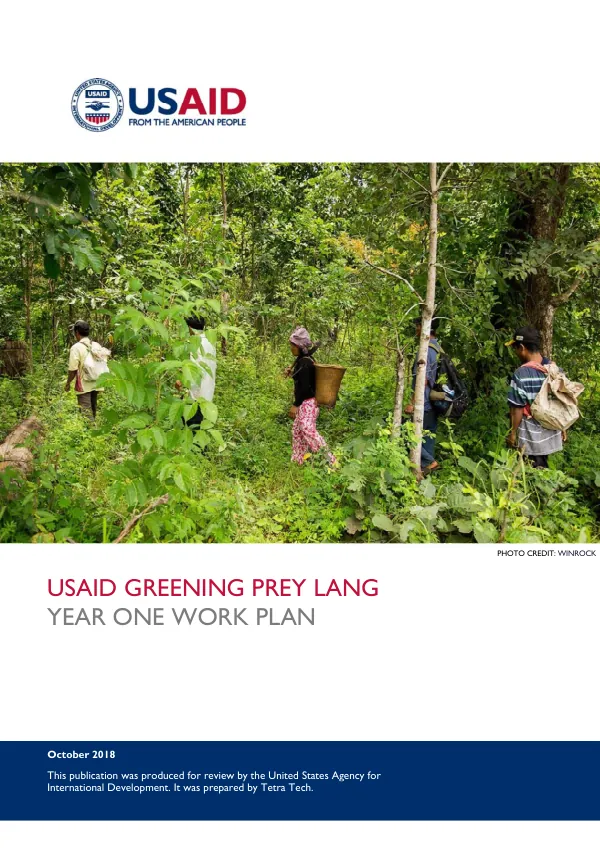
The USAID Greening Prey Lang project is a five-year initiative aimed at promoting resilient, low-emission development and inclusive, sustainable management in the Prey Lang Extended Landscape (PLEL).
2019 · 16 pages
Sign in to readA free account is required to download.
Abstract
The project focuses on conservation, communities, and governance, with the goal of improving participation and evidence-based decision-making in Cambodia's management of its forests and biodiversity. This integrated, landscape-level approach addresses the direct threats to natural capital and their drivers, with the ultimate objective of lowering greenhouse gas emissions, creating economic opportunities for rural people, and mobilizing investment in natural capital to reduce risks due to climate change vulnerabilities. The project's inception and learning event, held on April 3, 2019, brought together government, private sector, and civil society stakeholders to launch the project and share best practices and lessons learned. The event's objectives were to raise awareness on effective, sustainable, and participatory management, highlight opportunities for increasing investments, identify potential collaboration between stakeholders, and discuss the role of data, technology, and innovation for effective management and stakeholder engagement. Through moderator-facilitated discussion sessions, event participants addressed three key issues: mechanisms for effective management, protected area zoning and planning, and sustainable finance for conservation and livelihoods. Significant key outcomes of the event included recognition of the need for engagement and cooperation of all stakeholders at every level, strong governance systems with transparency of all actions by government, the private sector, and civil society, and development of community livelihoods to reduce pressures on natural resources. To address these needs, sustainable financing to support protected area management and local livelihoods in Cambodia and internationally is necessary. The project's approach to addressing the direct threats to natural capital and their drivers involves a combination of strategies, including law enforcement, livelihoods opportunities and incentives, protected area zoning and demarcation, and implemented management plans. Key actions in law enforcement needed to achieve effective management of the PLEL include collaboration and commitment of government and non-government stakeholders, improved ranger capacity and resources, and sustainable finance for law enforcement and local community livelihoods. In terms of zoning and management planning for protected areas, key approaches include participation of local communities, protected area zoning and demarcation, and implemented management plans. The project also recognizes the importance of innovative technologies and mechanisms to obtain, analyze, and share data and assess law enforcement operations to enable adaptive management.