TETRA TECH
USAID SUSTAINABLE ECOSYSTEMS ADVANCED (USAID SEA) PROJECT Third Annual Work Plan
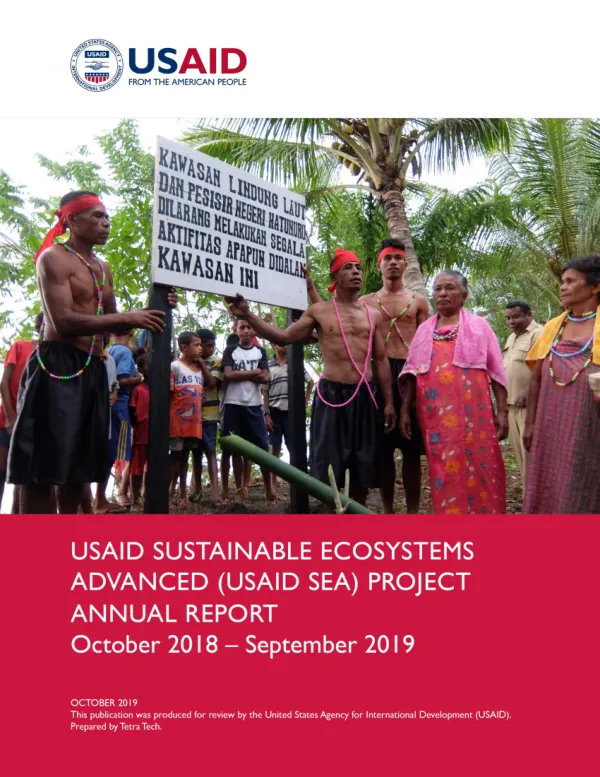
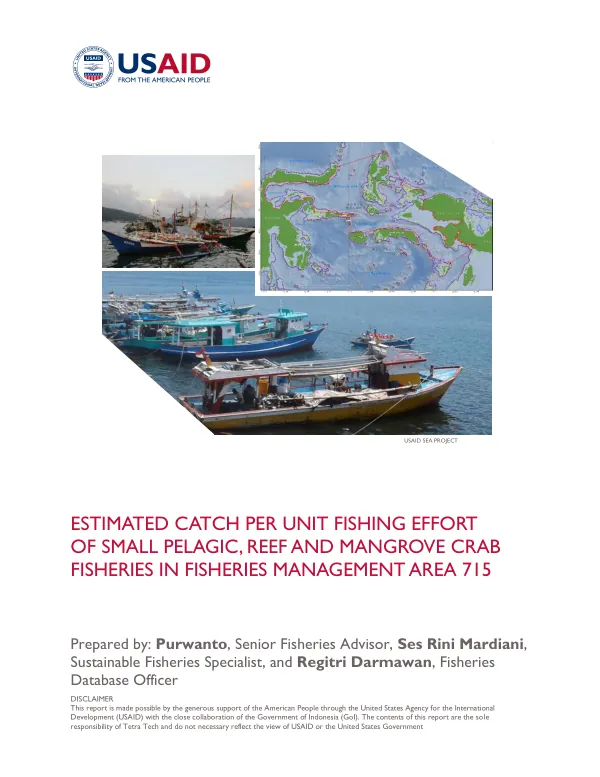
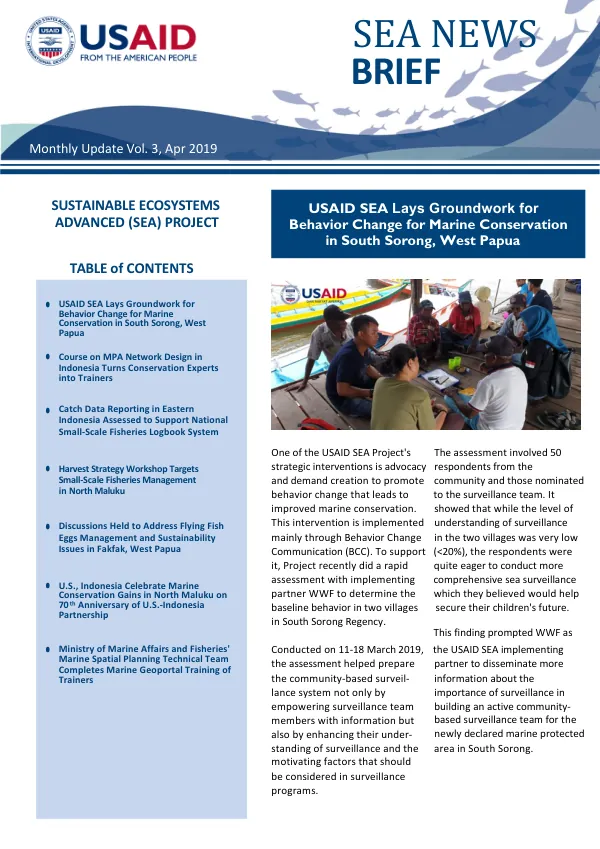
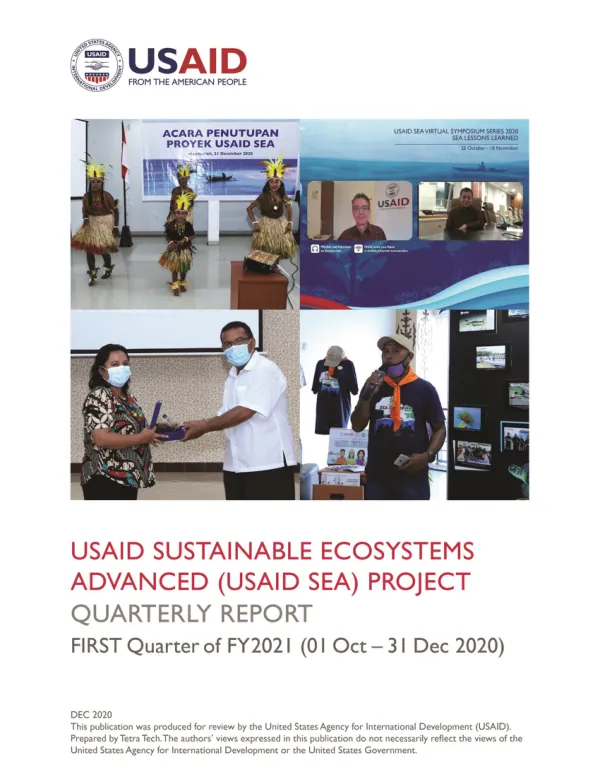
The USAID Sustainable Ecosystems Advanced (USAID SEA) Project is a three-year initiative aimed at promoting sustainable marine ecosystems in Indonesia.
2018 · 192 pages
Sign in to readA free account is required to download.
Abstract
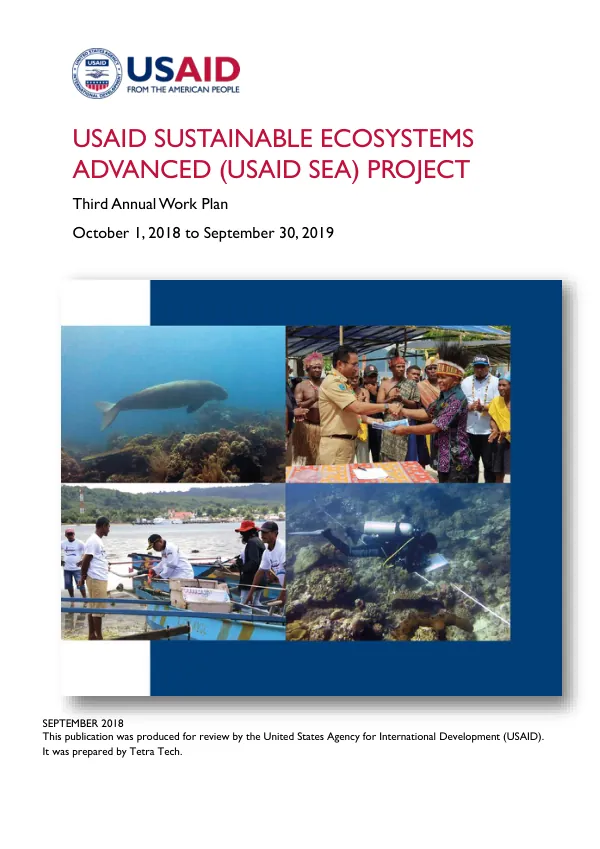
The project focuses on five strategic approaches: creating demand through awareness raising and advocacy, improving ecosystem management of Fisheries Management Area (FMA) 715 and Marine Protected Areas (MPAs), increasing incentives for marine stewardship, advancing the development of marine and fisheries policies and regulations, and institutionalizing training and capacity building. The project's strategic approach 1, create demand through awareness raising and advocacy, involves activities such as public outreach and education, community engagement, and policy advocacy. This approach aims to raise awareness among local communities, policymakers, and other stakeholders about the importance of sustainable marine ecosystems and the need for effective management. Strategic approach 2, improve ecosystem management of FMA 715 and MPAs, involves activities such as ecosystem approach to fisheries management, marine protected area management, marine spatial planning, and law enforcement. This approach aims to improve the management of FMA 715 and MPAs, which are critical for maintaining healthy marine ecosystems and supporting the livelihoods of local communities. Strategic approach 3, increase incentives for marine stewardship, involves activities such as developing and implementing incentive programs for marine stewardship, promoting sustainable fishing practices, and supporting the development of marine-based tourism. This approach aims to encourage local communities and fishermen to adopt sustainable fishing practices and to protect marine ecosystems. Strategic approach 4, advance the development of marine and fisheries policies and regulations, involves activities such as policy analysis, advocacy, and development of new policies and regulations. This approach aims to strengthen the policy and regulatory framework for marine and fisheries management in Indonesia. Strategic approach 5, institutionalize training and capacity building, involves activities such as training and capacity building for local communities, fishermen, and government officials. This approach aims to build the capacity of local communities and government officials to manage marine ecosystems effectively and to implement sustainable fishing practices. The project is implemented in three provinces: North Maluku, Maluku, and West Papua. Each province has its own set of activities and interventions, which are tailored to the specific needs and context of the province. The project also involves close collaboration and coordination with local government agencies, community groups, and other stakeholders. The project's management approach emphasizes internal collaboration and coordination among project staff, as well as external collaboration and coordination with local government agencies, community groups, and other stakeholders. The project also has a strong focus on monitoring and evaluation, which involves tracking progress, identifying challenges, and making adjustments to the project's activities and interventions as needed. Overall, the USAID SEA Project aims to promote sustainable marine ecosystems in Indonesia by improving ecosystem management, increasing incentives for marine stewardship, advancing the development of marine and fisheries policies and regulations, and institutionalizing training and capacity building. The project's activities and interventions are designed to be context-specific and to address the unique needs and challenges of each province.