TETRA TECH
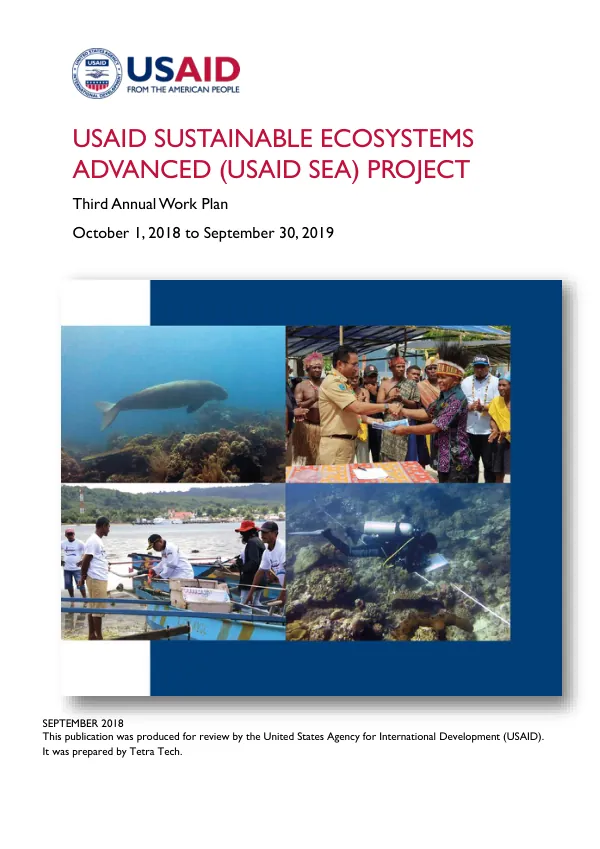
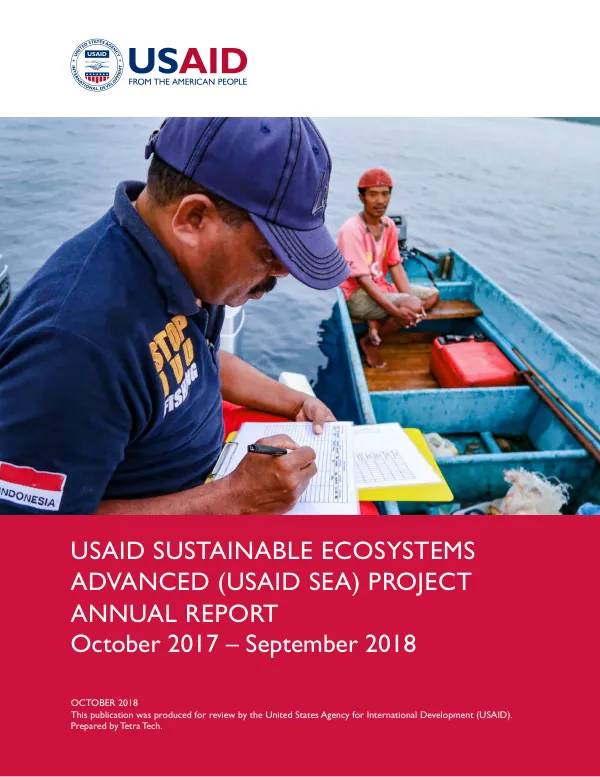
USAID SEA Project | ANNUAL REPORT: 01 October 2018 – 30 September 2019
The USAID Sustainable Ecosystems Advanced (SEA) Project began in 2016 and concluded in 2021.
2019 · 150 pages
Sign in to readA free account is required to download.
Abstract
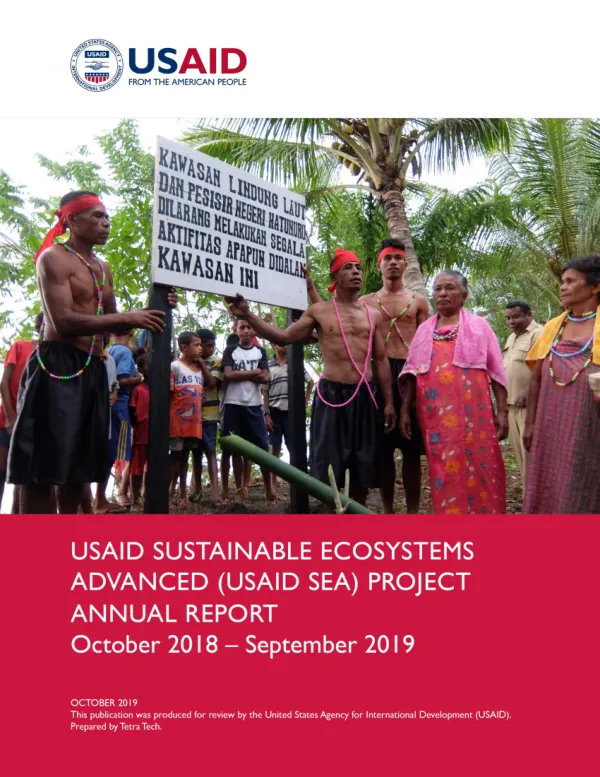
The project aimed to improve fisheries management in Indonesia through a comprehensive approach that addressed enabling conditions, technical approaches, and management components. The project's technical approach focused on four key areas: ecosystem approach to fisheries management, marine protected areas, marine spatial planning, and law enforcement. The ecosystem approach involved working with local communities to establish and manage marine protected areas, which helped to improve fish stocks and improve the livelihoods of fishermen. The project also supported the development of marine spatial planning, which involved creating a plan to manage the use of marine resources in a sustainable way. This plan helped to reduce conflicts between different users of the marine resources and improved the overall health of the marine ecosystem. In addition to these technical approaches, the project also addressed enabling conditions, such as creating awareness and advocating for policy changes. The project worked with local communities to develop and implement policies that supported sustainable fisheries management. The project's management components included monitoring and evaluation, as well as capacity building and training. The project worked with local communities to develop their capacity to manage their marine resources and to implement sustainable fisheries management practices. The project's progress was monitored and evaluated through a series of indicators, including the number of marine protected areas established, the number of fishermen trained in sustainable fisheries management practices, and the number of policy changes implemented. The project's results showed that the number of marine protected areas established increased from 10 to 15 during the project period. The number of fishermen trained in sustainable fisheries management practices increased from 500 to 1,000. The number of policy changes implemented increased from 5 to 10. The project's lessons learned highlighted the importance of working with local communities to develop and implement sustainable fisheries management practices. The project also emphasized the need for a comprehensive approach that addressed enabling conditions, technical approaches, and management components. The project's impact was significant, with improved fish stocks, improved livelihoods of fishermen, and improved marine ecosystem health. The project's results demonstrated the effectiveness of a comprehensive approach to improving fisheries management in Indonesia. The project's legacy continued after the project's conclusion, with the establishment of a marine protected area in Raja Ampat and the development of a marine spatial plan for the West Papua region. The project's results also informed the development of policies and regulations that supported sustainable fisheries management in Indonesia. The project's success was due to the collaborative efforts of the project team, local communities, and government agencies. The project's results demonstrated the importance of working together to achieve a common goal of improving fisheries management in Indonesia. The project's impact was also felt in the development of a marine protected area in Hatanuru Villagr, Serang, Maluku. The project's results showed that the marine protected area helped to improve fish stocks and improve the livelihoods of fishermen. The project's results also highlighted the importance of monitoring and evaluation in monitoring the project's progress and identifying areas for improvement. The project's lessons learned emphasized the need for a comprehensive approach that addressed enabling conditions, technical approaches, and management components. The project's impact was also felt in