FINTRAC
USAID-TAPP monthly bulletin #62
The Tanzania Agriculture Productivity Program (USAID-TAPP) is a five-year initiative implemented by Fintrac Inc.
2015 · 2 pages
Sign in to readA free account is required to download.
Abstract
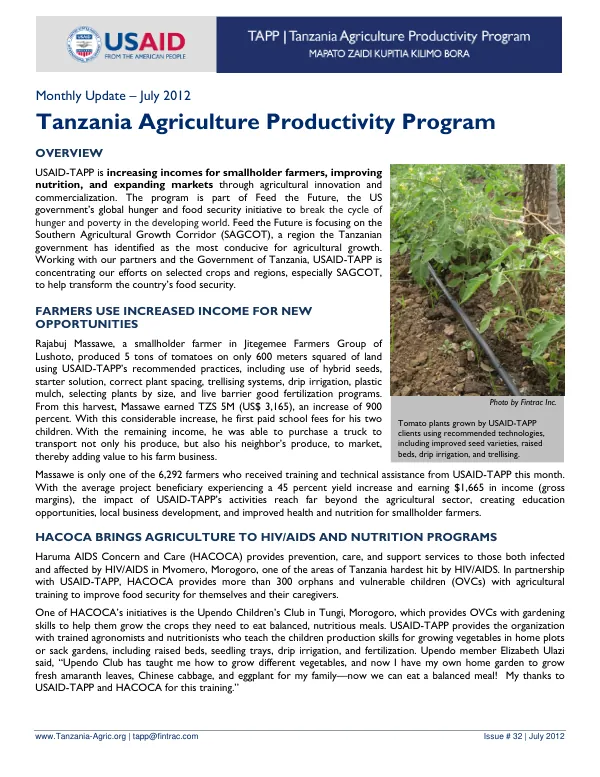
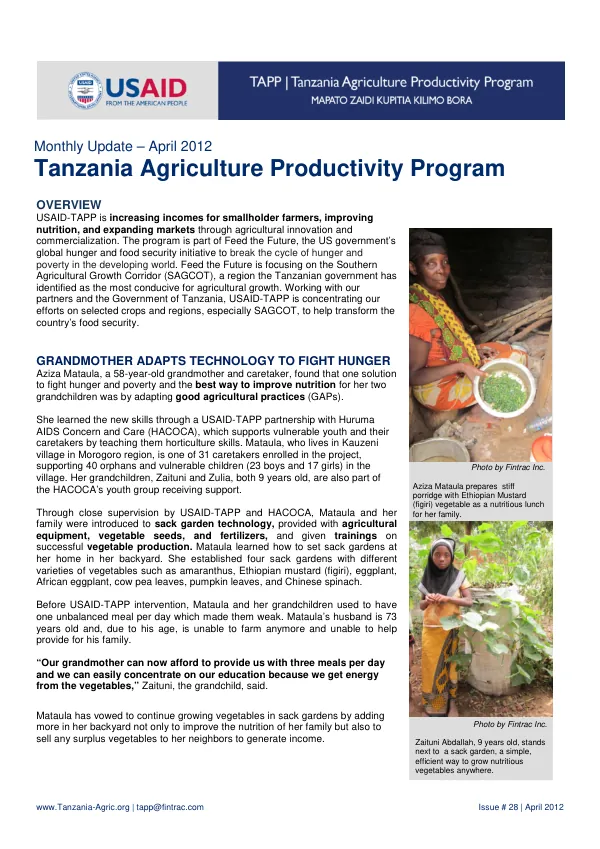
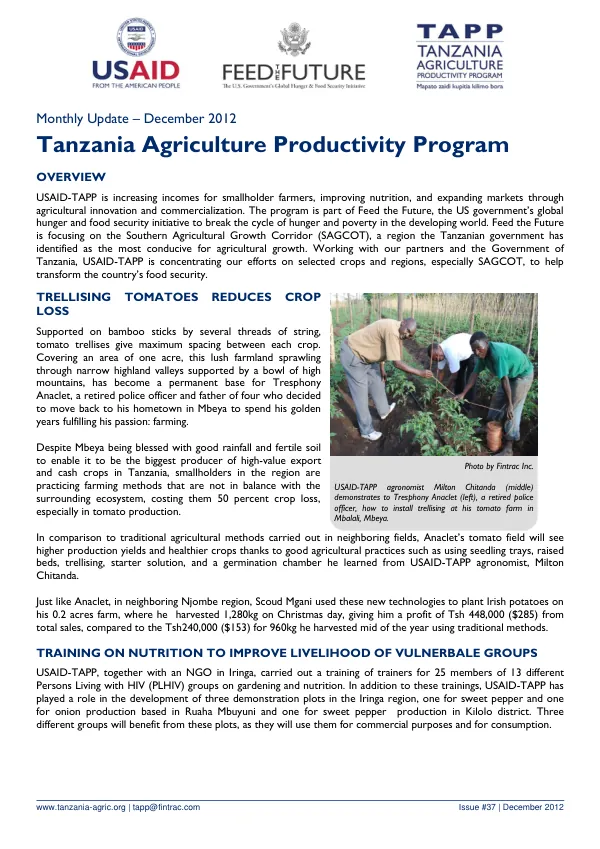
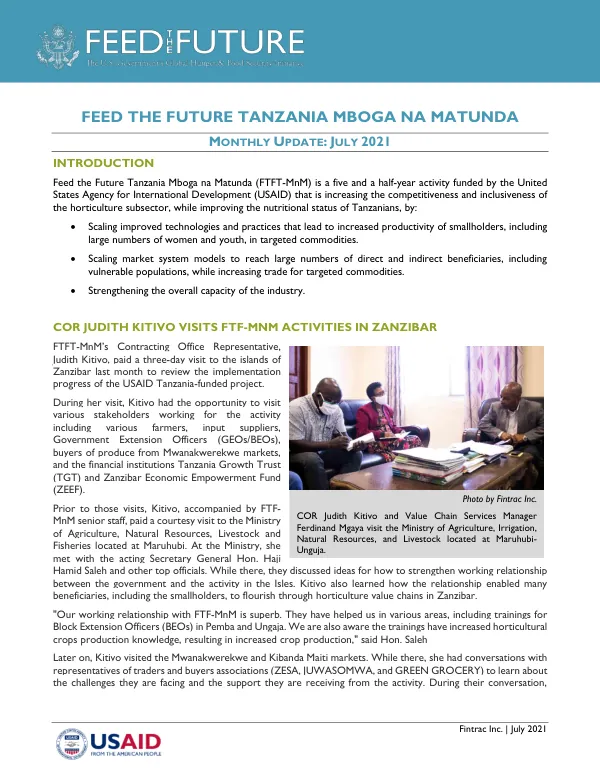
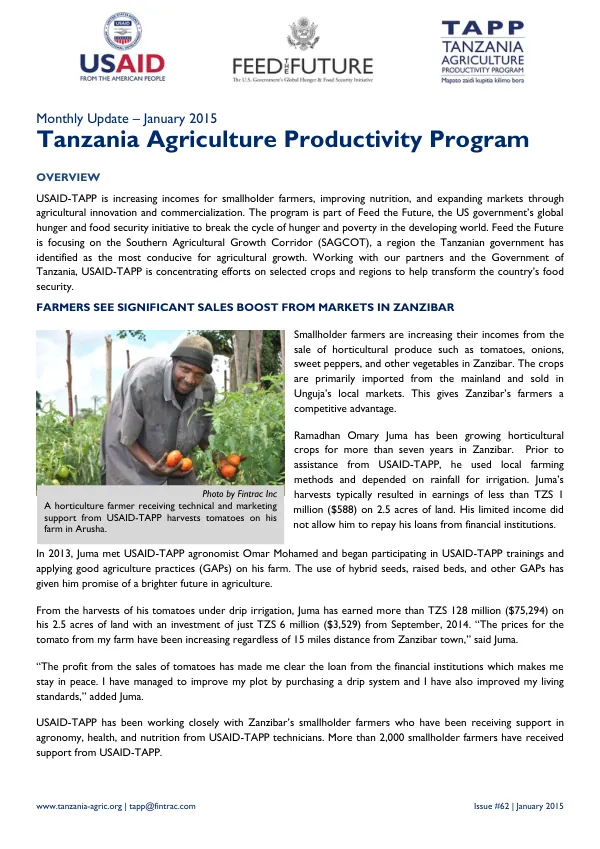
to enhance smallholder farmer incomes through improved productivity, crop diversification, and increased market access. The program is part of the Feed the Future initiative, a global hunger and food security program launched by the US government to break the cycle of hunger and poverty in developing countries. Feed the Future is focusing on the Southern Agricultural Growth Corridor (SAGCOT), a region identified by the Tanzanian government as conducive for agricultural growth. USAID-TAPP is working closely with smallholder farmers in Zanzibar, providing technical and marketing support to enhance their productivity and income. The program has been successful in increasing the incomes of smallholder farmers, particularly those growing horticultural crops such as tomatoes, onions, and sweet peppers. These crops are primarily imported from the mainland and sold in Unguja's local markets, giving Zanzibar's farmers a competitive advantage. One of the success stories of USAID-TAPP is Ramadhan Omary Juma, a smallholder farmer who has been growing horticultural crops for over seven years in Zanzibar. Prior to receiving assistance from USAID-TAPP, Juma's harvests typically resulted in earnings of less than TZS 1 million ($588) on 2.5 acres of land. However, after applying good agriculture practices (GAPs) and using hybrid seeds, raised beds, and drip irrigation, Juma's earnings have increased to over TZS 128 million ($75,294) on his 2.5 acres of land. In addition to supporting smallholder farmers, USAID-TAPP has also been working with the Moshi Police Academy to establish a farm that provides fresh vegetables to the students. The farm, which was established in 2012, has generated significant income for the academy, with earnings of over TZS 41.4 million ($24,352) on 0.5 acres of cabbage, TZS 29 million ($17,058) on 0.25 acres of high density banana, and TZS 22.08 million ($12,988) on 0.25 acres of tomatoes. The farm has also provided students with practical training in agriculture, enabling them to learn about good agricultural practices and the use of hybrid seeds. The success of USAID-TAPP can be attributed to its focus on enhancing smallholder farmer incomes through improved productivity, crop diversification, and increased market access. The program's efforts have not only improved the livelihoods of smallholder farmers but also provided students with practical training in agriculture, enabling them to acquire skills that can be used to uplift their livelihoods.
Related documents