IBI
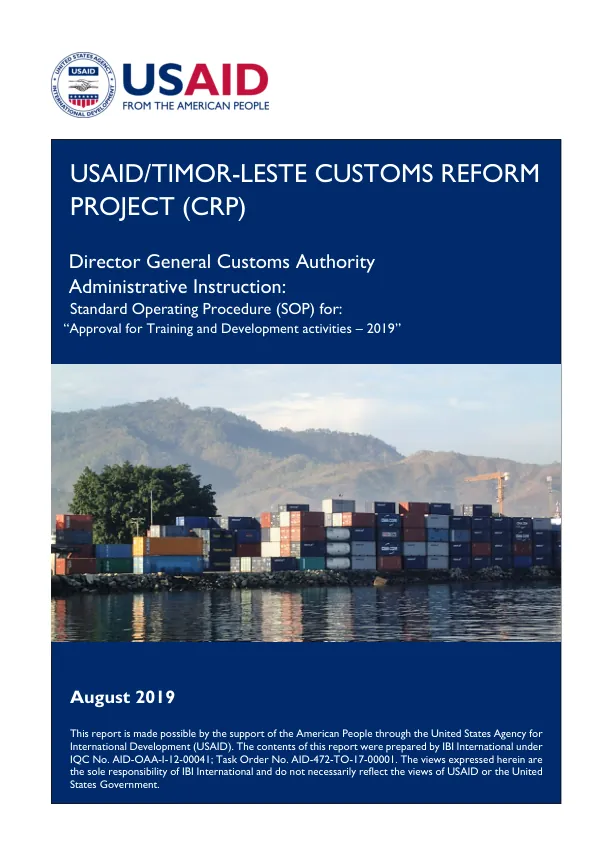
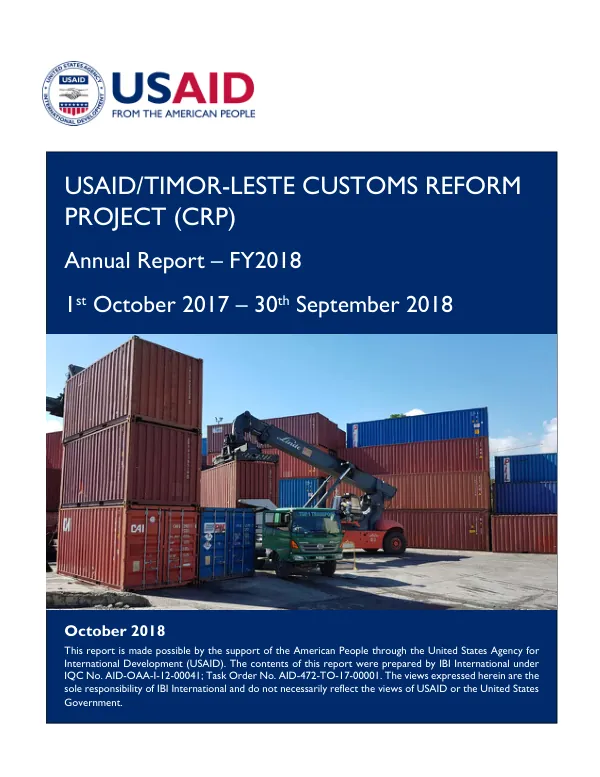
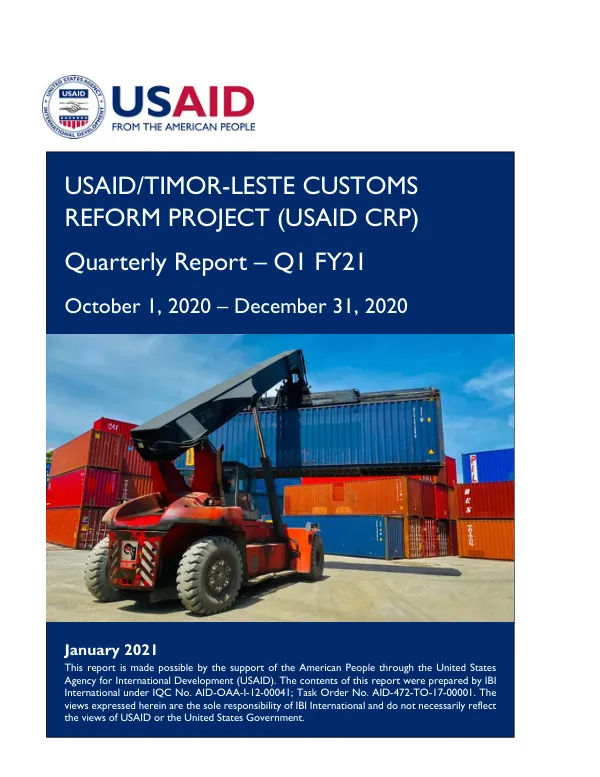
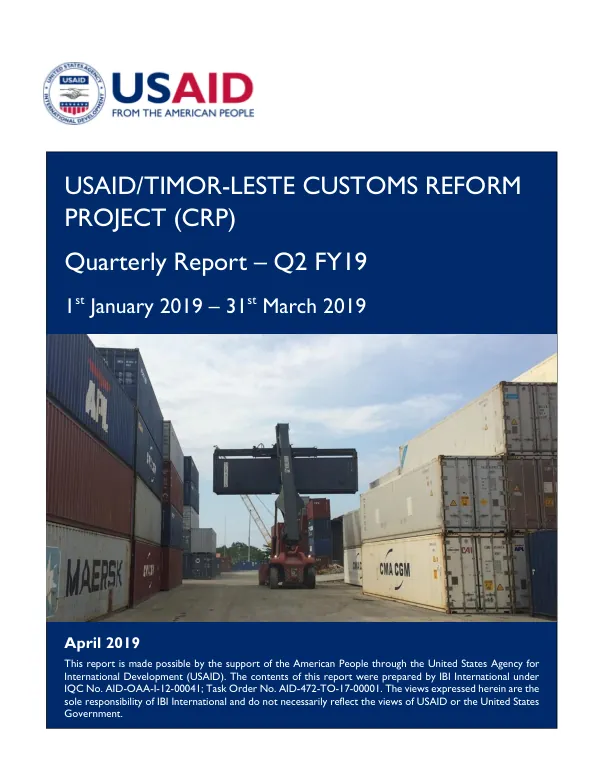
USAID/TIMOR-LESTE CUSTOMS REFORM PROJECT: QUARTERLY REPORT — Q2 FY19
The Customs Reform Project (CRP) in Timor-Leste continued to make progress in the first half of the quarter, January to February 2019, through partnership with the Fiscal Reform Commission (FRC).
2019 · 73 pages
Sign in to readA free account is required to download.
Abstract
Key activities included the implementation of the Revised Kyoto Convention (RKC) and the SAFE Framework, which aimed to secure and facilitate global trade. The project also focused on the development of the Timor-Leste Trade Information Portal (TLTIP), a national trade information portal that would provide a single point of access to trade-related information. Implementation of the RKC and SAFE Framework involved several activities, including the creation and building of risk management capacity, streamlining of procedures in line with international best practices, and the establishment of a post-clearance desk audit unit. The project also supported the finalization of a cooperative agreement between primary border agencies and designed an Authorized Economic Operator (AEO) certification program. The development of the TLTIP involved several activities, including the development, implementation, and publicization of the portal, integration of key information within the portal, and preparation of policies and procedural manuals. The project also developed a monitoring and evaluation (M&E) strategy to measure the impact of the TLTIP on trade. Despite progress, the project faced challenges in the latter half of the quarter due to the disbanding of the FRC on March 18, 2019. The FRC's cessation of operations disrupted ongoing CRP activities, which were reliant on the commission's support. The project team worked to mitigate the impact of this disruption and continued to make progress on key activities. The project's performance indicators, as reported in Annex 1, show steady progress in key areas, including the implementation of the RKC and SAFE Framework, development of the TLTIP, and capacity building for customs officials. The project's financial information, as reported in Annex 2, shows a steady expenditure trend, with a total expenditure of $X million for the quarter. The project's successes during the quarter included the completion of several key activities, including the development of the TLTIP and the implementation of the RKC and SAFE Framework. The project also made progress in capacity building for customs officials, with a focus on risk management and trade facilitation. However, the project faced several challenges, including the disruption caused by the disbanding of the FRC. The project team worked to mitigate the impact of this disruption and continued to make progress on key activities. Lessons learned from the quarter included the importance of maintaining a strong partnership with key stakeholders, such as the FRC, and the need for flexibility in responding to changing circumstances. The project's environmental compliance and mitigation measures were also a focus during the quarter. The project team worked to ensure that all activities were carried out in accordance with environmental regulations and best practices. Looking forward, the project will continue to focus on the implementation of the RKC and SAFE Framework, development of the TLTIP, and capacity building for customs officials. The project team will also work to mitigate the impact of the FRC's disbanding and continue to make progress on key activities.