IBI
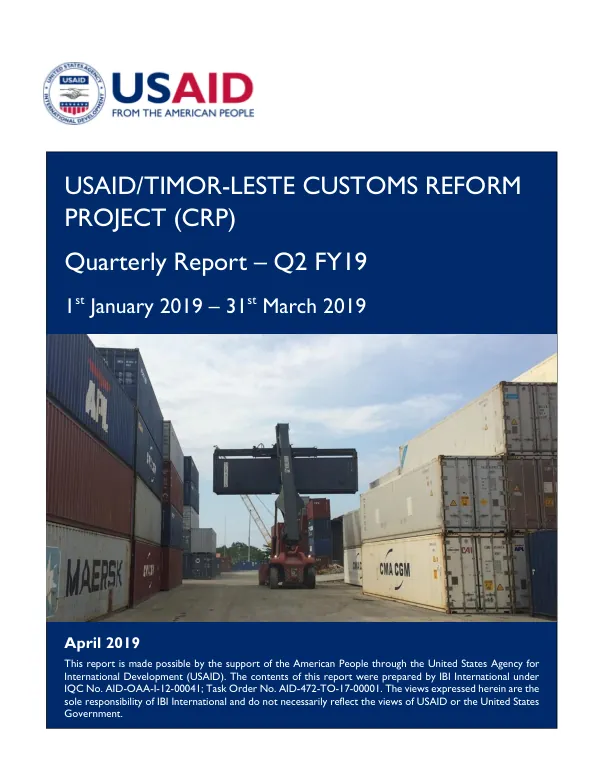
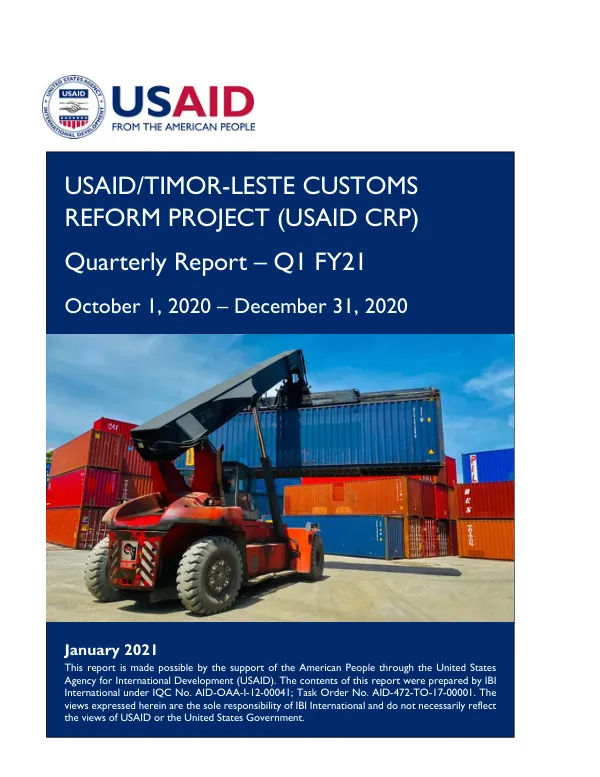
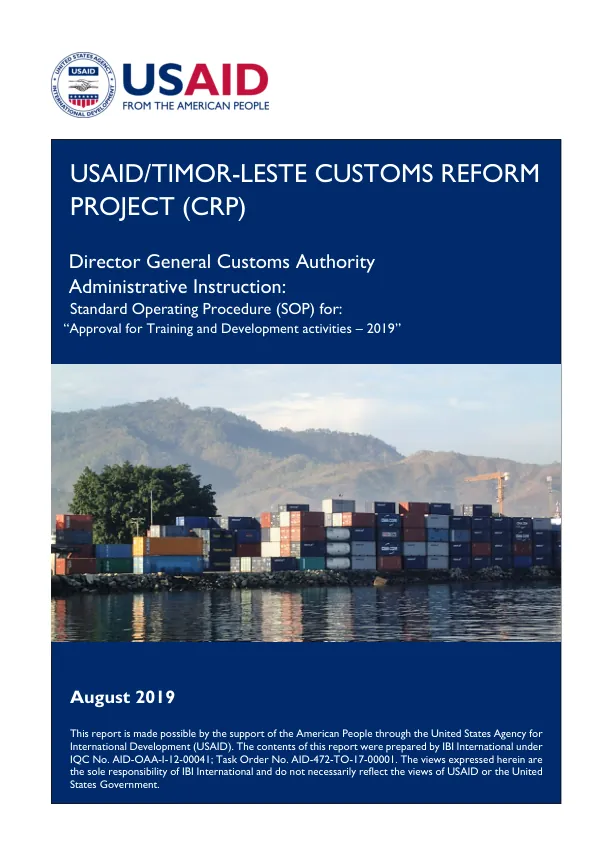
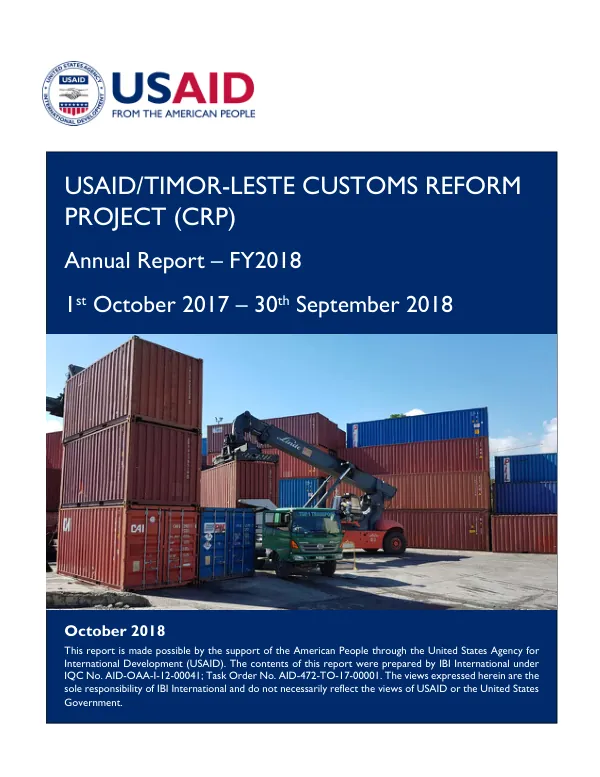
USAID/TIMOR-LESTE CUSTOMS REFORM PROJECT: ANNUAL REPORT — FY2018
The USAID/Timor-Leste Customs Reform Project (CRP) aimed to enhance the efficiency and effectiveness of customs procedures in Timor-Leste.
2018 · 110 pages
Sign in to readA free account is required to download.
Abstract
The project focused on implementing the Revised Kyoto Convention (RKC) and the SAFE Framework of Standards to Secure and Facilitate Global Trade. Key activities included risk management baseline assessments, capacity building, and the application of automated selectivity using ASYCUDA. Implementation of the RKC and SAFE Framework involved several activities, including the creation and building of risk management capacity, the application of automated selectivity using ASYCUDA, and the streamlining of procedures in line with international best practices. The project also supported the finalization of agreements between border agencies and established a post-clearance desk audit unit. Additionally, an AEO certification program was designed to facilitate trade and improve customs procedures. The project also focused on implementing the World Customs Organization (WCO) Revised Arusha Declaration, which aimed to enhance customs procedures and improve trade facilitation. Key activities included drafting and implementing a capacity building plan, developing and implementing an anti-corruption plan, and developing human resources management capacity. The project also assisted in drafting a customs strategic plan and established the National Enquiry Point (NEP) to facilitate trade and improve customs procedures. Furthermore, the project aimed to operationalize the National Trade Information Portal (TLTIP), which provided a platform for traders to access information on customs procedures and trade regulations. The project developed, implemented, and publicized the TLTIP, integrated key information within the portal, and prepared policies and procedural manuals. A monitoring and evaluation strategy was also developed to measure the impact of the TLTIP on trade. Despite the challenges faced by the project, including significant delays due to a government impasse, the project made significant progress in implementing customs reforms and improving trade facilitation in Timor-Leste. The project's achievements were reflected in the 15 key performance indicators, which showed improvements in customs procedures, trade facilitation, and economic growth. The project's success was also reflected in the financial information, which showed a significant increase in customs revenue and a reduction in clearance times. The project's achievements were also reflected in the establishment of a post-clearance desk audit unit, which improved customs procedures and reduced clearance times. The project also designed an AEO certification program, which facilitated trade and improved customs procedures. Additionally, the project established the National Enquiry Point (NEP), which provided a platform for traders to access information on customs procedures and trade regulations. The project's success was also attributed to the collaboration between the project team and the Government of Timor-Leste, which ensured the effective implementation of customs reforms and trade facilitation measures. The project's achievements were also reflected in the World Bank Group's report, which showed a significant improvement in customs procedures and trade facilitation in Timor-Leste. Overall, the USAID/Timor-Leste Customs Reform Project (CRP) made significant progress in implementing customs reforms and improving trade facilitation in Timor-Leste. The project's achievements were reflected in the 15 key performance indicators, which showed improvements in customs procedures, trade facilitation, and economic growth. The project's success was also attributed to the collaboration between the project team and the Government of Timor-Leste, which ensured the effective implementation of customs reforms and trade facilitation measures.