USAID DEC
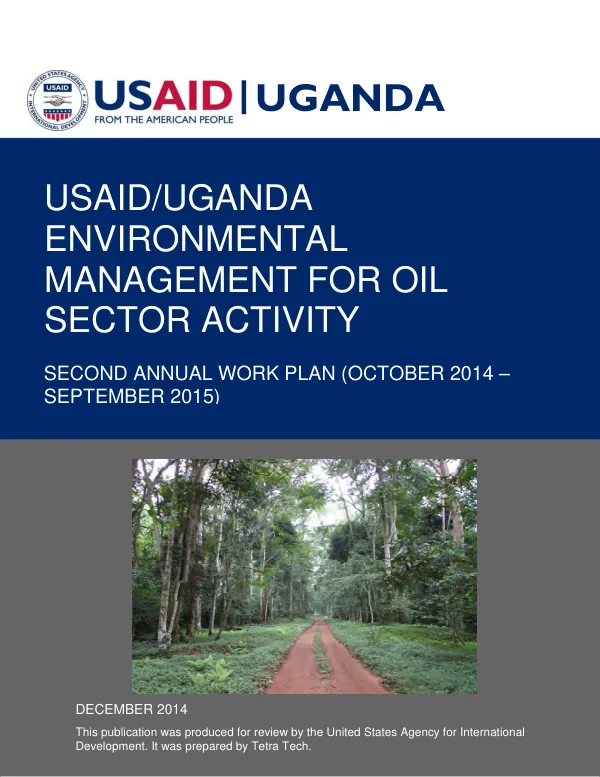
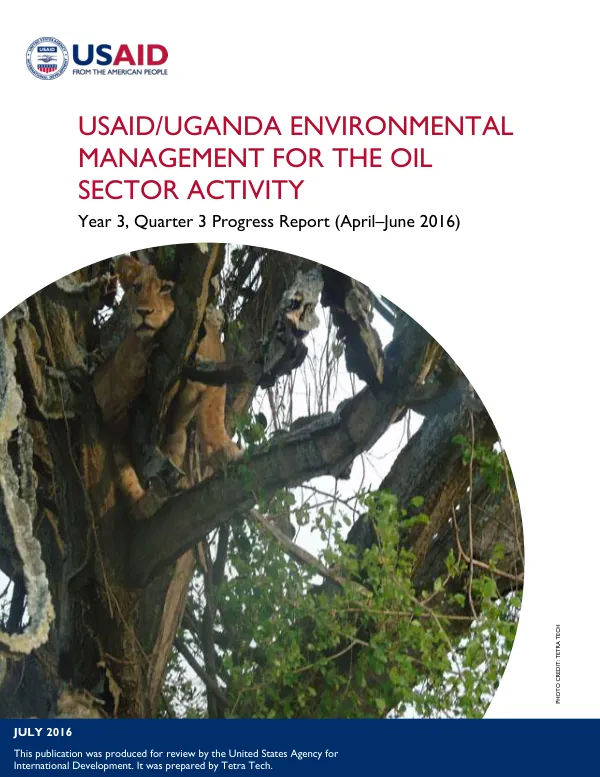
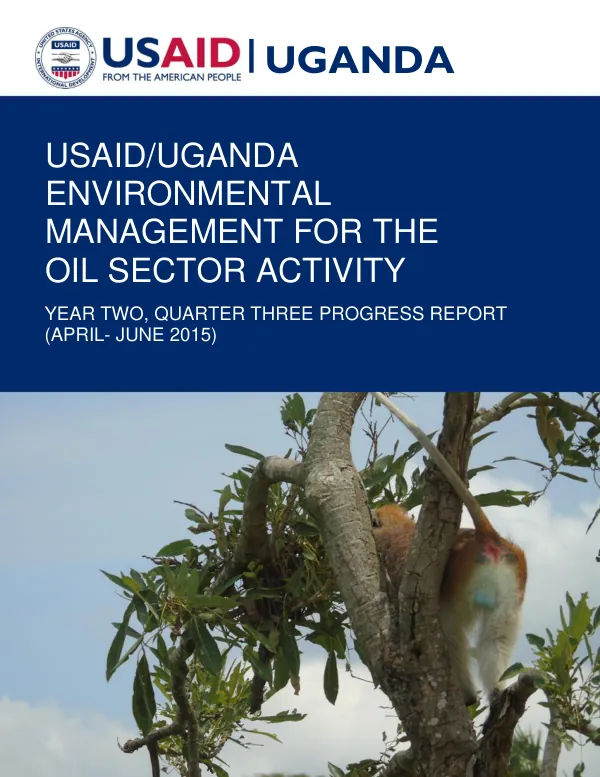
USAID/UGANDA: Environmental Management for the Oil Sector – Third Quarterly Progress Report AWP2
Sign inGOVERNMENT OF UGANDA
USAID/UGANDA: Environmental Management for the Oil Sector – Third Quarterly Progress Report AWP2
The Environmental Management for the Oil Sector Activity in Uganda is a four-year initiative aimed at building capacity of Ugandan institutions, professionals, and citizens to manage the environmental impacts of oil and gas sector development.
2015 · 49 pages
Sign in to readA free account is required to download.
Abstract
The Activity is implemented by Tetra Tech and is funded by the United States Agency for International Development (USAID). The Activity has three expected Results: strengthened capacity of Government of Uganda (GoU) institutions, strengthened capacity of Ugandan professionals, and strengthened capacity of Uganda civil society. The Activity has eight Sub-Results and twelve activities, with a guiding principle of "collaborating, learning, adapting" through existing institutions and processes to add value. The Sub-Results are focused on strengthening processes and systems to monitor impacts of oil and gas activities on biodiversity, updating environmental regulations and guidance to address biodiversity impacts, and enhancing awareness and ability to value biodiversity resources. In Year Two, Quarter Three (April-June 2015), the Activity made progress in several areas. Sub-Result 1.1, Processes and systems to monitor impacts of oil and gas activities on biodiversity, was implemented, with the development of a biodiversity monitoring plan and the establishment of a biodiversity monitoring team. Sub-Result 1.2, Environmental regulations and guidance to address biodiversity impacts of oil and gas, was also updated, with the revision of the Environmental Impact Assessment (EIA) guidelines and the development of a biodiversity impact assessment framework. Sub-Result 1.3, Awareness of and ability to value biodiversity resources, analyse trade-offs, and apply economic instruments to promote biodiversity conservation, was enhanced through the development of a biodiversity communication strategy and the conduct of a capacity needs assessment for biodiversity conservation. The Activity also made progress in strengthening the capacity of Ugandan professionals, with the design and implementation of short-term training programs on biodiversity conservation and environmental management in oil and gas affected areas. In addition, the Activity strengthened the capacity of Uganda civil society, with the enhancement of civil society awareness on biodiversity and environmental aspects of oil and gas activities. The Activity also supported the development of district and community capacity to manage biodiversity and environmental impacts of oil and gas development. The Activity has a strong focus on collaboration, learning, and adaptation, with a emphasis on working through existing institutions and processes to add value. The Activity has a robust monitoring and evaluation system in place, with regular progress reports and a comprehensive evaluation plan. The Activity also has a strong focus on integrating gender concerns and has identified priority equipment to support environmental monitoring and delivery of training. Overall, the Environmental Management for the Oil Sector Activity in Uganda is making significant progress in building capacity of Ugandan institutions, professionals, and citizens to manage the environmental impacts of oil and gas sector development. The Activity's focus on collaboration, learning, and adaptation, as well as its emphasis on integrating gender concerns, are key strengths of the initiative.