GOVERNMENT OF UGANDA
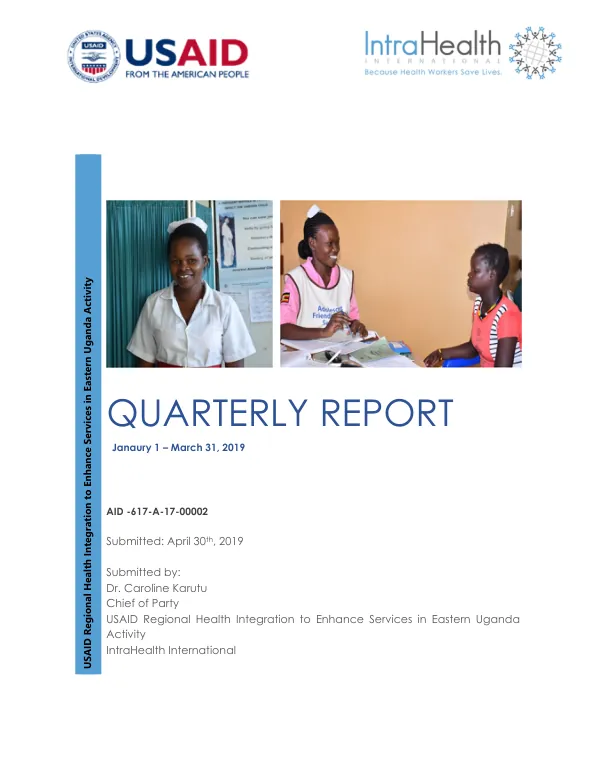
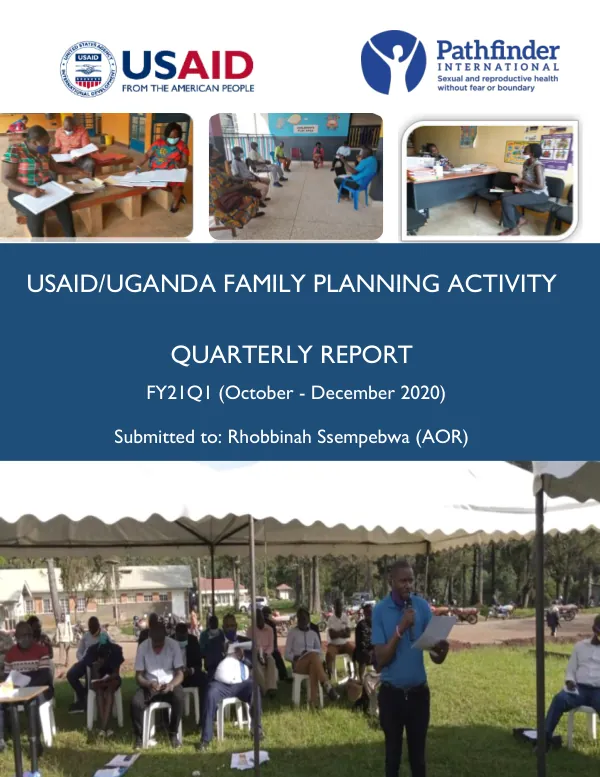
USAID/UGANDA FAMILY PLANNING ACTIVITY QUARTERLY REPORT FY21Q1
The USAID/Uganda Family Planning Activity is a quarterly report for FY21Q1, covering the period from October to December 2020.
2021 · 48 pages
Sign in to readA free account is required to download.
Abstract
The report is submitted to Rhobbinah Ssempebwa, the Activity Officer Responsible (AOR). The activity aims to strengthen Ugandan leadership and coordination to support voluntary family planning, enhance positive social norms and behaviors, and increase access to quality, voluntary family planning services. The report highlights the progress made in achieving these objectives. Result 1: Ugandan leadership and coordination strengthened to support voluntary family planning. The commitment to and leadership for voluntary family planning programs have been strengthened at all levels. The Ministry of Health (MoH) Family Planning and Reproductive Health Coordination Section (FP/RHCS) has been engaged in collaboration meetings to strengthen management capacity. The Supportive Performance Assessment and Recognition (SPARS) strategy has been implemented, and quarterly action reviews on family planning commodities have been conducted. Additionally, the RH web-based reporting and monitoring system has been implemented in 11 Family Planning Association (FPA) districts, and the One Facility, One Warehouse initiative has been implemented. Result 2: Positive social norms and behaviors have been enhanced to improve healthy timing and spacing of pregnancies. Knowledge and understanding of the root causes of social norms and their distribution have been improved through engagement with community and national radio stations, TV stations, and the development of resource training packages for resource persons. Innovative solutions to address the root causes of social norms at the household and community levels have been developed and scaled. Result 3: Access to quality, voluntary family planning has been increased. The family planning uptake summary shows an increase in the number of mothers receiving post-partum family planning services. The contraceptive method mix has been improved, with a trend towards increased use of long-acting and reversible contraceptives (LARCs). Provider readiness to deliver quality voluntary family planning services has been improved through training of health workers and village health teams on family planning. The report also highlights the progress made in monitoring, evaluation, and learning, including the implementation and dissemination of evaluative survey findings, improving data quality and use, partnership and stakeholder engagement, and collaboration, learning, and adaptation. The program management section covers staff recruitment, stakeholder engagement, office support, and compliance activities, as well as challenges and recommendations for the next quarter. The report includes annexes with success stories, overall assessment results for drug shops, and lists of tables and figures. The tables and figures provide additional information on the progress made in achieving the activity's objectives, including trends in EM-SPARS visits, monthly and quarterly reporting rates, and the proportion of health facilities with complete family planning reports.
Related documents