USAID DEC
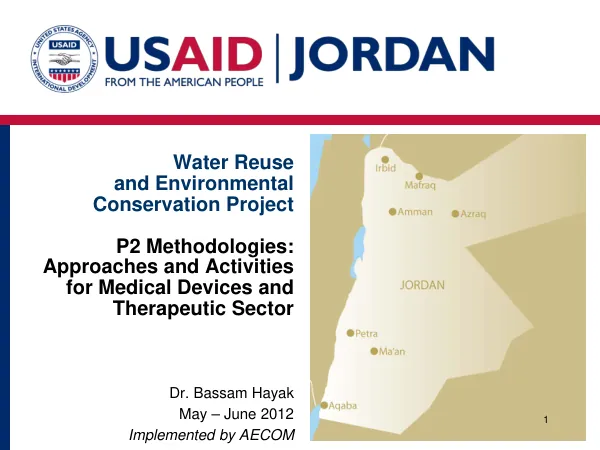
USAID Water Reuse and Environmental Conservation Project: P2 Methodologies: Approaches and Activities for Medical Devices and Therapeutic Sector
Sign inAECOM INTERNATIONAL
USAID Water Reuse and Environmental Conservation Project: P2 Methodologies: Approaches and Activities for Medical Devices and Therapeutic Sector
The Pollution Prevention (P2) Assessment Methodologies for the Medical Devices and Therapeutic Sector were developed by Dr.
2012 · 30 pages
Sign in to readA free account is required to download.
Abstract
Bassam Hayak in 2012, implemented by AECOM. The primary objective of this project is to provide a comprehensive framework for conducting P2 assessments in the medical devices and therapeutic sector. The P2 assessment process involves several key steps, including planning, pre-assessment, assessment, synthesis, implementation, and sustainment. The planning phase involves assembling a team, allocating resources, and defining the focus area for the assessment. The pre-assessment phase includes conducting a material and energy flow analysis to identify potential areas for improvement. During the assessment phase, options for pollution prevention and energy conservation are evaluated and prioritized. The synthesis phase involves selecting the most promising options and developing a plan for implementation. The implementation phase involves monitoring the results and continuing the assessment in another focus area. A key component of the P2 assessment process is data collection. This involves collecting data on the characteristics of the focus area, including energy consumption and waste generation. The data collection process typically involves the use of standard forms, such as the EPA's pollution prevention assessment form, as well as the development of custom worksheets to meet the specific needs of the assessment. The P2 assessment team typically consists of a team leader, technical experts, and external experts, such as laboratory personnel and sampling and measurement specialists. The team may also require access to external resources, such as laboratory equipment and sampling and measurement equipment. The P2 assessment process is designed to be flexible and adaptable to the specific needs of the organization. The team may need to consider various techniques and tools to collect data and conduct the assessment, including in-house resources and external expertise. The P2 assessment process has several key benefits, including improved efficiency, reduced waste, and reduced energy consumption. By identifying and implementing opportunities for pollution prevention and energy conservation, organizations can reduce their environmental impact and improve their bottom line.