USAID DEC
Water Reuse and Environmental Conservation Project: Aqaba Water Reuse Financial Planning Assistance
Sign inAECOM INTERNATIONAL
Water Reuse and Environmental Conservation Project: Aqaba Water Reuse Financial Planning Assistance
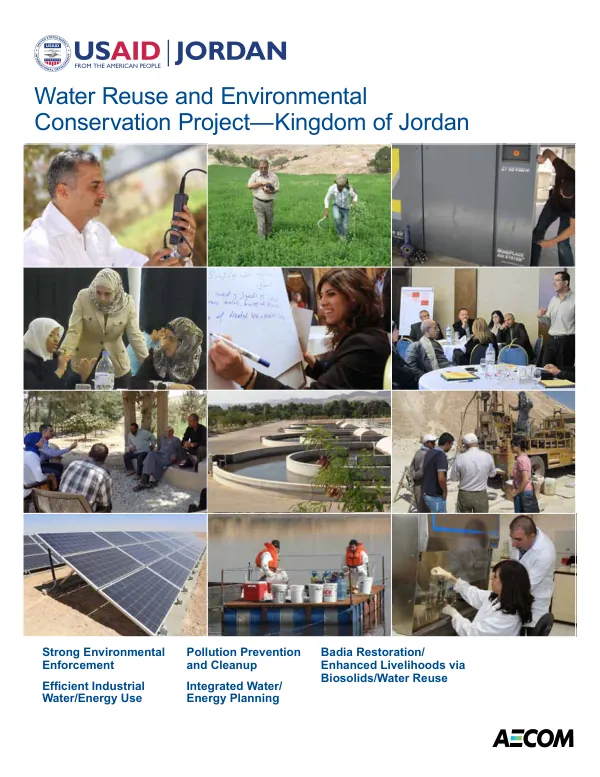
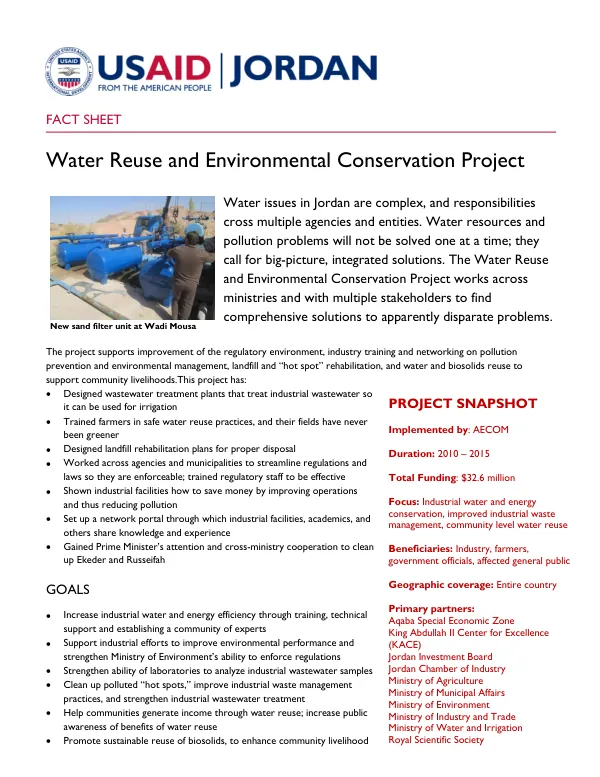
The Water Reuse and Environmental Conservation Project in Aqaba, Jordan, aims to protect and conserve scarce resources through regulation, education, and coordination with industry, local communities, and the private sector.
2015 · 45 pages
Sign in to readA free account is required to download.
Abstract
The project supports the improvement of the regulatory environment, industry training and networking on pollution prevention and environmental management, landfill and "hot spot" rehabilitation, water reuse to support community livelihoods, and kingdom-wide biosolids management. The project consists of four tasks aimed at increased efficiency in the use of water and energy, and improved liquid and solid waste handling practices in the industrial sector of Jordan. As part of Task 2, the Water Reuse and Environmental Conservation Project developed a reclaimed water tariff model for use by Aqaba Water Company (AWC) wastewater division. This report provides a systematic, cost-based methodology to pricing of reused water, as opposed to a case-by-case negotiated approach. The reclaimed water tariff model encompasses capital, operating, financing costs, and markup necessary to achieve AWC's required return on equity. The model is based on data obtained from AWC, including trial balances, audited accounts, and wastewater influent and effluent volumes. The report also discusses the ponds upgrading study, which recommends a new aerated stabilization basin as the best option to upgrade the quality and quantity of reused water. The new aerated stabilization basin has operational parameters and cost estimates, including a Type A water capacity of 11,269 m3/day, an annual Type A water sold of 3.3 million m3, and an upgrade and expansion capital cost of JD 8,120,000. The annual operating costs under the recommended option include asset recovery reserve, maintenance reserve, salaries and benefits, and other expenses. The reclaimed water tariff model is expected to achieve cost recovery and allocate common treatment costs equitably among various developers. The model will provide a roadmap of future prices and projected cash flows for various stakeholders, including AWC, buyers of reused water, financiers of wastewater expansions, and donors. The report concludes that the reclaimed water tariff model is a necessary step towards achieving the project's objectives and improving the efficiency of water and energy use in the industrial sector of Jordan. The Aqaba Water Reuse Financial Planning Assistance project aims to provide a financial planning framework for the Aqaba Water Company to manage its water resources efficiently. The project involves the development of a water reuse tariff model, which will enable the company to recover costs associated with water reuse and allocate them equitably among various stakeholders. The water reuse tariff model is based on a cost-based approach, which takes into account the costs of water treatment, transportation, and distribution. The model also considers the costs of energy, chemicals, and other expenses associated with water reuse. The report provides a detailed breakdown of the costs associated with water reuse, including capital costs, operating costs, and financing costs. The project also involves the upgrading of the Aqaba wastewater treatment plant, which will enable the company to produce high-quality water for reuse. The upgrading of the plant will involve the installation of a new aerated stabilization basin, which will improve the quality and quantity of reused water. The Aqaba Water Reuse Financial Planning Assistance project is expected to have a positive impact on the environment and the economy of Jordan. The project will help to conserve water resources, reduce energy consumption, and promote sustainable development. The project will also provide a financial planning framework for the Aqaba Water Company to manage its water resources efficiently and recover costs associated with water reuse. The project's success will depend on the effective implementation of the reclaimed water tariff model and the upgrading of the Aqaba wastewater treatment plant. The project will require close collaboration between the Aqaba Water Company, the Ministry of Water and Irrigation, and other stakeholders to ensure the successful implementation of the project.
Related documents