USAID DEC
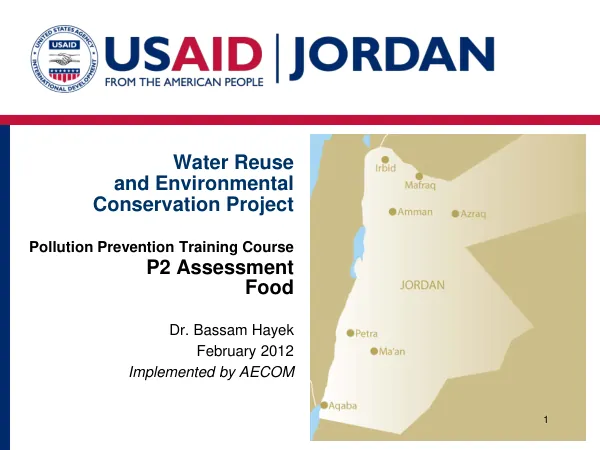
USAID Water Reuse and Environmental Conservation Project: Pollution Prevention Training Course
Sign inAECOM INTERNATIONAL
USAID Water Reuse and Environmental Conservation Project: Pollution Prevention Training Course
The Water Reuse and Environmental Conservation Project, implemented by AECOM in February 2012, aimed to provide a comprehensive approach to pollution prevention and environmental conservation.
2012 · 30 pages
Sign in to readA free account is required to download.
Abstract
The project's primary objective was to enable participants to describe the key steps in pollution prevention assessment. The pollution prevention assessment process involves a series of steps, commencing with a plan to define the scope of the assessment, identify the team and resources required, and determine the focus area. The pre-assessment phase involves material and energy flow analysis, as well as the identification of required external resources, such as laboratories and equipment for sampling and measurements. The assessment phase is critical, as it involves the identification and evaluation of options for pollution prevention and energy efficiency. This phase requires the collection of data, which can be achieved through the use of standard worksheets, quick scan forms, or custom-designed worksheets. The assessment agenda should be prepared, outlining key milestones, meetings with the team and management, and plant visits. The synthesis phase involves the selection of options, planning, and implementation of the most promising options for pollution prevention and energy efficiency. This phase requires the identification of data needed, how to collect it, and the development of an assessment plan. The implementation phase involves follow-up on results and the continuation of the assessment in another focus area. The final phase, sustain, is crucial in ensuring the long-term success of the pollution prevention assessment. This phase involves the evaluation of results, identification of areas for improvement, and the development of strategies to sustain the gains achieved through the assessment. The project emphasizes the importance of a well-structured team, including a P2/CP expert, to ensure the success of the assessment. The team should consist of individuals with diverse specialties, depending on the size and complexity of the processes to be investigated. The project also highlights the need for external resources, such as laboratories and equipment for sampling and measurements, to support the assessment process. The pollution prevention assessment process is a critical component of the Water Reuse and Environmental Conservation Project, providing a comprehensive approach to pollution prevention and environmental conservation. By following the outlined steps, participants can identify opportunities for pollution prevention and energy efficiency, leading to improved environmental outcomes and reduced costs.
Related documents