ADRA
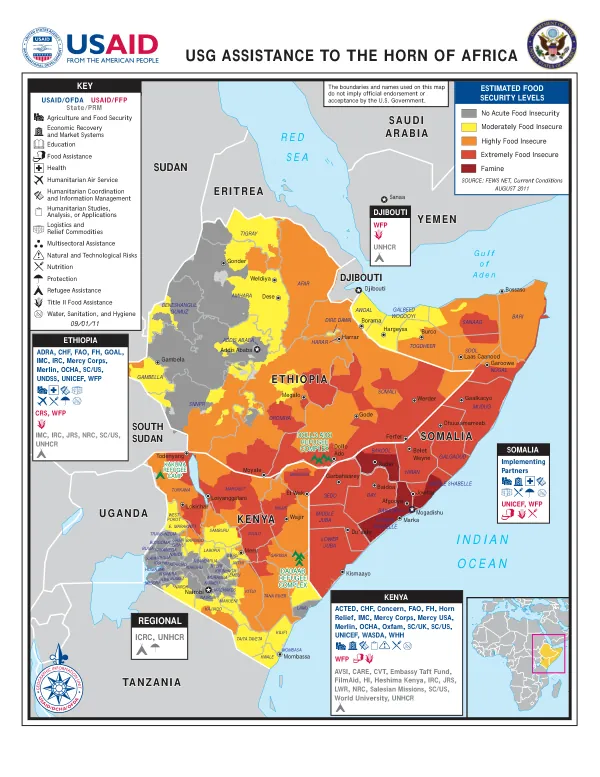
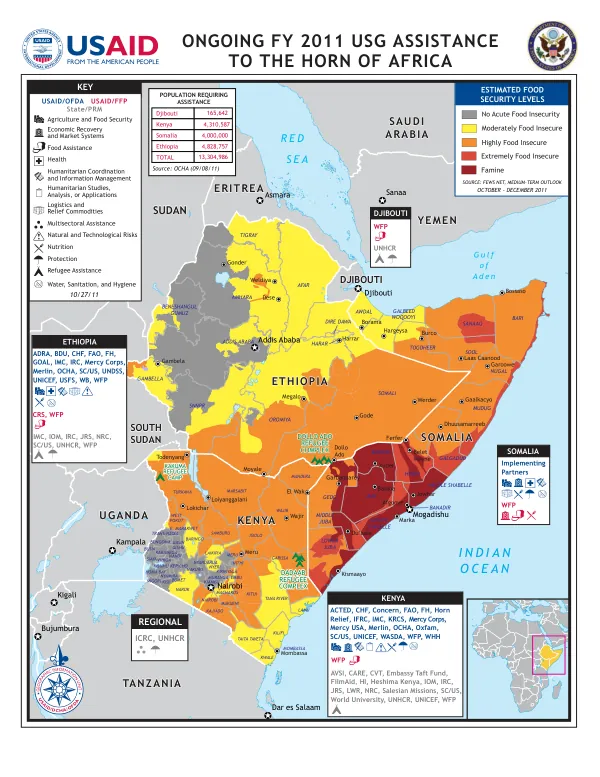
USG Horn of Africa Drought Fact Sheet #4 Map - FY 2012
The Horn of Africa region, encompassing countries such as Somalia, Ethiopia, Kenya, and Djibouti, has been a focal point for humanitarian assistance due to ongoing conflict, displacement, and food insecurity.
2011 · 1 pages
Sign in to readA free account is required to download.
Abstract
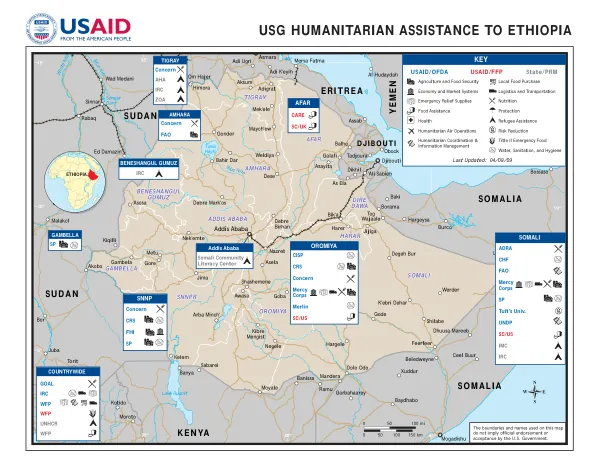
The region's complex geography, with arid and semi-arid lands, contributes to the vulnerability of its population to drought and famine. According to the October-December 2011 estimated food security levels, approximately 13.3 million people in the Horn of Africa required assistance, with Somalia accounting for the largest share at 4 million. Ethiopia and Kenya also had significant populations in need, with 4.8 million and 4.3 million, respectively. Djibouti had the smallest population requiring assistance, at 165,642. The humanitarian response in the region is led by various organizations, including the United Nations High Commissioner for Refugees (UNHCR), the World Food Programme (WFP), and non-governmental organizations (NGOs) such as the International Rescue Committee (IRC) and the Norwegian Refugee Council (NRC). These organizations provide a range of assistance, including food aid, shelter, and protection services. The US Government, through the United States Agency for International Development (USAID), has been a significant donor to the humanitarian response in the Horn of Africa. In 2011, the USG provided over $1.5 billion in assistance to the region, with a focus on food security, economic recovery, and humanitarian coordination. The Horn of Africa region is characterized by a range of humanitarian needs, including food insecurity, displacement, and protection concerns. The ongoing conflict in Somalia, in particular, has led to significant displacement and humanitarian needs. The region's complex humanitarian landscape requires a coordinated and sustained response to address the needs of affected populations. The estimated food security levels in the Horn of Africa region highlight the need for continued humanitarian assistance to address the ongoing food insecurity and displacement. The region's complex geography and ongoing conflict make it a challenging environment for humanitarian responders, but the efforts of organizations such as UNHCR, WFP, and NGOs are critical to addressing the needs of affected populations.
Related documents