ACTED
USAID/DCHA Sudan Program Maps 7/2/2009
The U.S.
2009 · 6 pages
Sign in to readA free account is required to download.
Abstract
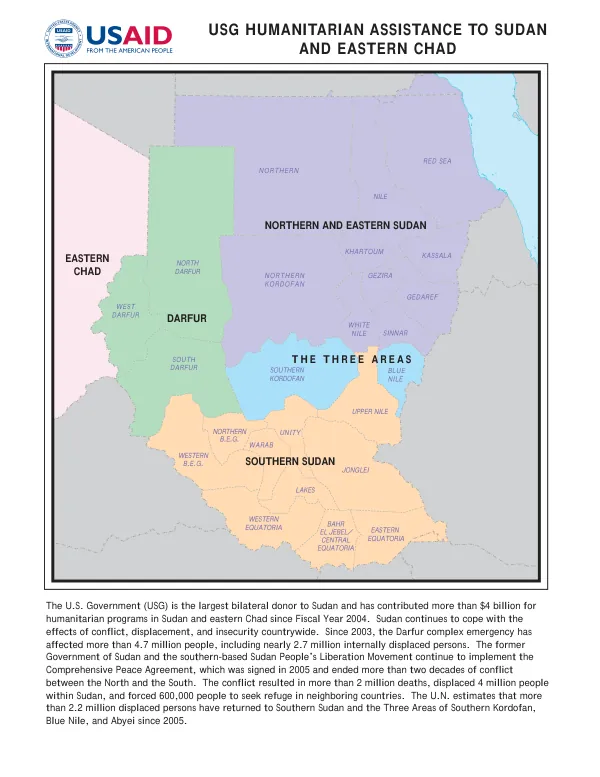
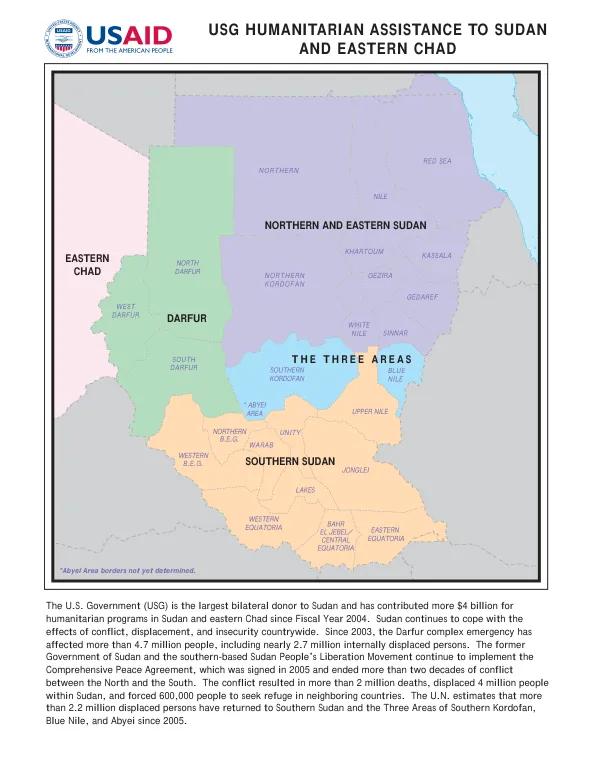
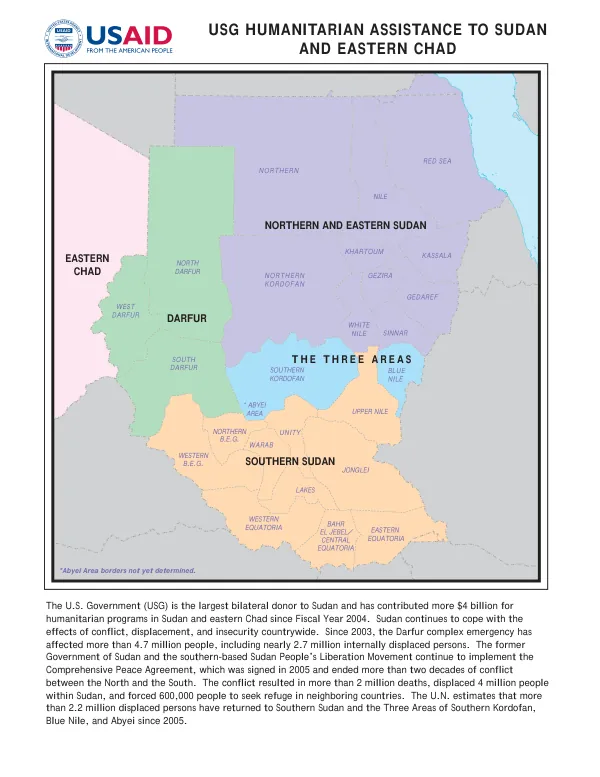
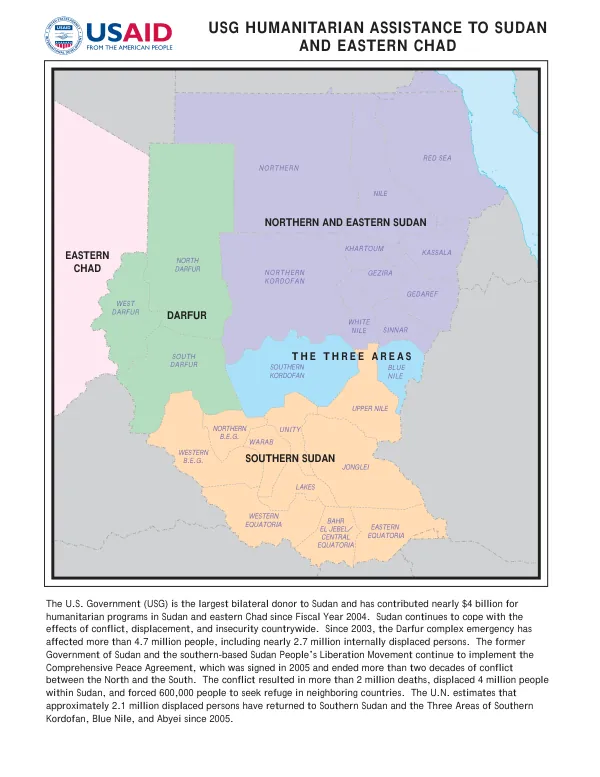
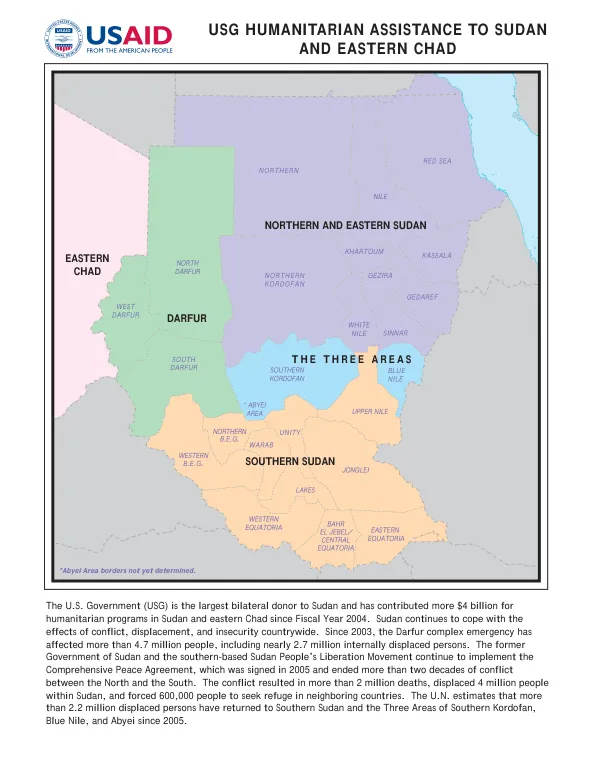
Government (USG) is the largest bilateral donor to Sudan, having contributed more than $4 billion for humanitarian programs in Sudan and eastern Chad since Fiscal Year 2004. Sudan continues to cope with the effects of conflict, displacement, and insecurity countrywide. The Darfur complex emergency has affected more than 4.7 million people, including nearly 2.7 million internally displaced persons, since 2003. The Comprehensive Peace Agreement, signed in 2005, ended more than two decades of conflict between the North and the South, resulting in more than 2 million deaths, displacing 4 million people within Sudan, and forcing 600,000 people to seek refuge in neighboring countries. The conflict in Darfur has led to significant humanitarian needs, with over 2.2 million displaced persons returning to Southern Sudan and the Three Areas of Southern Kordofan, Blue Nile, and Abyei since 2005. The USG has provided humanitarian assistance to Sudan and eastern Chad, with a focus on addressing the needs of internally displaced persons and refugees. Key areas of assistance include agriculture and food security, coordination and information management, economy and market systems, emergency relief supplies, health, humanitarian air operations, IDP assistance, logistics and transport, nutrition, protection, refugee assistance, risk reduction, shelter, title II food assistance, water, sanitation, and hygiene. In eastern Chad, the USG has provided humanitarian assistance to internally displaced persons and refugees, with a focus on addressing the needs of women and children. Key areas of assistance include agriculture and food security, capacity building, coordination and information management, economy and market systems, education, environmental conservation, health, humanitarian air operations, IDP assistance, logistics and transport, media, nutrition, protection, psychosocial services, refugee assistance, title II emergency food assistance, and water, sanitation, and hygiene. The USG has also provided humanitarian assistance to South Sudan, with a focus on addressing the needs of internally displaced persons and refugees. Key areas of assistance include agriculture and food security, conflict prevention, coordination and information management, economy and market systems, education, emergency relief supplies, gender-based violence prevention, health, humanitarian air operations, landmine risk reduction, livelihoods, logistics and transport, protection, refugee assistance, repatriation, title II food assistance, and water, sanitation, and hygiene. The USG has worked with a range of implementing partners, including non-governmental organizations (NGOs), international organizations, and local organizations, to provide humanitarian assistance to Sudan, eastern Chad, and South Sudan. These partners have played a critical role in delivering assistance to affected populations and have helped to build the capacity of local organizations to respond to humanitarian needs. The USG has also provided support to the humanitarian response in Sudan, eastern Chad, and South Sudan through the provision of funding, technical assistance, and logistics support. This support has helped to ensure that humanitarian assistance is delivered in a timely and effective manner, and has helped to build the capacity of local organizations to respond to humanitarian needs. The humanitarian situation in Sudan, eastern Chad, and South Sudan remains complex and challenging, with ongoing conflict, displacement, and insecurity affecting millions of people. The USG will continue to provide humanitarian assistance to affected populations, working with a range of implementing partners to deliver assistance in a timely and effective manner.