USAID DEC
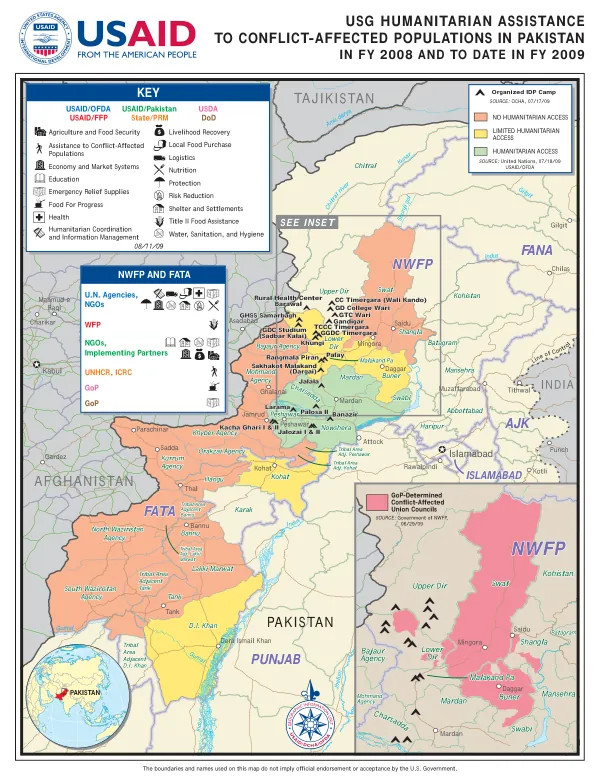
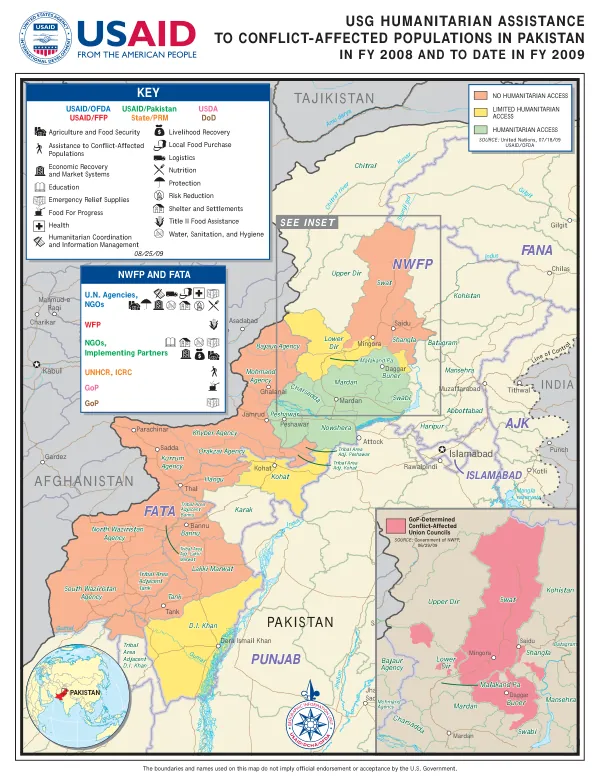
USG HUMANITARIAN ASSISTANCE TO COMFLICT-AFFECTED POPULATIONS IN PAKISTAN IN FY 2008 AND TO DATE IN FY 2009
Sign inICRC
USG HUMANITARIAN ASSISTANCE TO COMFLICT-AFFECTED POPULATIONS IN PAKISTAN IN FY 2008 AND TO DATE IN FY 2009
The conflict-affected areas in Pakistan's North-West Frontier Province (NWFP) and Federally Administered Tribal Areas (FATA) have been a focal point for humanitarian assistance.
2009 · 2 pages
Sign in to readA free account is required to download.
Abstract
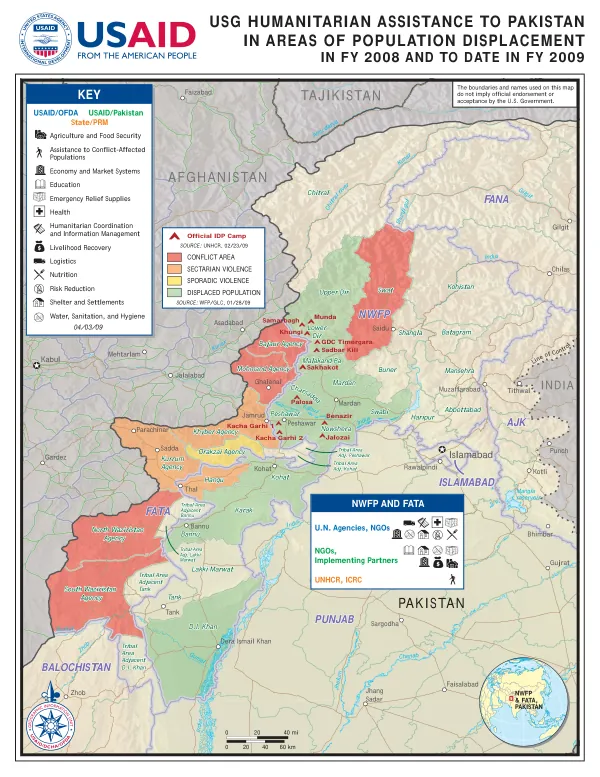
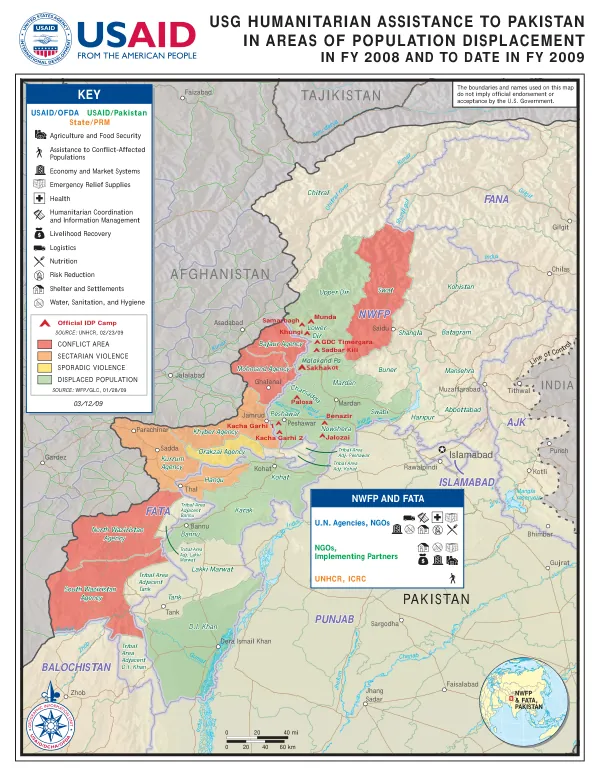
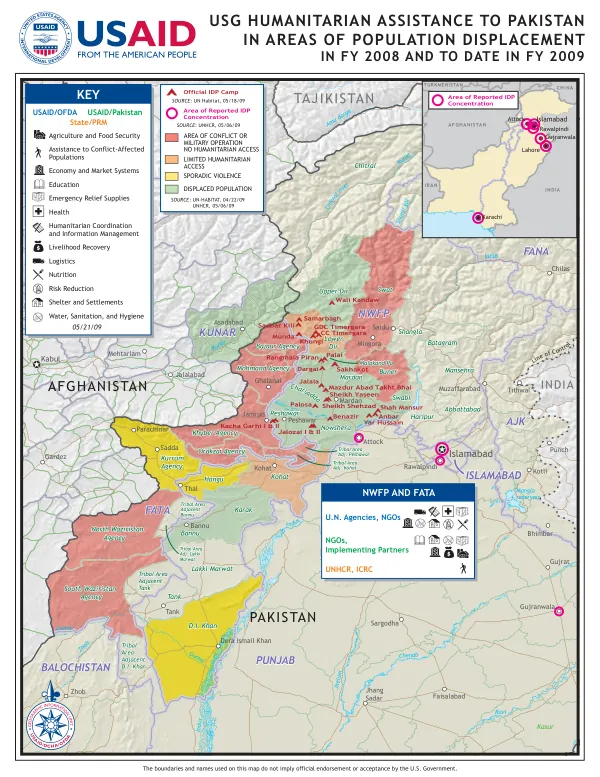
The region has experienced significant displacement due to conflict, with many individuals forced to flee their homes in search of safety. The map provided by the United Nations Office for the Coordination of Humanitarian Affairs (UN OCHA) on July 24, 2009, highlights areas where internally displaced persons (IDPs) reside outside organized camps. The map also shows the movement of IDPs since July 20, 2009. According to the map, IDPs have been displaced from various districts in NWFP and FATA, including Swat, Mansehra, Upper Dir, Shangla, Batagram, Mohmand Agency, Bajaur Agency, Khyber Agency, Buner, Swabi, Haripur, Mardan, Nowshera, and Peshawar. The Government of Pakistan (GOP) has facilitated and supported the return of IDPs to their homes. According to the Provincial Relief Commission (PRC) and Emergency Response Unit (ERU) and local officials, as of July 21, 2009, many IDPs had returned to their homes in Swat, Mansehra, Upper Dir, Shangla, Batagram, Mohmand Agency, Bajaur Agency, Khyber Agency, Buner, Swabi, Haripur, Mardan, Nowshera, and Peshawar. The humanitarian assistance provided to the conflict-affected areas in NWFP and FATA has been a collaborative effort between the US Government, UN agencies, non-governmental organizations (NGOs), and implementing partners. The assistance has focused on providing food, shelter, and other essential services to IDPs and affected communities. The map also highlights the areas where IDPs reside outside organized camps, including Mingora, Saidu Sharif, Daggar, Mardan, Peshawar, Asadabad, Islamabad, and other districts in NWFP and FATA. The movement of IDPs since July 20, 2009, is also shown on the map, indicating the extent of displacement in the region. The humanitarian assistance provided to the conflict-affected areas in NWFP and FATA has been a critical component of the response to the crisis. The assistance has helped to alleviate the suffering of IDPs and affected communities, providing them with the necessary support to recover from the conflict. The US Government has provided significant humanitarian assistance to the conflict-affected areas in NWFP and FATA. The assistance has been provided through various channels, including the US Agency for International Development (USAID), the Department of Defense (DoD), and the State Department's Bureau of Population, Refugees, and Migration (PRM). The humanitarian assistance provided to the conflict-affected areas in NWFP and FATA has focused on several key areas, including agriculture and food security, assistance to conflict-affected populations, economic recovery and market systems, education, emergency relief supplies, food for progress, health, humanitarian coordination and information management, livelihood recovery, local food purchase, logistics, nutrition, protection, risk reduction, shelter and settlements, title II food assistance, and water, sanitation, and hygiene. The assistance has been provided to various districts in NWFP and FATA, including Swat, Mansehra, Upper Dir, Shangla, Batagram, Mohmand Agency, Bajaur Agency, Khyber Agency, Buner, Swabi, Haripur, Mardan, Nowshera, and Peshawar. The assistance has helped to alleviate the suffering of IDPs and affected communities, providing them with the necessary support to recover from the conflict.