ADRA
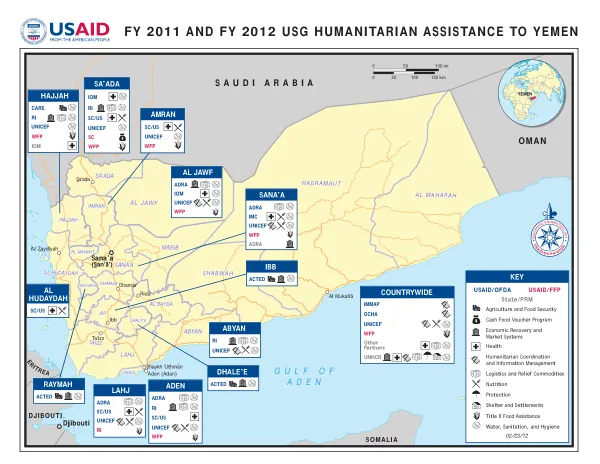
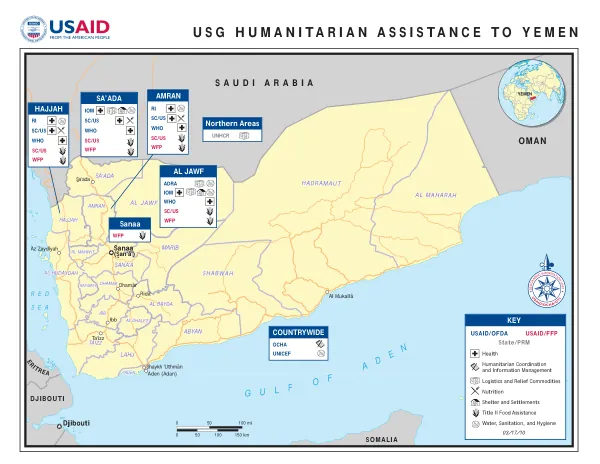
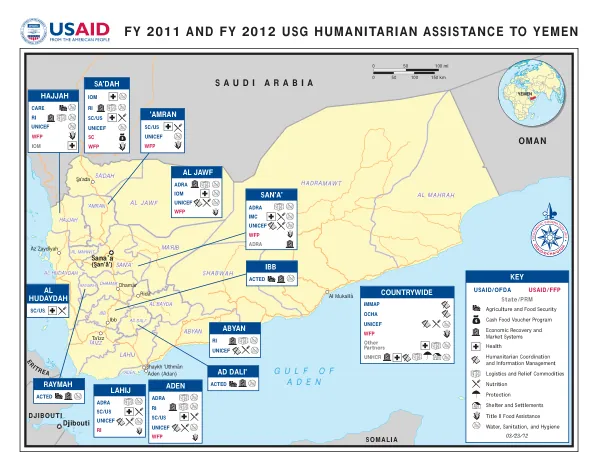
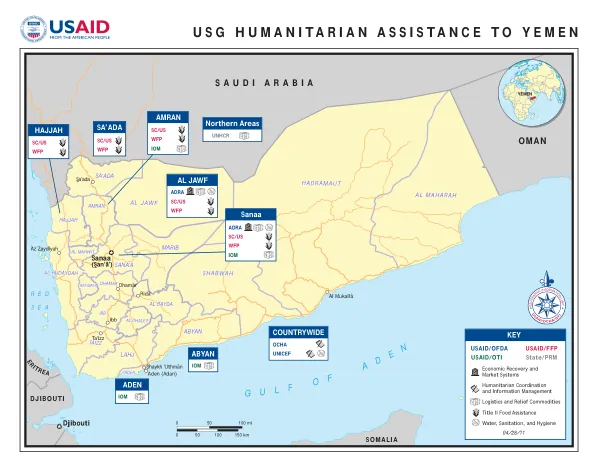
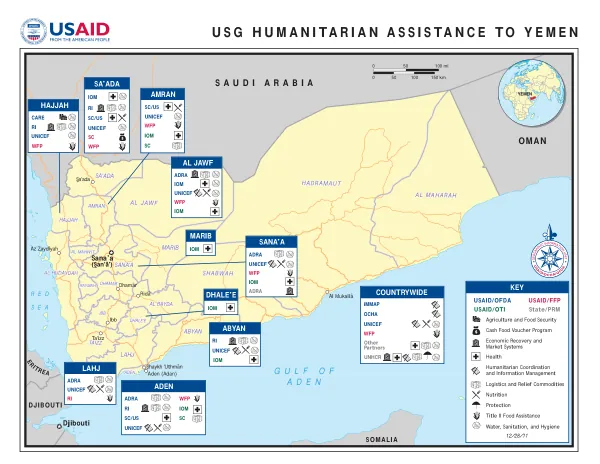
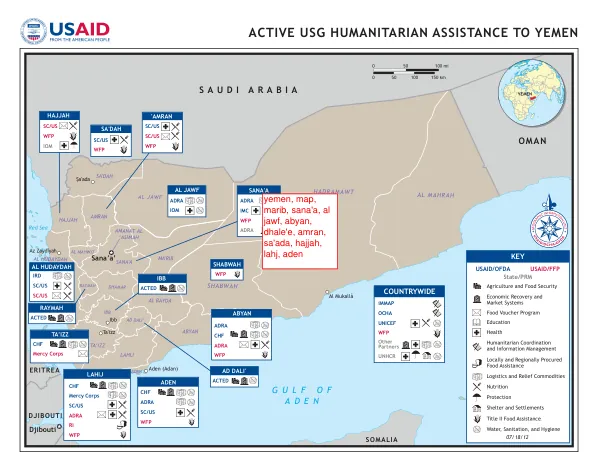
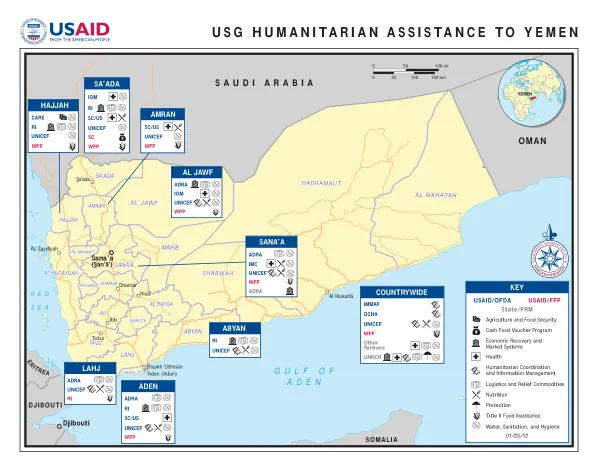
USG HUMANITARIAN ASSISTANCE TO YEMEN MAP
Yemen's agricultural sector faces significant challenges, particularly in the southern regions.
2012 · 1 pages
Sign in to readA free account is required to download.
Abstract
The provinces of Ta'izz, Dhamar, and Ibb are among the most affected areas, with soil degradation and limited market access hindering crop yields. Initial assessments conducted in these provinces identified soil erosion and inadequate irrigation systems as primary concerns. The USAID-funded Cash Food Voucher Program aimed to improve food security and stimulate local economies. The program provided cash assistance to vulnerable households, enabling them to purchase essential food items and other necessities. Agricultural development initiatives also targeted the provinces of Al Jawf, Hadramaut, and Lahj, where farmers received training in sustainable agriculture techniques and access to improved irrigation systems. The geographic focus of these initiatives extends beyond the provinces of Ta'izz, Dhamar, and Ibb, encompassing the entire country. The USAID-funded program, in collaboration with international partners such as UNHCR, UNICEF, and WFP, aimed to address the humanitarian needs of vulnerable populations across Yemen. The program's implementation was facilitated by the presence of local partners, including ADRA, IOM, and IMC, which provided critical support in the delivery of assistance. The program's impact was also felt in the provinces of Sana'a, Hajjah, and Sa'ada, where agricultural development initiatives aimed to improve food security and stimulate local economies. The program's success was attributed to the effective coordination and collaboration among international partners, local authorities, and community stakeholders. The program's achievements serve as a model for future agricultural development initiatives in Yemen, highlighting the importance of integrated approaches to address the country's complex humanitarian and development challenges.
Related documents