USAID DEC
Using Routine Data to Improve Antiretroviral Treatment Retention: Examples and Lessons Learned from the Literature and Experts in the Field
Sign inHEALTH PARTNERS INTERNATIONAL
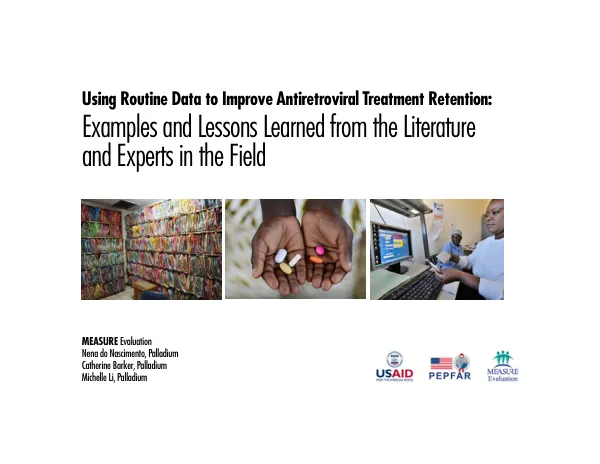
Using Routine Data to Improve Antiretroviral Treatment Retention: Examples and Lessons Learned from the Literature and Experts in the Field
The use of routine data to improve antiretroviral treatment (ART) retention is a critical component of HIV care in low-resource settings.
2017 · 32 pages
Sign in to readA free account is required to download.
Abstract
A strong cadre of community health workers, empowered by a staff of data managers who provide quality data and good data analysis, is essential for increasing retention in ART. Good-quality data and better use of them are the low-hanging fruit to achieve retention on ART, as they can be done now. Retention in care is crucial for curbing the transmission of HIV and achieving an AIDS-free generation. It is the cornerstone of the UNAIDS strategy. Harnessing data to increase ART retention involves a diverse set of skilled practitioners, motivated to collect, analyze, and use routine health facility data. Quality controls for data, sharing data across systems, and the support of country health-program managers and facility staff are also necessary to sustain achievements. Three main ways that routine data are currently used to improve adult ART retention in low-resource settings have been identified. These include data capture, data review, and client tracing. Almost all of these interventions ultimately rely on community health workers to support clients, and every one of them relies on good-quality data that are used in programs, not just reported. National, district, facility, and community health system staff collect, aggregate, and analyze routine data for trends and achievements, while funders pay for HIV interventions to increase ART retention and have their own data reporting streams. Routine health information systems (RHIS) are used to record information at regular intervals to meet predictable information needs. Data collected on health status, health interventions, or health resources may be captured in these systems. As countries work toward 90-90-90 goals, they must be able to assess how well their RHIS are able to track clients and monitor their visits to facilities and clinical data effectively. The use of routine data to improve ART retention is a complex process that requires a diverse set of skilled practitioners, quality controls for data, and the support of country health-program managers and facility staff. The importance of routine data in improving ART retention cannot be overstated. It is essential for curbing the transmission of HIV and achieving an AIDS-free generation. The use of routine data to improve ART retention involves a diverse set of skilled practitioners, motivated to collect, analyze, and use routine health facility data. Quality controls for data, sharing data across systems, and the support of country health-program managers and facility staff are also necessary to sustain achievements. By leveraging routine data, countries can improve ART retention and ultimately achieve the 90-90-90 goals.