USAID DEC
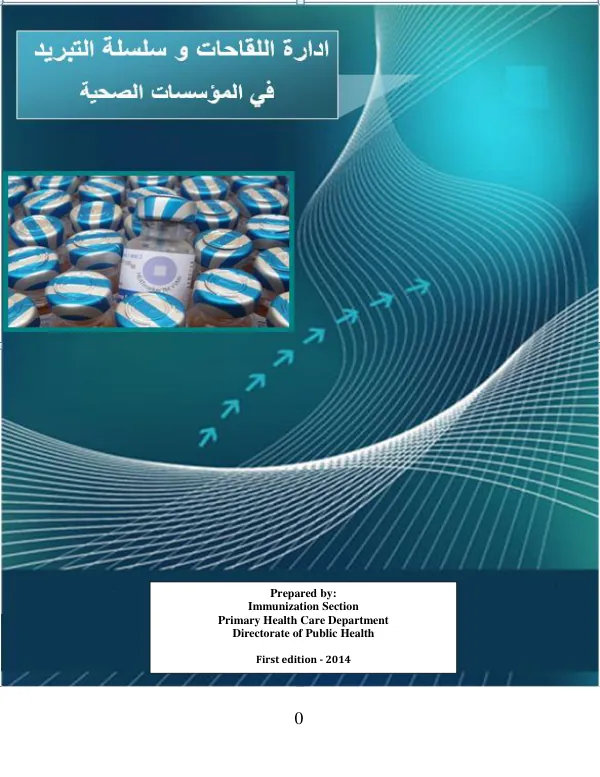
Vaccination Management and Cold Chain Guide for Iraq
The accurate definition of vaccination cold chain is summarized as the system that ensures preserving the vaccines safe and effective from manufacturing moment to the use of vaccine.
2014 · 57 pages
Sign in to readA free account is required to download.
Abstract
The basic elements of cold chain are the equipment used in storing and transportation, and the personnel in charge of receiving, transporting, storing, distribution, and delivering vaccines during different stages that vaccines pass through. This is called vaccine cold chain. Cold chain is considered the main pillar in the expanded program of immunization and the guarantee for delivering effective vaccines to the targeted sector in a correct way. Since vaccine exposure to heat or freezing influences the efficacy of the vaccine, and thereby the required immunity would not be satisfied, exposing the community to the risk of contacting preventable diseases. The different levels of primary health care require different equipment to transport and store vaccines and solvents in the appropriate temperature to preserve each vaccine. The vaccine is stored on arrival from the factory in the main warehouse, until the end of specific tests, to be distributed at the level of province warehouse, and therefrom to the warehouses of health district and primary health care centers (PHCCs). The central main warehouse requires cold rooms, freezing rooms, freezers, refrigerated vehicles, and portable insulated containers for transport. Branch warehouses require cold rooms, refrigerators, freezers for ice blocks, refrigerated vehicles, and portable insulated containers for transport and emergency cases. District warehouses require freezers, refrigerators, and portable insulated containers. The equipment used in the primary health care clinics (PHCC) includes refrigerators, vaccine transport equipment, cold boxes, vaccine carriers, and ice packs. Refrigerators are used to store vaccines at a temperature range of 2-8°C, while vaccine transport equipment is used to transport vaccines from one location to another. Cold boxes are used to store vaccines at a temperature range of 2-8°C, and vaccine carriers are used to transport vaccines from one location to another. Ice packs are used to keep vaccines cool during transport. The accurate storage and handling of vaccines are crucial to maintain their efficacy. Vaccines should be stored in a cool, dry place, away from direct sunlight and heat sources. The storage temperature should be between 2-8°C, and the vaccines should be kept in their original packaging. The vaccines should also be handled carefully to prevent damage and contamination. The monitoring of vaccine temperature is essential to ensure that the vaccines are stored at the correct temperature. The vaccine vial monitor (VVM) is a device that is used to monitor the temperature of vaccines. The Fridge-Tag is a device that is used to monitor the temperature of refrigerators, and the Cold Chain Monitor (CCM) is a device that is used to monitor the temperature of vaccines during transport. The freezing index is a device that is used to monitor the temperature of freezers, and the disc thermometer is a device that is used to monitor the temperature of vaccines. The storage capacity of vaccines is an essential factor to consider when planning vaccine storage and distribution. The storage capacity of vaccines can be calculated using a formula that takes into account the number of vaccines, the storage temperature, and the storage duration. The storage capacity of vaccines can also be calculated using a chart that shows the storage capacity of vaccines at different temperatures. The needs assessment process is an essential step in planning vaccine storage and distribution. The needs assessment process involves identifying the number of vaccines required, the storage capacity of vaccines, and the distribution channels. The needs assessment process also involves identifying the factors that affect the needs assessment, such as the number of vaccines required, the storage capacity of vaccines, and the distribution channels. The stock management process is an essential step in planning vaccine storage and distribution. The stock management process involves managing the inventory of vaccines, monitoring the storage capacity of vaccines, and monitoring the distribution channels. The stock management process also involves identifying the factors that affect the stock management, such as the number of vaccines required, the storage capacity of vaccines, and the distribution channels.