USAID. BUR. FOR SCIENCE AND TECHNOLOGY. OFC. OF HEALTH
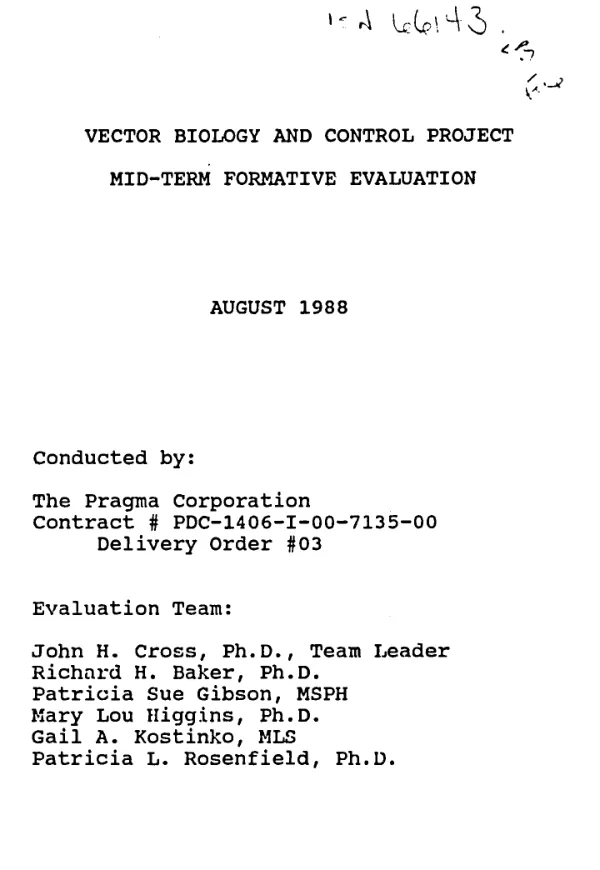
Vector biology and control
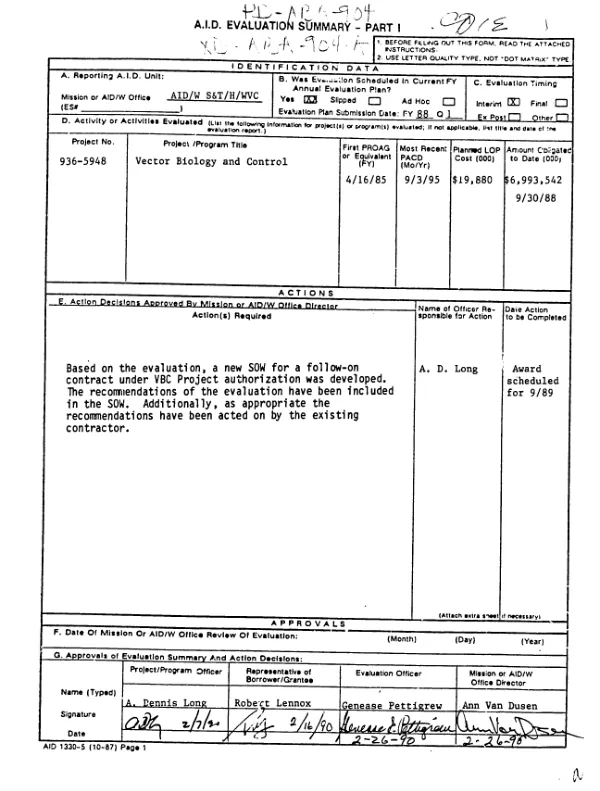
Summarizes mid-term evaluation (XD-ABA-904-A) of a project to establish and enhance vector-borne disease control programs in developing countries through TA, institution and human resource development, information management, and technical information services.
1990
Sign in to readA free account is required to download.
Abstract
The evaluation covered the period 4/85-1990. Project management and implementation have been successful, and solutions to identified problems are well within reach. Almost all end-of-project activity targets have been achieved: 32 countries have been assisted (vs. 40-50 planned); 265 professionals have been trained (vs. 100-200); and 10 new vector control tools have been tested (vs. 10-15). In addition, an impressive information center has been established. Project activities, staff, and consultants have received high marks from Regional Bureaus and Missions for responsiveness and quality of assistance. The success of efforts to identify needs and build interest in the project is evident from the high level of buy-in activities: approximately 40% of activity costs have been met through Mission buy-ins. The project funding ceiling has been drawn down at a faster rate than expected. Recommendations generally aim at strengthening current operations rather than rectifying errors. The principal recommendations are that the project: (1) assess assistance needs with Regional Bureaus and Missions; (2) develop a comprehensive strategy for integrating vector control into health sector programs; (3) achieve a better balance between initiating activities and responding to requests for assistance; (4) continue collaboration with international and regional organizations and national institutions; and (5) increase the level of project capabilities in the areas of design, planning, and human resource development. (Abstract based in part on XD-ABA-904-A.)
Related documents