ENCOMPASS, LLC
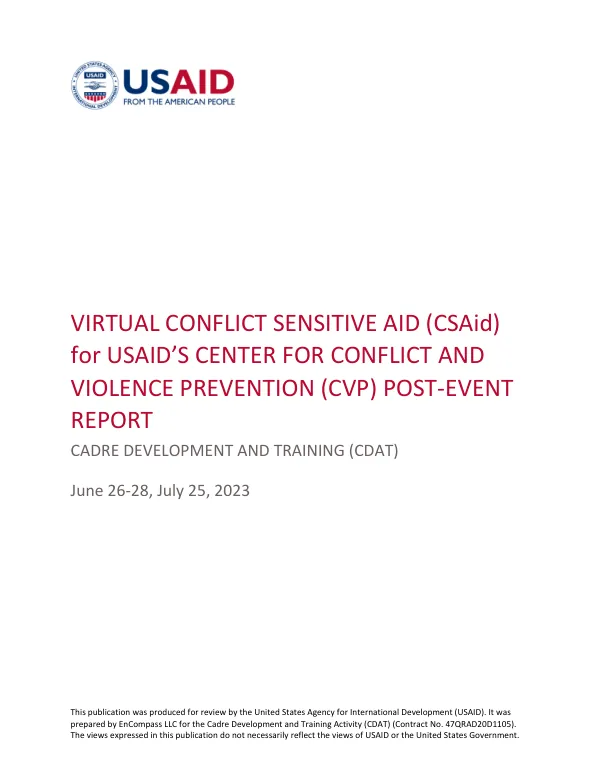
Virtual CSAid ToT POST-EVENT REPORT
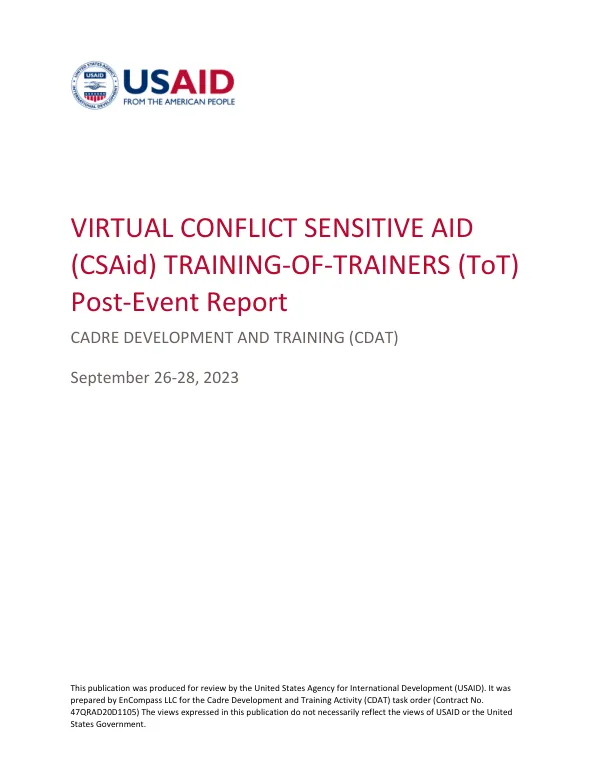
The Conflict Sensitive Aid (CSAid) Training-of-Trainers (ToT) workshop was conducted virtually from September 26-28, 2023.
2023 · 13 pages
Sign in to readA free account is required to download.
Abstract
The workshop aimed to prepare selected staff members from the Conflict Vulnerability Platform (CVP) to serve as trainers for the CSAid course. The objectives of the workshop were to identify the core components of the virtual and in-person versions of the CSAid course, use various techniques to engage adult learners in interactive sessions, and facilitate components of the CSAid course. The workshop design provided modeling of sessions, having participants deliver sections of the course, receiving feedback from fellow participants and course trainers, and engaging in self-assessment. The agenda for the three 4-hour virtual instructor-led (vILT) sessions is presented in Annex A. A total of 10 participants attended the workshop, and 7 completed the evaluation. The evaluation results showed that the majority of respondents agreed or strongly agreed that the design of the session contributed to their learning experience (86 percent), that they are committed to applying what they learned in the course back on the job (86 percent), and that they are confident in applying what they learned back on the job (71 percent). Respondents also reported high satisfaction with the course facilitators, with 71 percent or more indicating that they were satisfied or very satisfied with each facilitator's knowledge of the subject matter, effectiveness in engaging participants, and effectiveness in facilitating responses to participant comments/questions. The evaluation results also showed that a majority of respondents agreed or strongly agreed that the learning objectives were clear (57 percent), and almost half of respondents agreed or strongly agreed that they were satisfied with the sessions (43 percent) and that they would recommend the course to colleagues (43 percent). The respondents' perceived competency in identifying the core components of the CSAid course increased from 14 percent to 43 percent after the session. The facilitators, producers, and the CVP team provided input through the after-action review process, indicating that this delivery was successful. Strengths included strong participant engagement in teach-backs and collaboration among the delivery team members. The team also had suggestions for how future deliveries could be improved, including adjustments to technical material and exploring strategies to increase participant engagement in the course throughout the three days of delivery. Based on the ToT participant feedback, feedback from the facilitators, and the P&E and CDAT team's post-event after-action reviews, CDAT recommends the following adjustments for future CSAid ToT workshops: considering the impact of delivery timing on participant engagement, reviewing technical material and adjusting where needed, and ensuring activities provide clarity between in-person and virtual delivery nuances. The demographic data presented in Annex C shows that the respondents were primarily female (71 percent), with a majority working in the field of democracy, human rights, and governance (57 percent). The respondents had varying levels of experience working in a peace and conflict role at USAID, with 43 percent having worked in this role for 1-3 years. The evaluation summary presented in Annex D shows that a majority of respondents agreed or strongly agreed that the design of the course materials contributed to their learning experience (86 percent), that they felt confident applying what they learned back on the job (71 percent), and that they are committed to doing so (86 percent).
Related documents