TETRA TECH
WA BiCC Gender Equality and Social Inclusion (GESI) Guidelines
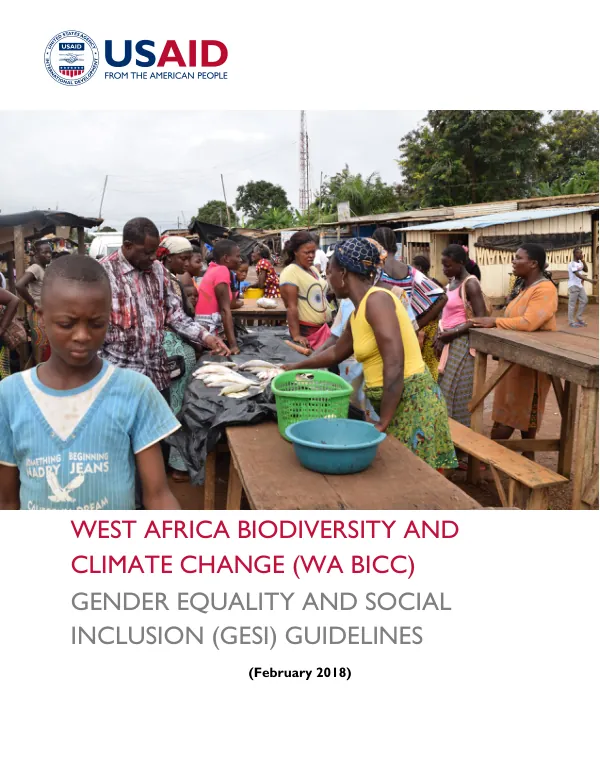
The West Africa Biodiversity and Climate Change (WA BICC) Gender Equality and Social Inclusion (GESI) Guidelines emphasize the importance of integrating gender equality and social inclusion into biodiversity and climate change interventions.
2018 · 18 pages
Sign in to readA free account is required to download.
Abstract
The guidelines aim to support WA BiCC staff and partners in understanding how to incorporate GESI into their activities, improve access to information on GESI, and reduce disparities related to gender and other social factors. The WA BiCC GESI strategy emphasizes the need for responsive integration of gender equality and social inclusion to make for more effective biodiversity and climate change adaptation (CCA) interventions. The strategy seeks to support WA BiCC staff and partners in their efforts to understand how to incorporate GESI into their activities, improve access to information on GESI, and reduce disparities related to gender and other social factors. The guidelines provide practical guidelines on how to mainstream GESI into WA BiCC components and activities, as well as a guided approach to integrating GESI into regular work. The guide is developed for those who will be planning, implementing, monitoring, and evaluating WA BiCC's projects and activities, including all WA BiCC staff, regional partners, grantees, and landscape facilitators. The WA BiCC GESI strategy emphasizes the need for an intersectional focus, recognizing that a person may be excluded in profound ways due to the interaction of their gender, age, ethnicity, and other aspects of their social, economic, and cultural identity. The strategy provides pragmatic recommendations to WA BiCC for equitable distribution of project benefits in ways that include the voices and concerns of vulnerable and marginalized groups, and improves their agency and status. The guidelines highlight the importance of capacity building, evidence-based learning, and advocacy and awareness raising in ensuring effective mainstreaming of GESI into WA BiCC. These approaches are expected to lead to the improved voice and agency of vulnerable groups, increased access to alternative livelihoods, sustainable use of natural resources, and increased climate resilience among all social groups, particularly the most poor and vulnerable. The WA BiCC GESI guide is based on an extensive WA BiCC GESI Strategy in which evidence-based approaches for GESI in natural resource management (NRM) in West Africa were reviewed. The guide provides practical guidelines on how to mainstream GESI into WA BiCC components and activities, as well as a guided approach to integrating GESI into regular work. The guidelines aim to support WA BiCC staff and partners in their efforts to understand how to incorporate GESI into their activities, improve access to information on GESI, and reduce disparities related to gender and other social factors. The guide is expected to help WA BiCC and partners design and implement programming that supports comprehensive and sustainable natural resource management, and to improve the lives of poor and marginalized West Africans. The guidelines highlight the importance of mainstreaming GESI into WA BiCC components and activities, and provide practical guidelines on how to do so. The guide is developed for those who will be planning, implementing, monitoring, and evaluating WA BiCC's projects and activities, including all WA BiCC staff, regional partners, grantees, and landscape facilitators. The WA BiCC GESI strategy emphasizes the need for evidence-based approaches to GESI, and provides pragmatic recommendations to WA BiCC for equitable distribution of project benefits in ways that include the voices and concerns of vulnerable and marginalized groups, and improves their agency and status. The strategy provides a guided approach to integrating GESI into regular work, and highlights the importance of capacity building, evidence-based learning, and advocacy and awareness raising in ensuring effective mainstreaming of GESI into WA BiCC.
Related documents