USAID
Water Security and Resilience Assessment for Lesotho
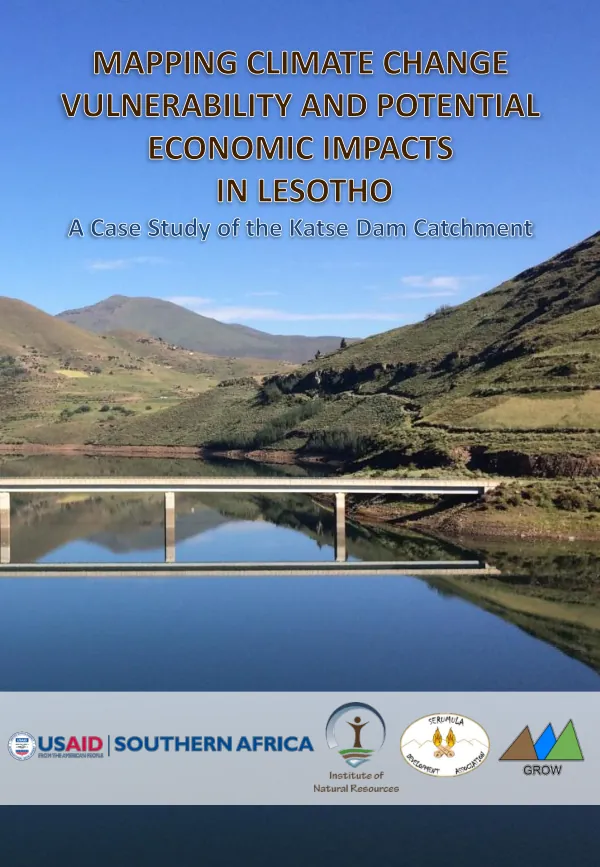
The Lesotho Highlands Water Project (LHWP) is a major water development initiative in Lesotho, a small country in southern Africa.
2010 · 28 pages
Sign in to readA free account is required to download.
Abstract
The project began in the 1980s with the goal of harnessing the water resources of the Maluti Mountains to supply water to the cities of Johannesburg and Pretoria in South Africa. The LHWP involves the construction of a series of dams, tunnels, and canals to divert water from the Maluti Mountains to the Vaal River, which flows into the Orange River and eventually into the Atlantic Ocean. The project also includes the construction of a power station, which generates electricity for the national grid. The LHWP has been implemented in several phases, with the first phase completed in the 1990s. The second phase, which began in the early 2000s, involved the construction of a new dam, the Katse Dam, and a series of tunnels and canals to divert water from the dam to the Vaal River. The third phase, which is currently underway, involves the construction of a new power station and the expansion of the existing infrastructure. The LHWP has had a significant impact on the economy and environment of Lesotho. The project has created thousands of jobs and has generated significant revenue for the government through the sale of electricity and water. However, the project has also had significant environmental impacts, including the displacement of communities and the alteration of the natural landscape. The LHWP is managed by the Lesotho Highlands Development Authority (LHDA), which is responsible for the planning, implementation, and maintenance of the project. The LHDA works closely with the government of Lesotho, the government of South Africa, and other stakeholders to ensure the successful implementation of the project. The LHWP has been recognized as a model for water development and management in Africa. The project has won several international awards for its innovative approach to water management and its commitment to sustainability. The LHWP has also been recognized for its contributions to the economic development of Lesotho and its role in promoting regional cooperation and integration. The LHWP is a complex and multifaceted project that involves the coordination of multiple stakeholders and the management of significant technical and environmental risks. However, the project has been successful in achieving its goals and has made a significant contribution to the economic and social development of Lesotho and the region.