USAID DEC
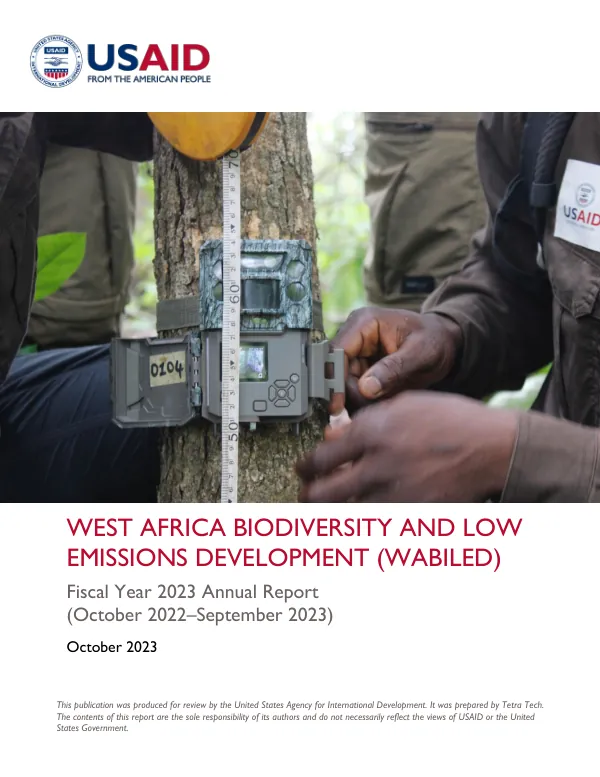
West Africa Biodiversity and Low Emissions Development (WABiLED): Fiscal Year 2023 Annual Report (October 2022–September 2023)
Sign inTETRA TECH
West Africa Biodiversity and Low Emissions Development (WABiLED): Fiscal Year 2023 Annual Report (October 2022–September 2023)
The West Africa Biodiversity and Low Emissions Development (WABiLED) initiative aims to combat wildlife trafficking and promote conservation of critical habitat in West Africa.
2023 · 98 pages
Sign in to readA free account is required to download.
Abstract
The program focuses on improving regional coordination and operationalizing national and regional policies, laws, and regulations. Key milestones include increased in-country coordination and capacity for CITES implementation and wildlife law enforcement, strengthened national capacities for protected area management, and increased strategic private sector partnerships. The program also targets reducing deforestation, forest degradation, and biodiversity loss in key forests through technical and knowledge management support. Results include strengthened collaboration among MRU states for effective resource governance, increased protection and management of transboundary forest landscapes, and community-identified livelihood opportunities that generate income and support sustainable forest management. Furthermore, the initiative aims to reduce greenhouse gas emissions and increase carbon sequestration from land use. Results include support for governments, communities, and private sector collaboration to improve forest landscape conservation and resource conservation, improved tenure security for vulnerable populations, and enhanced land-based private sector investment and innovation. The WABiLED program also focuses on policy and partnerships, with key achievements including capacity strengthening, collaboration with the Mano River Union Secretariat, and provision of cross-cutting services such as gender, youth, and social inclusion, knowledge management, and environmental compliance and climate risk management. The program management includes activities planning, staff, and WABiLED offices. Grants management is also managed through the Annual Program Statement and CITES students research support grant to IUCN. The program has made significant progress in achieving its objectives, with notable results including increased in-country coordination and capacity for CITES implementation and wildlife law enforcement, strengthened national capacities for protected area management, and increased strategic private sector partnerships. The program has also made significant progress in reducing greenhouse gas emissions and increasing carbon sequestration from land use. Results include support for governments, communities, and private sector collaboration to improve forest landscape conservation and resource conservation, improved tenure security for vulnerable populations, and enhanced land-based private sector investment and innovation. The WABiLED program has also made significant progress in providing cross-cutting services, including gender, youth, and social inclusion, knowledge management, and environmental compliance and climate risk management. The program has also made significant progress in grants management, including the Annual Program Statement and CITES students research support grant to IUCN. The WABiLED initiative has made significant progress in achieving its objectives, with notable results including increased in-country coordination and capacity for CITES implementation and wildlife law enforcement, strengthened national capacities for protected area management, and increased strategic private sector partnerships.
Related documents