IOM
West Africa – Ebola Outbreak Fact Sheet #26, Fiscal Year (FY) 2015
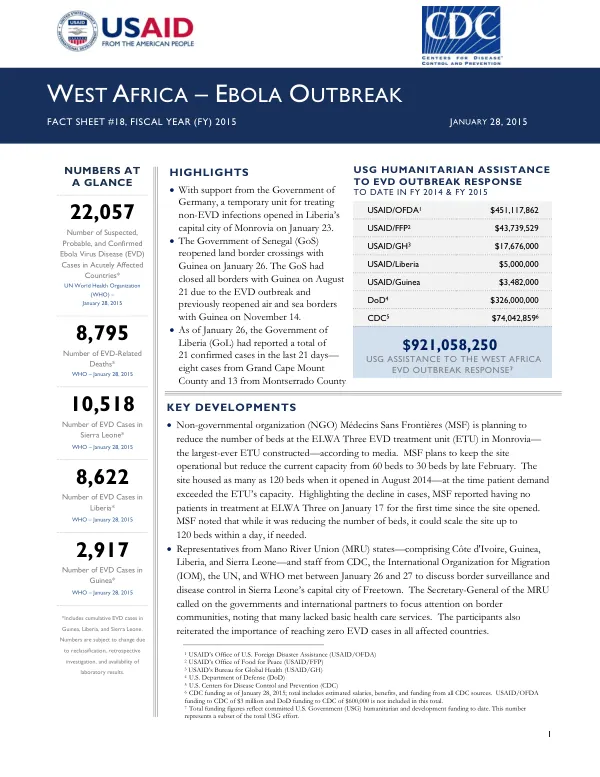
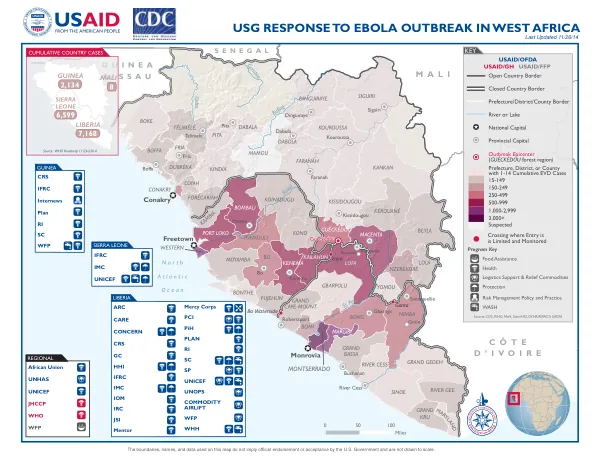
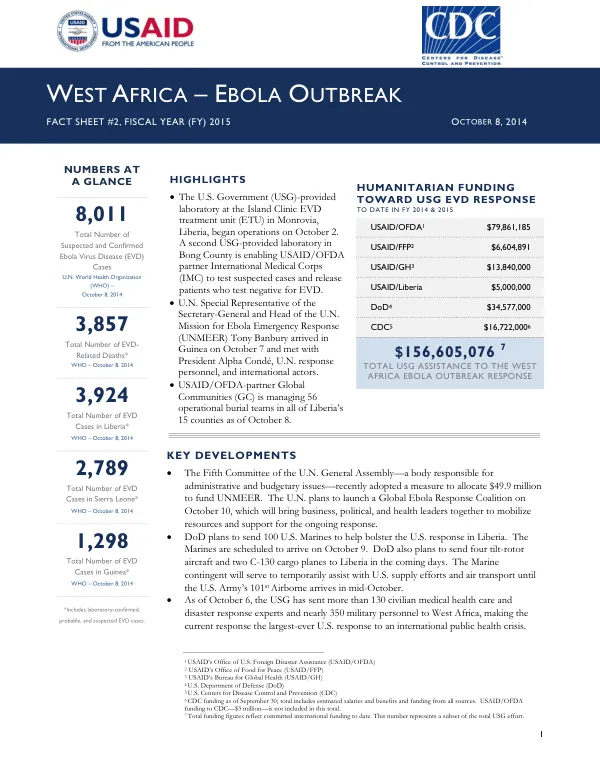
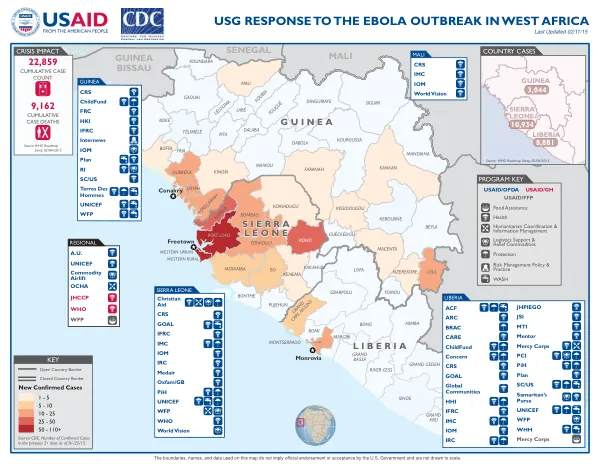
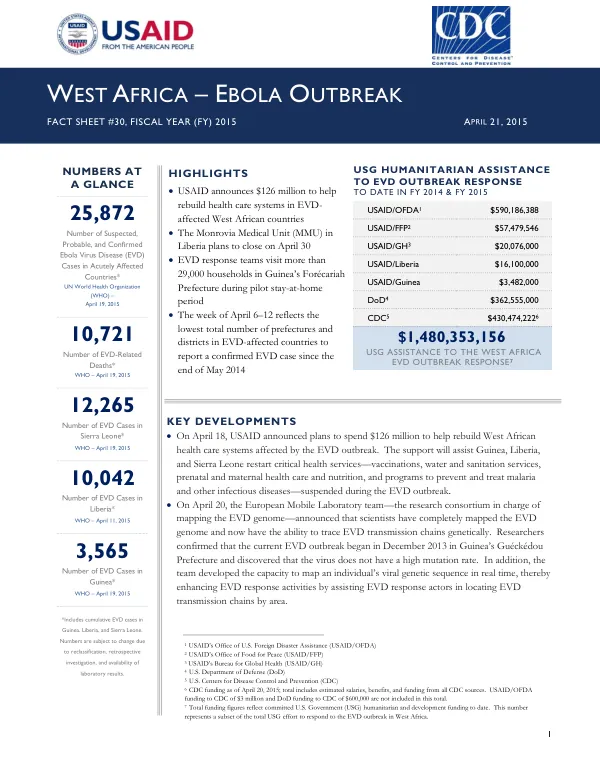
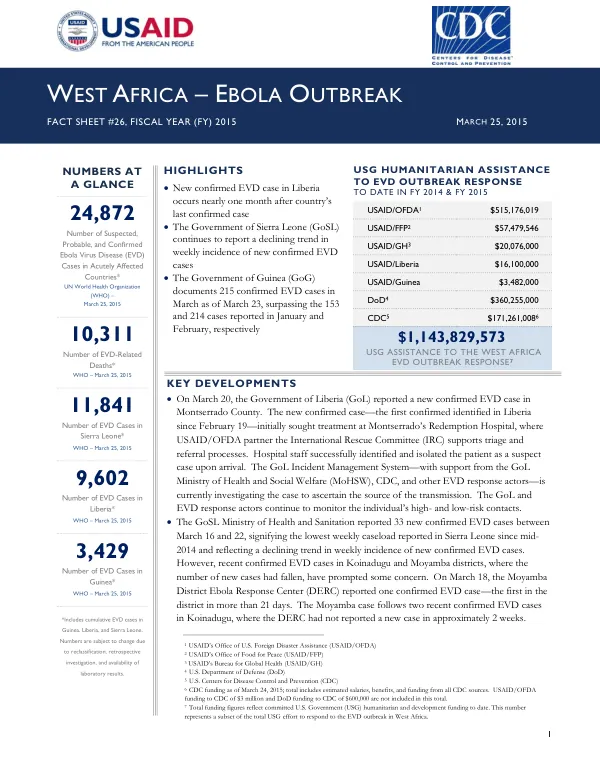
Ebola Outbreak Response in West Africa The Government of Liberia reported a new confirmed Ebola virus disease (EVD) case in Montserrado County on March 20, marking the first confirmed case in the country since February 19.
2015 · 8 pages
Sign in to readA free account is required to download.
Abstract
The patient initially sought treatment at Redemption Hospital, where USAID/OFDA partner the International Rescue Committee (IRC) supports triage and referral processes. Hospital staff successfully identified and isolated the patient as a suspect case upon arrival. The Government of Sierra Leone continues to report a declining trend in weekly incidence of new confirmed EVD cases, with 33 new confirmed cases reported between March 16 and 22. This represents the lowest weekly caseload reported in Sierra Leone since mid-2014. However, recent confirmed EVD cases in Koinadugu and Moyamba districts have prompted some concern. The Moyamba District Ebola Response Center reported one confirmed EVD case on March 18, the first in the district in more than 21 days. The Government of Guinea documents 215 confirmed EVD cases in March, surpassing the 155 and 214 cases reported in January and February, respectively. The World Health Organization (WHO) reported 79 new confirmed cases of EVD between March 16 and 22, the lowest weekly total in 2015. EVD treatment capacity exceeds demand in both Liberia and Sierra Leone due to falling incidence and declining transmission. National authorities, with technical guidance from WHO, are beginning to implement plans for the phased safe decommissioning of surplus EVD treatment facilities. Each country will maintain a core capacity of high-quality EVD treatment facilities with additional rapid-response capacity. WHO is supporting the Government of Liberia's Ministry of Health and Social Welfare to implement an enhanced EVD surveillance framework for monitoring Liberia's borders with Sierra Leone. The framework aims to strengthen cross-border surveillance capacity and reinforce cross-border controls. Liberia's rainy season, which occurs between May and October, often causes road deterioration and increases the prevalence of diseases such as malaria and cholera. The Government of Liberia and EVD response actors, including partners supported by USAID/OFDA, have begun rainy season preparations to ensure adequate drainage capacity and available supplies, including food, safe drinking water, medicines, fuel, personal protective equipment, and infection control stocks. USAID/OFDA partner BRAC continues to provide psychosocial support to EVD-affected populations across Bong, Gbarpolu, Grand Bassa, Grand Cape Mount, Lofa, Montserrado, and Nimba counties. BRAC staff facilitated 100 EVD survivor welcome ceremonies between January and March, promoting community acceptance and reintegration. BRAC also disseminates EVD awareness messaging via radio, translated into local languages, to dispel misconceptions and promote acceptance of EVD survivors. The Government of Sierra Leone has launched the "Getting to Zero" campaign to identify and isolate EVD cases in communities and improve adherence to infection control methods. The campaign will begin with a March 27-28 stay-at-home period, followed by three consecutive stay-at-home Saturdays starting on April 4. Three-person teams will conduct house-to-house EVD prevention and detection activities during the stay-at-home periods. The International Federation of Red Cross and Red Crescent Societies (IFRC) is providing 2,000 survivor kits to patients discharged from EVD treatment facilities across Sierra Leone, as well as to individuals hosting or caring for them. The kits include clothes, emergency food, hygiene kits, mattresses, and other household items. To date, IFRC has provided support to approximately 39 million people in response to the EVD outbreak in West Africa. The USG Disaster Assistance Response Team (DART) collaborated with IOM, Lifeline, and Medair to distribute interim care and educate recipients regarding their use. With IOM support, Medair plans to collaborate with Lifeline to distribute care and educate recipients in the Moa Wharf area in eastern Freetown, Western Urban District.