WORLD HEALTH ORGANIZATION
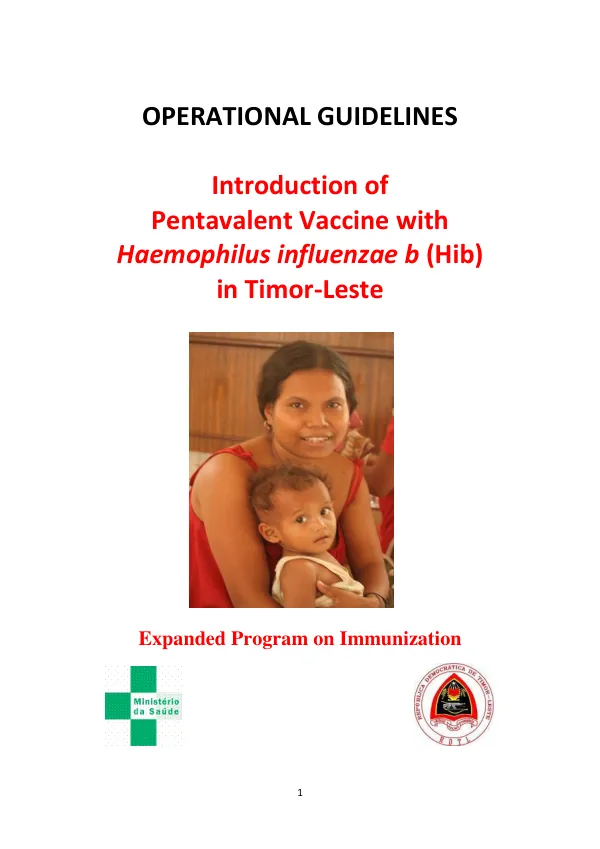
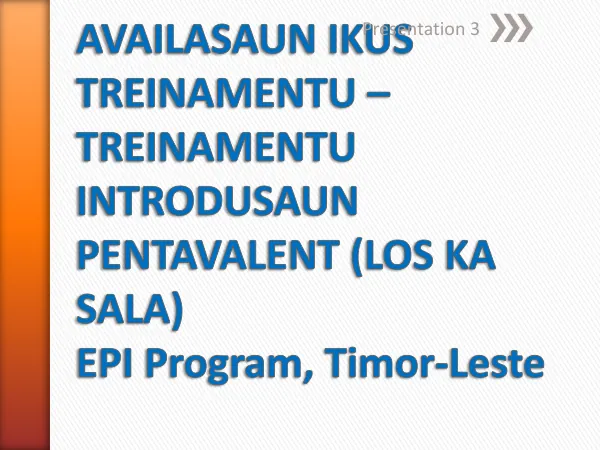
Why do we need the pentavalent vaccine ? EPI Program, Timor-Leste
Haemophilus influenzae type b (Hib) is a bacterium that causes severe infections, particularly in children under the age of five.
2012 · 22 pages
Sign in to readA free account is required to download.
Abstract
These infections can lead to high mortality rates among young children. Hib is a leading cause of pneumonia and meningitis in this age group. Hib is spread through respiratory droplets, similar to the common cold. When an infected person coughs or sneezes, they release droplets of saliva that can contain the bacteria. These droplets can then be inhaled by others, infecting them. Hib can also be spread when children share toys and other objects that they have put in their mouths. Children often serve as asymptomatic carriers of the bacteria, showing no signs or symptoms but still able to infect others. Preventing Hib infections is challenging. Diagnosis and treatment of the disease are difficult, and vaccination is the most effective strategy for prevention. The Hib vaccine is a proven method for preventing Hib infections. Children should receive three doses of the vaccine by the age of one. The Hib vaccine is safe and effective, and it is a crucial component of Hib prevention strategies. The pentavalent vaccine, which includes protection against diphtheria, pertussis, hepatitis B, and Hib, has been shown to be effective in preventing Hib infections. After receiving the pentavalent vaccine, children are less likely to contract pneumonia or meningitis caused by Hib. The pentavalent vaccine is widely available through the Expanded Programme on Immunization (EPI) and is administered in a series of 10 doses.