USAID DEC
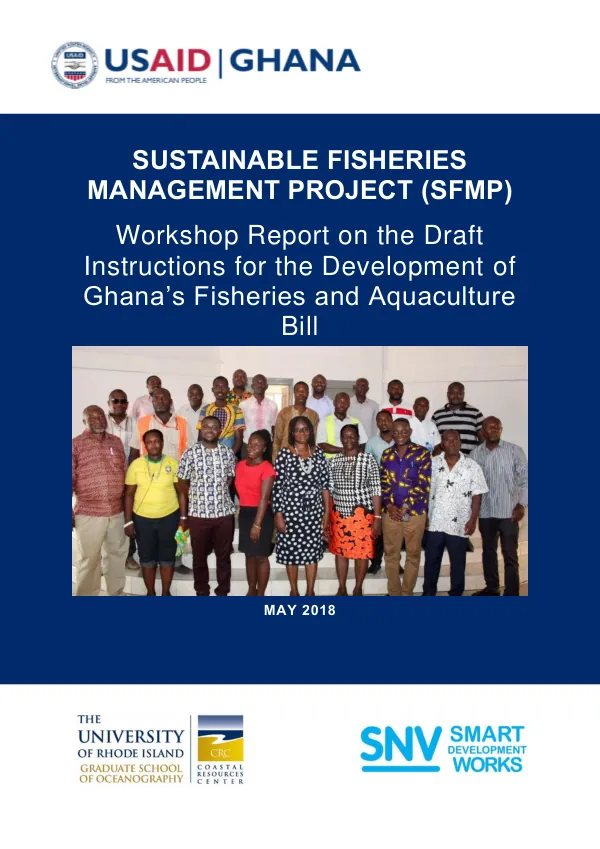
Workshop Report on the Draft Instructions for the Development of Ghana’s Fisheries and Aquaculture Bill
Sign inCOASTAL RESOURCES CENTER
Workshop Report on the Draft Instructions for the Development of Ghana’s Fisheries and Aquaculture Bill
The Ghana Sustainable Fisheries Management Project (SFMP) is a five-year initiative implemented by the United States Agency for International Development (USAID) from October 2014 to October 2019.
2018 · 18 pages
Sign in to readA free account is required to download.
Abstract
The project has committed approximately $24 million to rebuilding marine fisheries stocks and catches through the adoption of responsible fishing practices. This project contributes to the Government of Ghana's fisheries development objectives and USAID's Feed the Future Initiative. As part of its capacity development components, SFMP seeks to support and develop the capacity of various stakeholders in the fishing sector. This includes ensuring that stakeholders are actively involved in the sustainable management of fishery resources by influencing policy making and decision taking. The SNV Capacity Development Team has been working with local NGOs and other stakeholders in the fisheries sector to assist in capacity development activities. In 2017, the Ministry of Fisheries and Aquaculture Development (MoFAD) and the Fisheries Commission (FC) initiated the process of reviewing both the Fisheries Act, 2002 (625) and the Fisheries Regulations (L.I. 1968). The review aimed to address emerging issues facing the fisheries sector, particularly the call to reduce excessive pressure on fish stock and exploit fisheries resources within biologically acceptable levels. The Ghana Fisheries Management Plan (2014-2019) compelled regulators and industry players to review the existing laws. To facilitate the review process, the SNV Capacity Development Team supported the Ghana Industrial Trawlers Association (GITA) in organizing a review workshop. The workshop aimed to gather input from stakeholders on the draft instructions for the development of the Fisheries and Aquaculture Bill. The bill is intended to protect the country's fisheries resources for sustainable management. The workshop was attended by representatives from various stakeholders, including GITA members, SNV, and other local NGOs. The participants reviewed the draft instructions and provided proposals for consideration. The proposals included suggestions for amendments to the Fisheries Act, 2002 (625) and the Fisheries Regulations (L.I. 1968). The review process is crucial for the development of a comprehensive fisheries management framework that addresses the emerging issues facing the sector. The new framework is expected to promote sustainable fishing practices, reduce excessive pressure on fish stock, and protect the country's fisheries resources. The Ministry of Fisheries and Aquaculture Development (MoFAD) and the Fisheries Commission (FC) are responsible for revising the current Fisheries Act, 2002 to protect the country's fisheries resources for sustainable management. The revised act is expected to address the current emerging issues facing the fisheries sector, including the call to reduce excessive pressure on fish stock and exploit fisheries resources within biologically acceptable levels. The Ghana Sustainable Fisheries Management Project (SFMP) has committed to supporting the development of the revised Fisheries Act, 2002. The project aims to ensure that the revised act is comprehensive and addresses the emerging issues facing the fisheries sector. The project's capacity development components will continue to support the development of the capacity of various stakeholders in the fishing sector to ensure that they are actively involved in the sustainable management of fishery resources. The revised Fisheries Act, 2002 is expected to promote sustainable fishing practices, reduce excessive pressure on fish stock, and protect the country's fisheries resources. The act will also provide a framework for the management of fisheries resources, including the regulation of fishing activities, the protection of marine habitats, and the promotion of responsible fishing practices.