INTERNATIONAL RESCUE COMMITTEE
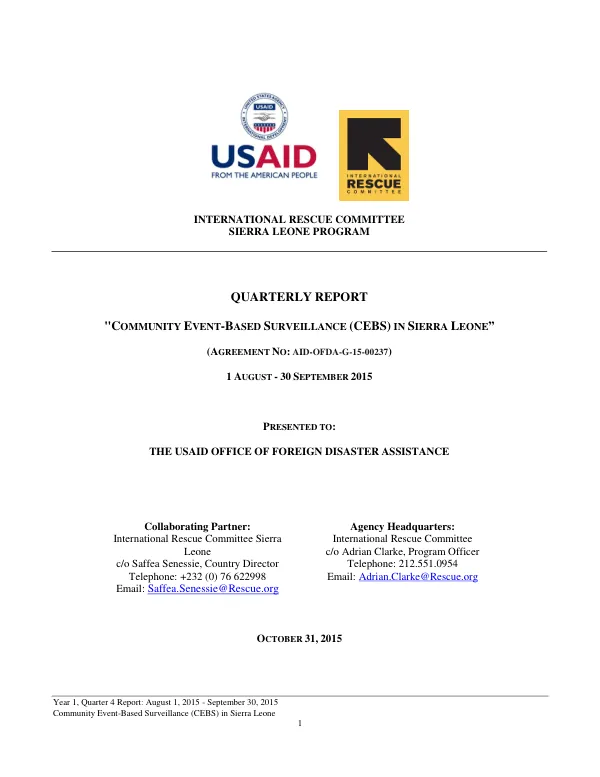
Year 1, Quarter 4 Report: Community Event-Based Surveillance (CEBS) in Sierra Leone
The Community Event-Based Surveillance (CEBS) initiative in Sierra Leone was implemented in nine districts to strengthen community-level systems for rapid disease detection and reporting.
2015 · 6 pages
Sign in to readA free account is required to download.
Abstract
The program aimed to improve the timeliness with which Ebola virus disease (EVD) cases are detected, isolated, and provided with appropriate care. The initiative was led by the International Rescue Committee (IRC) in collaboration with the Ministry of Health and Sanitation (MoHS) and other partners. During the reporting period from August 1 to September 30, 2015, the number of EVD cases decreased significantly, from 121 between April and June to 36 between July and September. However, the cases occurring during this period highlighted the ongoing risks that the region will continue to face, including the risk of imported cases and the challenge of late detection. The death of an EVD-positive adolescent female from a village in Bombali with no recent active transmission raised concerns about sexual transmission from EVD survivors. The IRC and its partners carried out various activities during the reporting period, including a national CEBS partners meeting, training of additional Community Health Monitors (CHMs), and ongoing CEBS reporting. A total of 344 additional CHMs were trained, bringing the total number of CHMs participating in CEBS to 7,416. The CEBS system continued to function as intended, bringing a large number of alerts into the surveillance system. Of the CEBS alerts reported during August and September, 86% were for deaths, while 13% were for sick cases and 1% was for other suspicious events. The development of district CEBS dashboards was also a key activity during the reporting period. The dashboards were generated using data from the ERC partners' weekly report submissions and sent back to partners within 48 hours for sharing with their respective District Ebola Response Centers (DERCs), District Health Management Teams (DHMTs), and other surveillance partners. The dashboards showed a collection of key CEBS performance indicators, allowing the DHMTs and other surveillance partners to see at a glance how CEBS is performing in their district both over time and in relation to other districts. The program faced several challenges, including growing complacency among both the general population and response workers, which has translated into low numbers of sick cases being reported to the DERCs. The IRC and its partners will continue to work together to address these challenges and ensure the success of the CEBS initiative in Sierra Leone. The CEBS initiative has made significant progress in improving the timeliness with which EVD cases are detected, isolated, and provided with appropriate care. The program has also improved the capacity of the MoHS and other partners to respond to EVD outbreaks. However, the ongoing risks that the region will continue to face, including the risk of imported cases and the challenge of late detection, require continued vigilance and support. The IRC and its partners will continue to work together to address the challenges faced by the CEBS initiative and ensure its success in Sierra Leone. The program will continue to focus on improving the capacity of the MoHS and other partners to respond to EVD outbreaks, as well as addressing the ongoing risks that the region will continue to face.