MERCY CORPS INTERNATIONAL
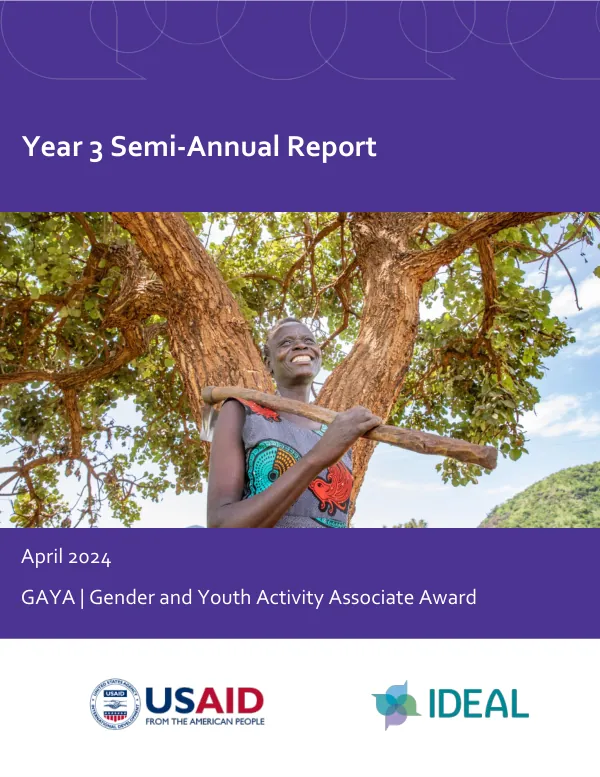
Year 3 Semi-Annual Report: Gender and Youth Activity Associate Award
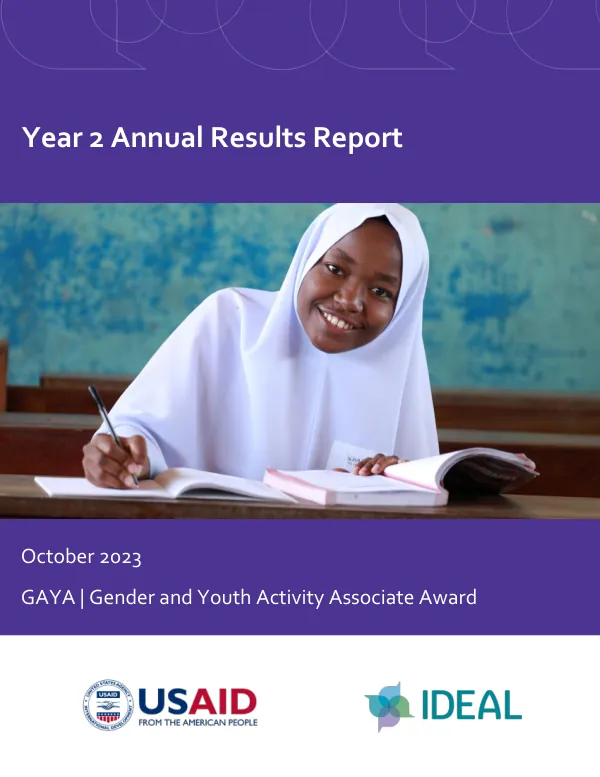
The Gender and Youth Activity (GAYA) Associate Award works to improve the quality and impact of food security activities by addressing the barriers and challenges implementing partners face when integrating gender and youth within their activities.
2024 · 18 pages
Sign in to readA free account is required to download.
Abstract
Understanding and meeting the unique and intersectional needs of women and youth, and addressing the root causes of the inequalities that affect them, are essential to achieving broad and equitable impacts in food and nutrition security. GAYA supports partners implementing emergency response, early recovery, risk reduction, and resilience programs. During this reporting period, the GAYA team wrapped up Cohort I and launched Cohort II of the Cultivating Inclusion for Food Security Fellowship (Cultivate Fellowship). The fellowship curriculum was revised to provide stronger technical integration and individual support for fellows' research projects. The Nourishing Inclusion blog series shifted its focus to highlight alumni experiences from the fellowship pilot (Cohort I), in alignment with BHA's request to produce documentation to highlight the results of partners' work during the fellowship. GAYA will continue to evolve this product for Cohorts II and III. GAYA also piloted virtual gender and youth consultations with two Regional Food Security Activities (RFSAs) and started reviewing small grant milestones under three awards. Additionally, GAYA met with teams that had received organization-specific data dashboards following the Year 2 (YR2) Implementing Partner (IP) survey to provide support around data usage. Across GAYA workstreams, the program shifted focus to in-depth, longer-term engagements and away from publicly facing virtual events. The total number of unique attendees decreased from YR2 (when there were 405 unique attendees for the full award year) to 161 unique attendees across eight IP-facing events, seven of which were by invitation only. GAYA participated in and led sessions at the IDEAL Regional Emergency West Africa MEL Workshop in Accra, Ghana, where over 60 IPs and BHA representatives from over 20 organizations and nine countries attended the session on Unleashing the Power of MEL: Data-Driven Action for Gender, Youth, and Social Inclusion. During the session, participants reflected on mock disaggregated program data and discussed how findings might be interpreted and used. GAYA emphasized the importance of qualitative data to complement disaggregated data. The group discussed how IPs could take this learning back to their programs. Attendees expressed a desire to adopt promoted practices from the session, such as adding new categories of disaggregation (including an emphasis on disability) and adding qualitative data to complement and/or explain quantitative data. Feedback from the session indicated that participants have further questions about LGBTQIA+ inclusion, expanding on what was discussed during the session. Their remaining questions center around to what extent IPs should include LGBTQIA+ folks in their programming, and to what extent data from LGBTQIA+ folks should be collected and disaggregated. The GAYA team will continue to provide support and guidance to implementing partners on integrating gender and youth within their activities, addressing the unique and intersectional needs of women and youth, and addressing the root causes of the inequalities that affect them. GAYA supports partners implementing emergency response, early recovery, risk reduction, and resilience programs. The program has shifted focus to in-depth, longer-term engagements and away from publicly facing virtual events. GAYA has piloted virtual gender and youth consultations with two Regional Food Security Activities (RFSAs) and started reviewing small grant milestones under three awards. The program has also met with teams that had received organization-specific data dashboards following the Year 2 (YR2) Implementing Partner (IP) survey to provide support around data usage. The Cultivating Inclusion for Food Security Fellowship (Cultivate Fellowship) has been revised to provide stronger technical integration and individual support for fellows' research projects. The Nourishing Inclusion blog series has shifted its focus to highlight alumni experiences from the fellowship pilot (Cohort I), in alignment with BHA's request to produce documentation to highlight the results of partners' work during the fellowship. GAYA will continue to evolve this product for Cohorts II and III. GAYA has also participated in and led sessions at the IDEAL Regional Emergency West Africa MEL Workshop in Accra, Ghana, where over 60 IPs and BHA representatives from over 20 organizations and nine countries attended the session on Unleashing the Power of MEL: Data-Driven Action for Gender, Youth, and Social Inclusion. The session focused on the importance of qualitative data to complement disaggregated data and how IPs could take this learning back to their programs. Attendees expressed a desire to adopt promoted practices from the session, such as adding new categories of disaggregation (including an emphasis on disability) and adding qualitative data to complement and/or explain quantitative data. Feedback from the session indicated that participants have further questions about LGBTQIA+ inclusion, expanding on what was discussed during the session. The GAYA team will continue to provide support and guidance to implementing partners on integrating gender and youth within their activities, addressing the unique
Related documents