USAID DEC
Year 4 Success Story: Vlora From Informal Settlement to Mainstream Community
Informal settlements are a common feature on the periphery of Albania's cities, presenting formidable social and economic challenges.
2015 · 1 pages
Sign in to readA free account is required to download.
Abstract
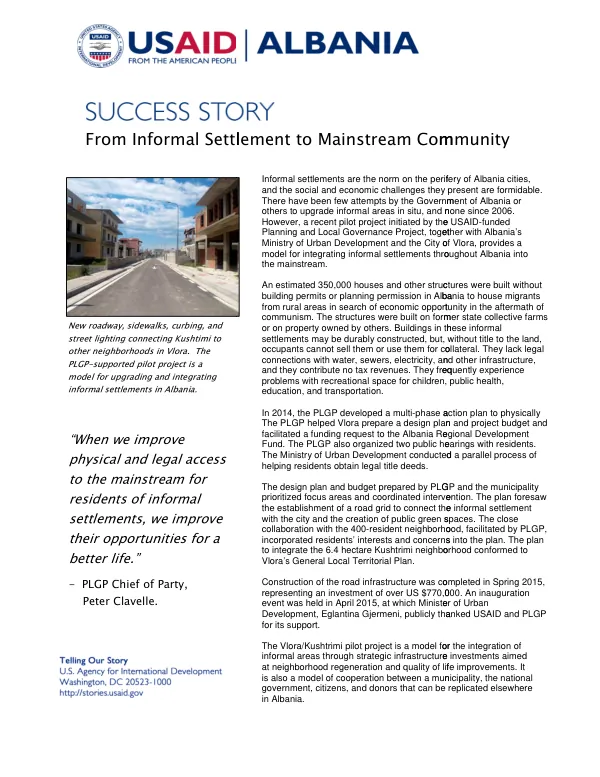
An estimated 350,000 houses and other structures were built without building permits or planning permission in Albania to house migrants from rural areas in search of economic opportunity in the aftermath of communism. These structures were built on former state collective farms or on property owned by others, and occupants lack legal connections with water, sewers, electricity, and other infrastructure. The lack of title to the land prevents occupants from selling their properties or using them as collateral, and they contribute no tax revenues. Informal settlements frequently experience problems with recreational space for children, public health, education, and transportation. In 2014, the Planning and Local Governance Project (PLGP) developed a multi-phase action plan to physically integrate informal settlements into the mainstream. The PLGP helped Vlora prepare a design plan and project budget and facilitated a funding request to the Albania Regional Development Fund. The PLGP also organized two public hearings with residents. The Ministry of Urban Development conducted a parallel process of helping residents obtain legal title deeds. The design plan and budget prepared by PLGP and the municipality prioritized focus areas and coordinated intervention. The plan foresaw the establishment of a road grid to connect the informal settlement with the city and the creation of public green spaces. The close collaboration with the 400-resident neighborhood, facilitated by PLGP, incorporated residents' interests and concerns into the plan. The plan to integrate the 6.4-hectare Kushtrimi neighborhood conformed to Vlora's General Local Territorial Plan. Construction of the road infrastructure was completed in Spring 2015, representing an investment of over US $770,000. The Vlora/Kushtrimi pilot project is a model for the integration of informal areas through strategic infrastructure investments aimed at neighborhood regeneration and quality of life improvements. It is also a model of cooperation between a municipality, the national government, citizens, and donors that can be replicated elsewhere in Albania. The project demonstrates the importance of improving physical and legal access to the mainstream for residents of informal settlements, thereby improving their opportunities for a better life.