CATHOLIC RELIEF SERVICES ORGANIZATION
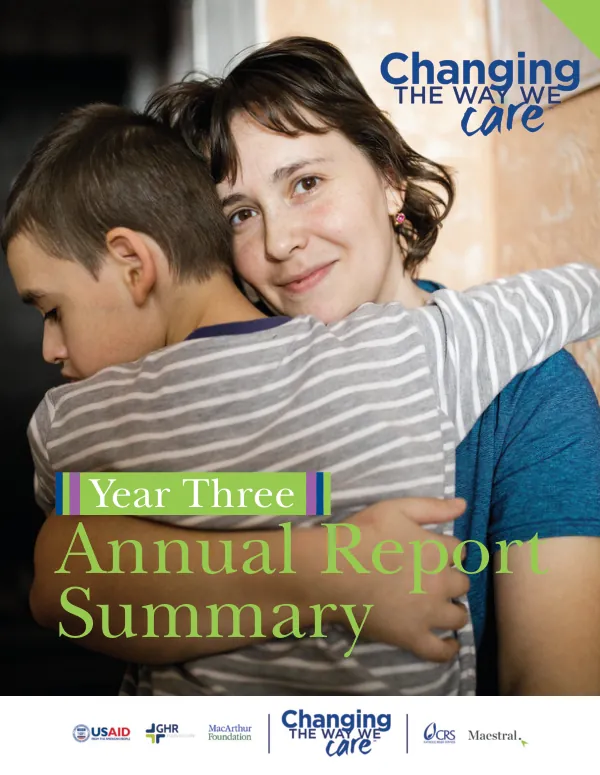
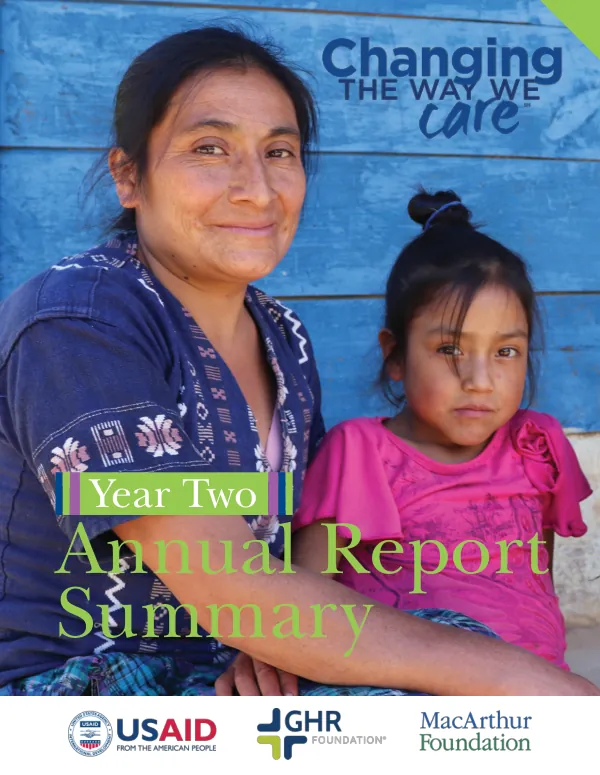
Year Two Annual Report: Changing the Way We Care
The Changing the Way We Care (CTWWC) initiative promotes safe, nurturing family care for children reintegrating from residential care facilities and prevents child-family separation by strengthening families, reforming national systems of care for children, and working to shift donor and volunteer support away from residential care and toward family care alternatives.
2021 · 8 pages
Sign in to readA free account is required to download.
Abstract
Launched on October 1, 2018, the CTWWC initiative is organized around three main strategic objectives: Governments promote family care, Children stay in or return to safe and nurturing families, and Key stakeholders make meaningful commitments toward family care. In Guatemala, the CTWWC initiative advanced its work with the national government to strengthen and reform its national childcare systems. A National Care System Assessment was completed to serve as important baseline information against which progress will be monitored with four key government agencies supporting children and families. The Zacapa municipal government's psychosocial team was trained in case management, and undertook a mapping of available social services and a needs assessment of vulnerable families to inform the development of comprehensive family support services and a referral system aimed at preventing the separation of children from their families. In Kenya, the CTWWC initiative worked closely with the government to produce several tools to guide the child care reform process, including the National Care System Assessment, Gatekeeping Guidelines, and the Alternative Family Care (AFC) Guidelines training package. Technical support and guidance were provided to the Kenyan National Council for Children's Services (NCCS) and the National Care Reform Team to begin developing a National Care Reform Strategy. Remote case management tools were used country-wide to support and collect data on children released from residential institutions during the pandemic through a government mandate. The CTWWC initiative made significant progress toward its objectives in Year Two, despite the challenges posed by the COVID-19 pandemic. In Guatemala, the Zacapa municipal government began providing psychosocial support, violence prevention, and household economic strengthening services to prevent family separation, with training and support from CTWWC. In Kenya, CTWWC and local partners provided economic support payments to 618 households, including 505 families whose children had been sent home from residential institutions, 61 families at risk of child-family separation, and 52 care leavers. The CTWWC initiative also contributed to the global shift to family care, with several significant achievements in Year Two. A global virtual working group was formed to plan for and respond to children at risk during the pandemic, which produced two comprehensive technical documents to guide policymakers and practitioners in addressing the needs of children at risk of family separation and/or in alternative care during this global crisis. The UN General Assembly adopted a new resolution by consensus, which included groundbreaking language on the harm of child institutionalization and urges states to progressively redirect resources to family and community-based care services. By the numbers, the CTWWC initiative achieved several notable outcomes in Year Two. Studies were completed or contributed to better understand the status of children's care systems in Kenya and Guatemala, including the Kenya Care System Assessment, Guatemala Opinion Study, and Kenya Situational Analysis of Residential Care in Four Counties. A total of 745 households benefited from emergency economic support funds or received training on kitchen gardens and small business management skills in Kenya and Guatemala. Government personnel participated in awareness-raising events on care reform in Guatemala, Kenya, and Moldova, and social service workers were trained on new case management materials in Kenya and Guatemala. Community members received sensitization messages on the harm of residential care and the need for family strengthening in Kenya and Guatemala, and 10 placements of children into residential care were prevented through case management efforts and family strengthening support in Guatemala.
Related documents