INTERNATIONAL MEDICAL CORPS
Yemen Complex Emergency
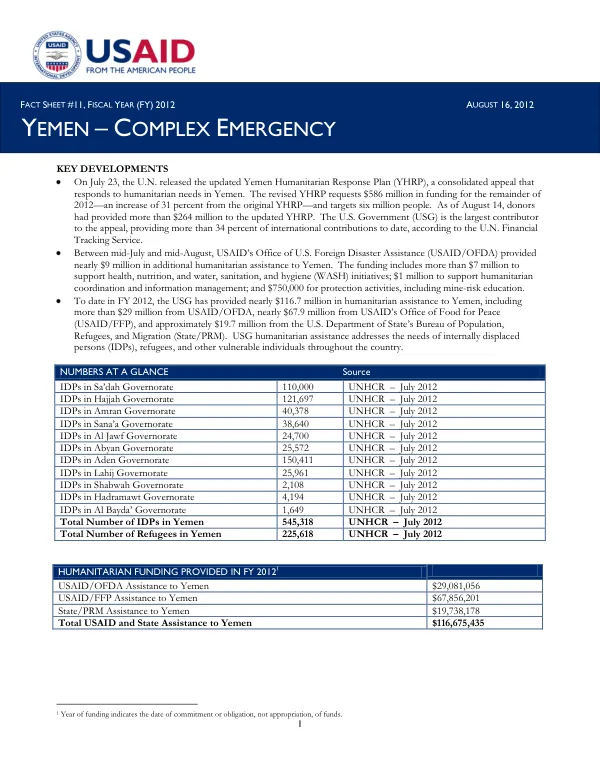
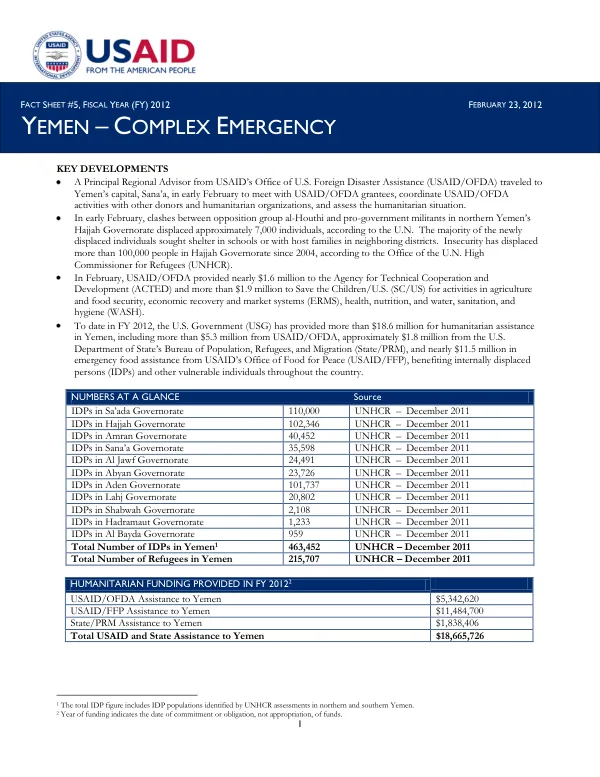
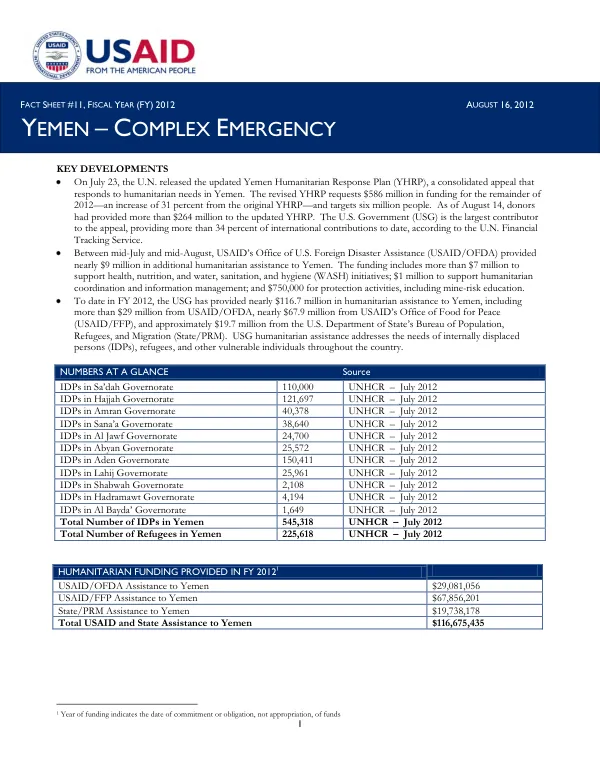
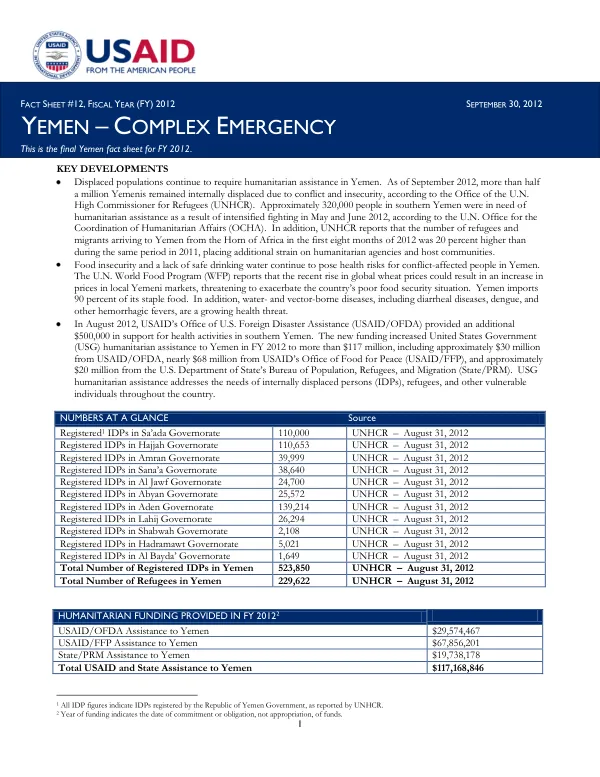
Conflict in Yemen has resulted in significant humanitarian needs, with over 523,000 internally displaced persons (IDPs) registered by the Republic of Yemen Government as of August 31, 2012.
2012 · 5 pages
Sign in to readA free account is required to download.
Abstract
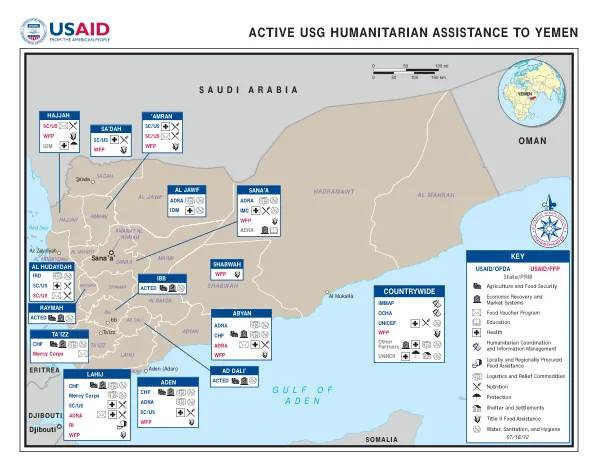
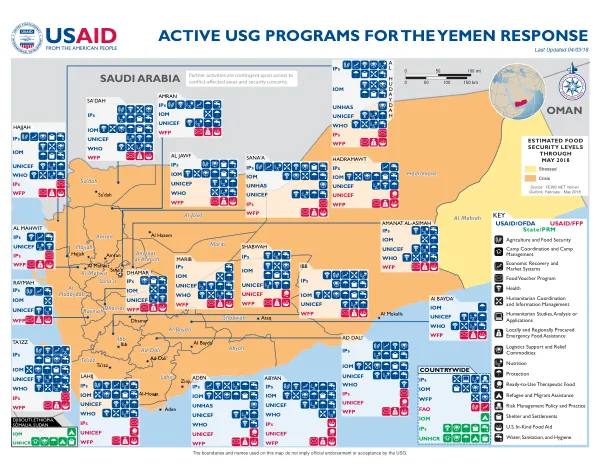
The majority of IDPs are concentrated in southern Yemen, with Aden Governorate hosting nearly 140,000 registered IDPs. Humanitarian agencies expect returns to continue in the coming months, despite ongoing concerns such as landmines, unexploded ordnance, and a lack of security, basic services, and employment opportunities. Food insecurity and a lack of safe drinking water continue to pose health risks for conflict-affected people in Yemen. The U.N. World Food Program (WFP) reports that the recent rise in global wheat prices could result in an increase in prices in local Yemeni markets, threatening to exacerbate the country's poor food security situation. Yemen imports 90 percent of its staple food, making it vulnerable to global market fluctuations. Water- and vector-borne diseases, including diarrheal diseases, dengue, and other hemorrhagic fevers, are a growing health threat. Humanitarian funding provided in FY 2012 totaled over $117 million, with USAID's Office of U.S. Foreign Disaster Assistance (USAID/OFDA) providing $29.6 million, USAID's Office of Food for Peace (USAID/FFP) providing $67.9 million, and the U.S. Department of State's Bureau of Population, Refugees, and Migration (State/PRM) providing $19.7 million. This funding addressed the needs of IDPs, refugees, and other vulnerable individuals throughout the country. The number of severely food insecure people in Yemen nearly doubled between 2009 and 2011, with over 10 million people currently experiencing food insecurity. Approximately five million people are severely food insecure, according to WFP. In response to deteriorating food security, WFP is expanding activities in Yemen to assist 5.5 million people, including 3.8 million severely food insecure Yemenis, for the remainder of 2012. WFP is also scaling-up nutrition interventions to help reduce high malnutrition levels among conflict-affected populations. In addition to food insecurity, Yemen faces significant health challenges, with over five million people lacking access to basic health care services. Chronic water shortages, poor sanitation facilities, and inadequate sewage systems increase the risk of communicable diseases and contribute to both malnutrition and food insecurity. To address these challenges, humanitarian agencies are working to provide emergency food assistance, hygiene kits, and other household items to conflict-affected populations.
Related documents