MERCY CORPS INTERNATIONAL
Yemen Quarterly Report January-March 2017
The humanitarian crisis in Yemen continued to worsen throughout the reporting period, with airstrikes and ground fighting posing significant challenges to implementation.
2017 · 17 pages
Sign in to readA free account is required to download.
Abstract
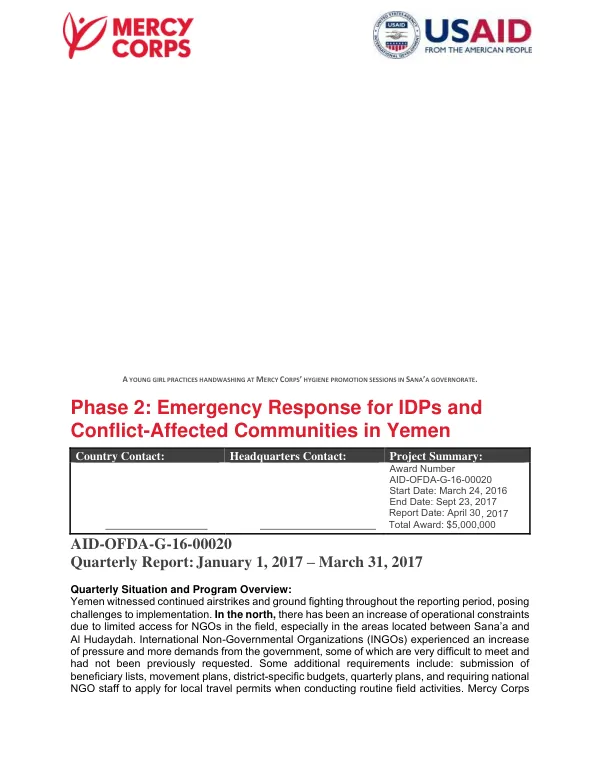
In the north, operational constraints due to limited access for NGOs in the field, particularly in areas between Sana'a and Al Hudaydah, hindered activity implementation. International Non-Governmental Organizations (INGOs) faced increased pressure and demands from the government, including requirements for submission of beneficiary lists, movement plans, and district-specific budgets. Despite these challenges, Mercy Corps made progress in negotiations with the Ministry of Planning and International Cooperation (MOPIC) and obtained some travel permits in the latter half of March. The Taiz team managed to undertake various activities, including the purchase of toolkits for environmental campaigns, hygiene promotion activities, and distributions of soap, rehabilitation of four water points, and temporary employment for skilled and unskilled laborers. In the south, the situation remained unsettled, with Al Qaeda in the Arabian Peninsula (AQAP) fighters conducting near-daily attacks on security belt forces in Abyan governorate. The US maintained a steady rate of airstrikes and increased its operational tempo of US counter-terrorism actions in Yemen, targeting AQAP militants. Despite these efforts, AQAP remained active, carrying out attacks on security forces in Hadramawt and Abyan. The UN special envoy to Yemen traveled to Aden in January in an attempt to resuscitate the moribund peace process between the warring Yemeni parties. However, the prospects for another ceasefire look dim as the fighting escalates in Al-Mokha and tensions rise between the belligerents along the west coast. Political dynamics remain unchanged, with underlying tensions between the various armed groups still present. Fuel and water shortages contributed to growing discontent with the local administration and the Hadi government, which is heightened by the ongoing failure to pay promised public-sector salaries. The Yemen Banks Association urged the Saudi government to lift the ban on the transfer of foreign currency to banks outside Yemen to facilitate the import of essential goods and release frozen funds. However, Riyadh is dealing with the relocated Central Bank of Yemen (CBY) in Aden, partly aimed at exerting economic pressure on the Houthis and their allies. In the WASH sector, Mercy Corps completed nine environmental campaigns, impacting an estimated population of 88,865. A total of 62,344 individuals received direct hygiene promotion, for a cumulative total of 176,073. Sanitation and water infrastructure projects are ongoing, with two water supply infrastructure projects completed, serving a total of 3,216 individuals. In the Temporary Employment sub-sector, a total of 290 individuals participated in CfW activities, earning an average amount of $213.84.