INTERNATIONAL MEDICAL CORPS
Baseline Report: Health, Nutrition, and WASH Activities in Yemen
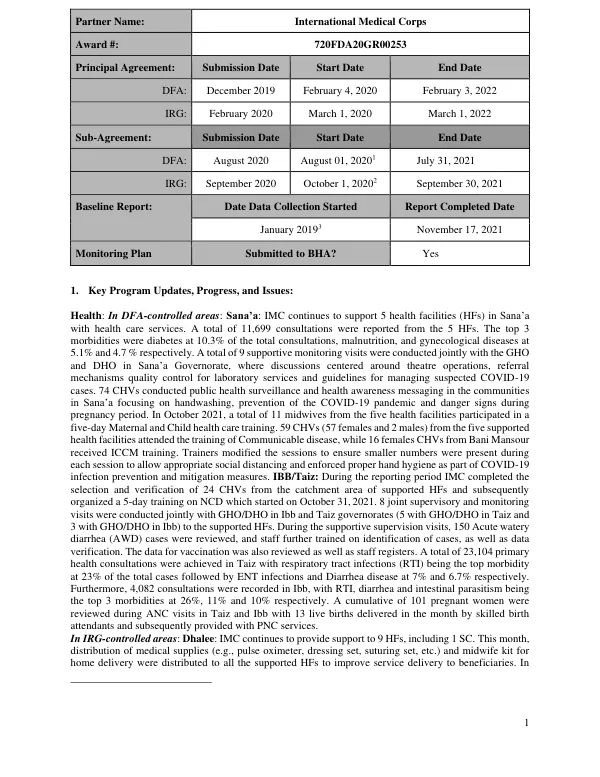
The International Medical Corps (IMC) implemented a health and nutrition program in Yemen, supported by the US Agency for International Development (USAID) through the Bureau for Humanitarian Assistance (BHA).
2021 · 11 pages
Sign in to readA free account is required to download.
Abstract
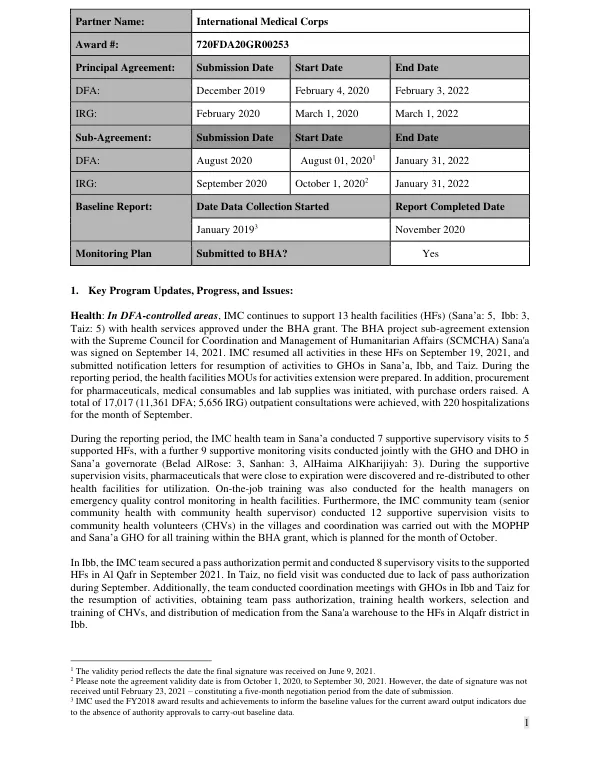
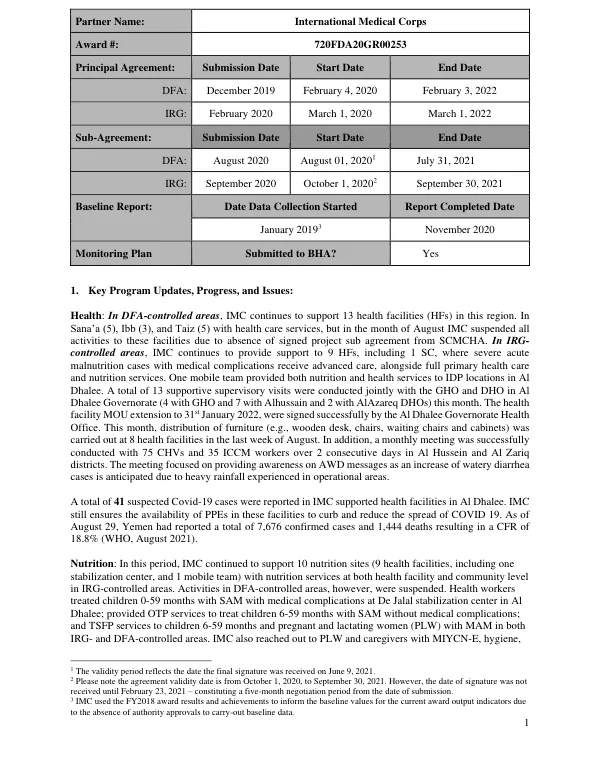
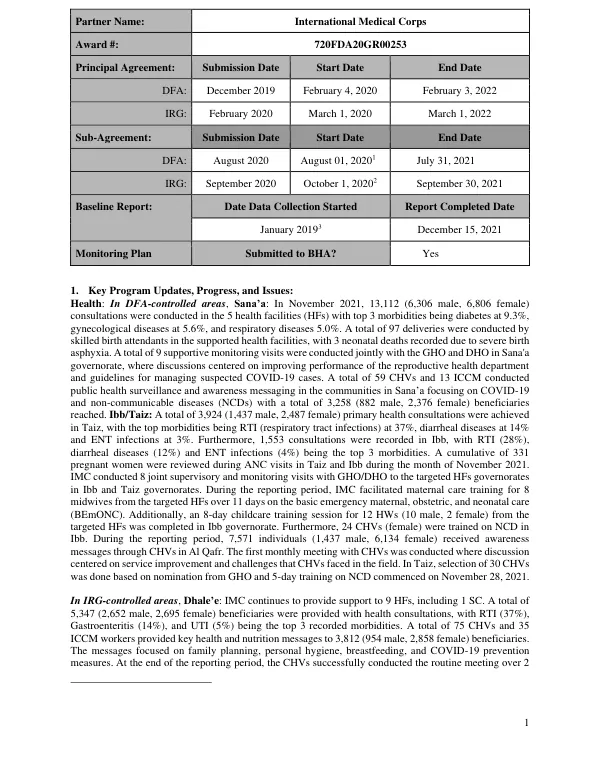
The program aimed to provide essential health services, nutrition support, and water, sanitation, and hygiene (WASH) interventions to vulnerable populations in conflict-affected areas. In DFA-controlled areas, IMC supported 13 health facilities, providing consultations to 13,112 individuals, including 6,806 females, in November 2021. The top morbidities were diabetes, gynecological diseases, and respiratory diseases. IMC also conducted 59 community health volunteer (CHV) and 13 integrated community case management (ICCM) public health surveillance and awareness messaging sessions, reaching 3,258 beneficiaries. In Ibb/Taiz, IMC supported 3,924 primary health consultations, with the top morbidities being respiratory tract infections, diarrheal diseases, and ENT infections. In IRG-controlled areas, Dhale'e, IMC continued to support 9 health facilities, including 1 stabilization center. A total of 5,347 beneficiaries received health consultations, with the top morbidities being respiratory tract infections, gastroenteritis, and urinary tract infections. IMC also conducted 75 CHV and 35 ICCM public health surveillance and awareness messaging sessions, reaching 3,812 beneficiaries. IMC continued to support 23 nutrition sites, providing nutrition services in both DFA- and IRG-controlled areas. In the reporting period, a total of 1,014 children aged 6-59 months and 633 pregnant and lactating women were screened for malnutrition and admitted for treatment. IMC completed refresher training of health workers in Taiz on community-based management of acute malnutrition (CMAM) and infant and young child feeding (IYCF). IMC also implemented WASH interventions, providing emergency water supply through water trucking to 13 health facilities and 12 IDP locations, benefiting 32,524 individuals. IMC monitored water quality, with a total of 30 samples taken, indicating that the free residual chlorine (FRC) level was within the acceptable World Health Organization (WHO) guideline for drinking water. IMC conducted community hygiene promotion sessions through trained CHVs, benefiting 15,571 individuals.
Related documents