GLASSWING INTERNATIONAL
Youth Mental Health and Psychosocial Support: Considerations for Education
The education system plays a crucial role in shaping the social ecology of youth, providing a stable environment where they can engage with peers and teachers, learn critical life and academic skills, and prepare for the workforce.
2021 · 6 pages
Sign in to readA free account is required to download.
Abstract
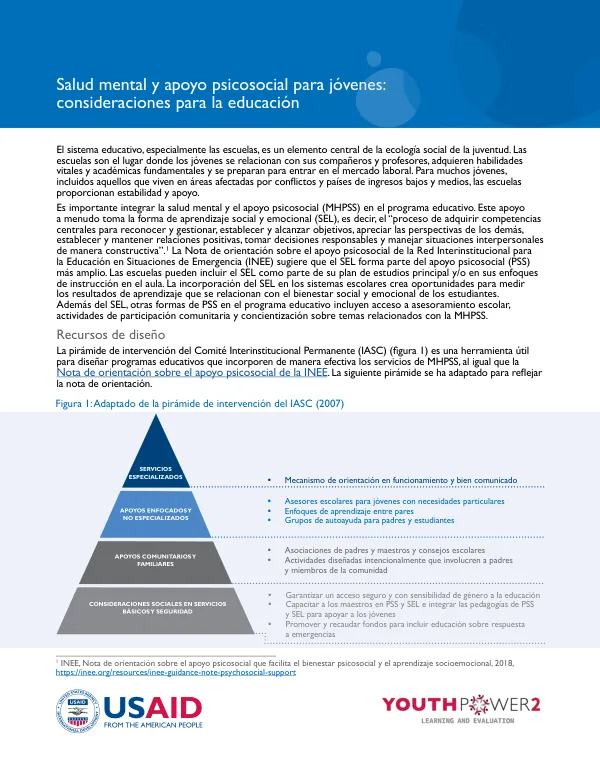
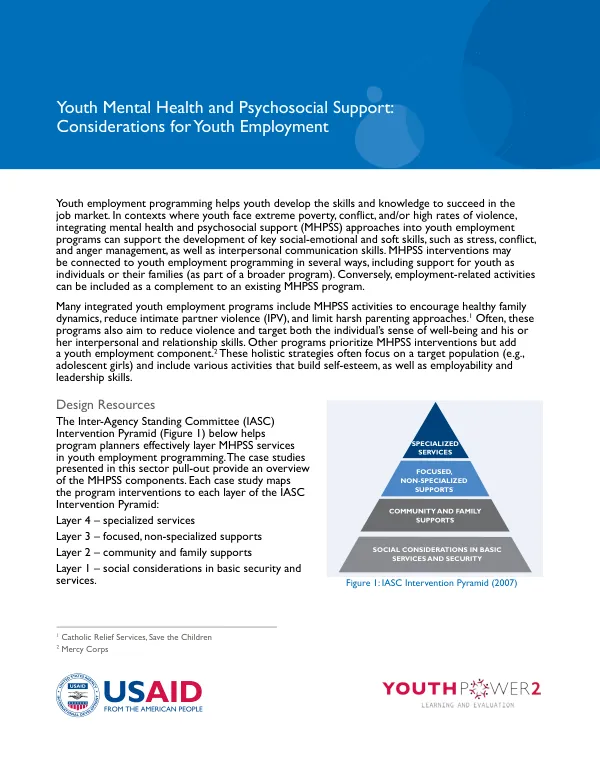
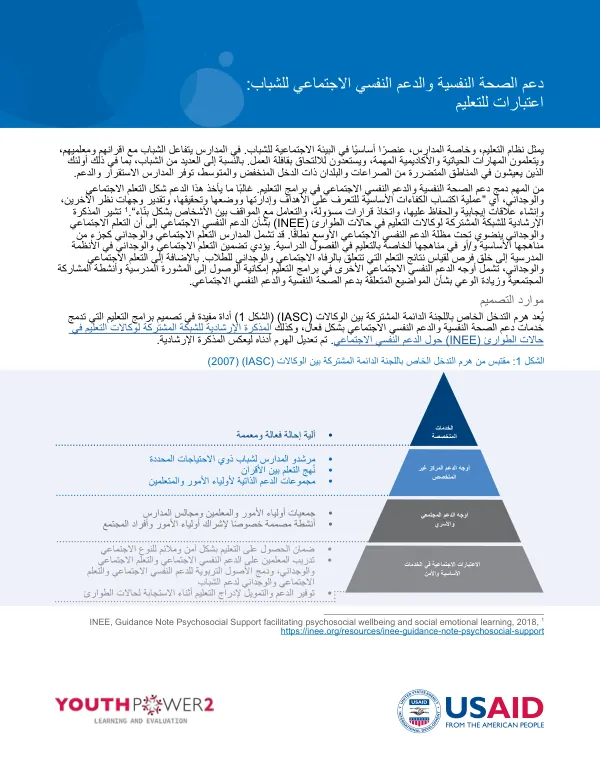
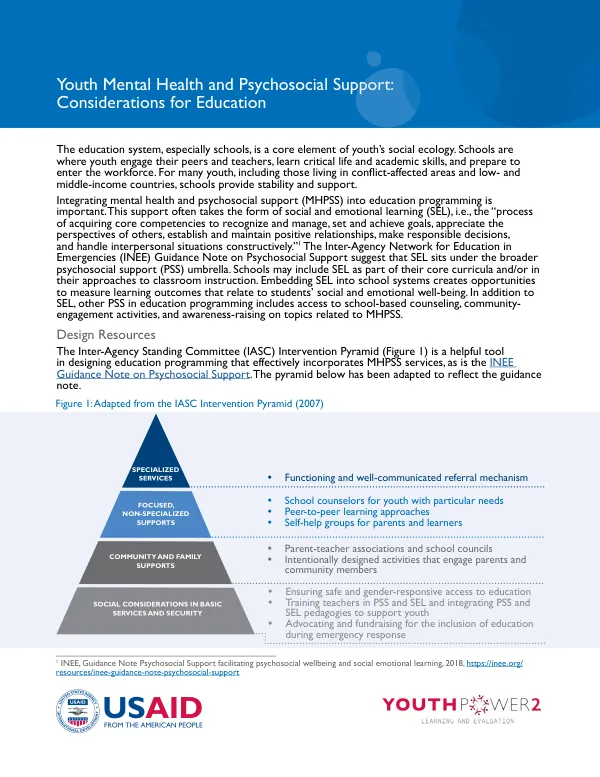
For many youth, especially those living in conflict-affected areas and low- and middle-income countries, schools offer a sense of stability and support. Integrating mental health and psychosocial support (MHPSS) into education programming is essential. This support often takes the form of social and emotional learning (SEL), which involves acquiring core competencies such as recognizing and managing emotions, setting and achieving goals, and establishing positive relationships. The Inter-Agency Network for Education in Emergencies (INEE) Guidance Note on Psychosocial Support suggests that SEL is a key component of psychosocial support (PSS) in education. Schools can incorporate SEL into their core curricula and classroom instruction, creating opportunities to measure learning outcomes related to students' social and emotional well-being. In addition to SEL, other PSS in education programming includes access to school-based counseling, community-engagement activities, and awareness-raising on topics related to MHPSS. The Inter-Agency Standing Committee (IASC) Intervention Pyramid is a useful tool for designing education programming that effectively incorporates MHPSS services. The pyramid consists of four levels: specialized services, focused non-specialized supports, community and family supports, and social considerations in basic services and security. Each level provides a framework for implementing MHPSS services in education programming. The INEE Guidance Note on Psychosocial Support highlights the importance of ensuring safe and gender-responsive access to education, training teachers in PSS and SEL, and integrating PSS and SEL pedagogies to support youth. Advocating and fundraising for the inclusion of education during emergency response is also crucial. Case studies, such as PRemlum for aDolEscents (PRIDE) in India and Glasswing International's Community Schools, demonstrate the effectiveness of integrating MHPSS into education programming. PRIDE uses a stepped-care model to provide adolescents with access to brief PSS to improve their well-being. The program includes a public-engagement component called "It's Ok to Talk" that aims to make it more culturally acceptable to talk about mental health issues in India. Glasswing International's Community Schools approach transforms schools into safe spaces and offers after-school programs that support youth's social and emotional development by building life skills. The approach includes extreme school makeovers, after-school programs, and community engagement. An impact evaluation conducted by the Pontifical Catholic University of Chile found that the Glasswing approach contributed to improved academic performance, positive behavior change, a better school environment, and increased emotional resilience. The IASC Intervention Pyramid and the INEE Guidance Note on Psychosocial Support provide a framework for designing education programming that effectively incorporates MHPSS services. By integrating MHPSS into education programming, schools can provide a supportive environment that promotes the social and emotional well-being of youth.