USAID DEC
Zimbabwe, anticipation of economic and humanitarian needs : observations on the labor force in Zimbabwe
Sign inAFRICAN-AMERICAN SCHOLARS COUNCIL
Zimbabwe, anticipation of economic and humanitarian needs : observations on the labor force in Zimbabwe
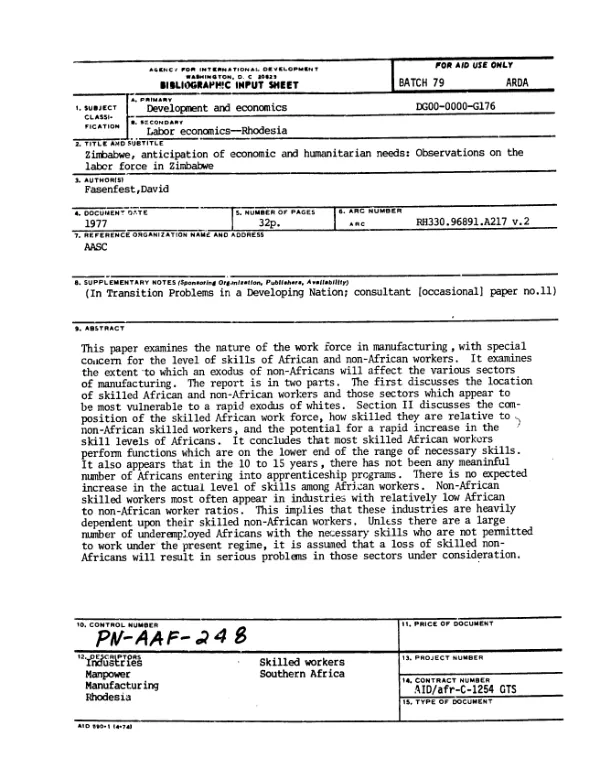
This paper examines the nature of the work force in manufacturing, with special concern for the level of skills of African and non-African workers.
Fasenfest, David · 1970
Sign in to readA free account is required to download.
Abstract
It examines the extent to which an exodus of non-Africans will affect the various sectors of manufacturing. The report is in two parts. The first discusses the location of skilled African and non-African workers and those sectors which appear to be most vulnerable to a rapid exodus of whites. Section II discusses the composition of the skilled African work force, how skilled they are relative to non-African skilled workers, and the potential for a rapid increase in the skill levels of Africans. It concludes that most skilled African workers perform functions which are on the lower end of the range of necessary skills. It also appears that in the 10 to 15 years, there has not been any meaningful number of Africans entering into apprenticeship programs. There is no expected increase in the actual level of skills among African workers. Non-African skilled workers most often appear in industries with relatively low African to non-African worker ratios. This implies that these industries are heavily dependent upon their skilled non-African workers. Unless there are a large number of underemployed Africans with the necessary skills who are not permitted to work under the present regime, it is assumed that a loss of skilled non-Africans will result in serious problems in those sectors under consideration.
Related documents