UNICEF
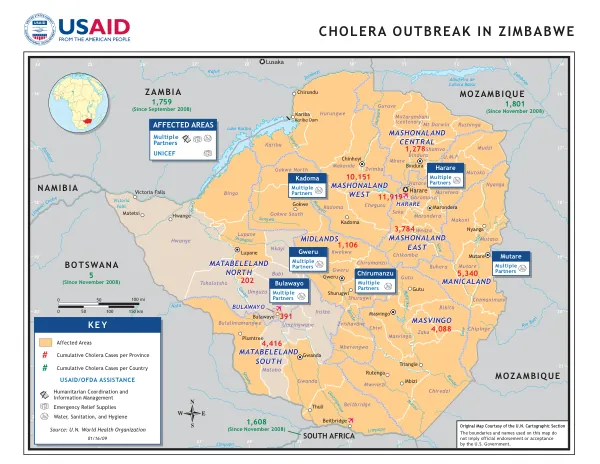
Zimbabwe Program Map 01/16/2009
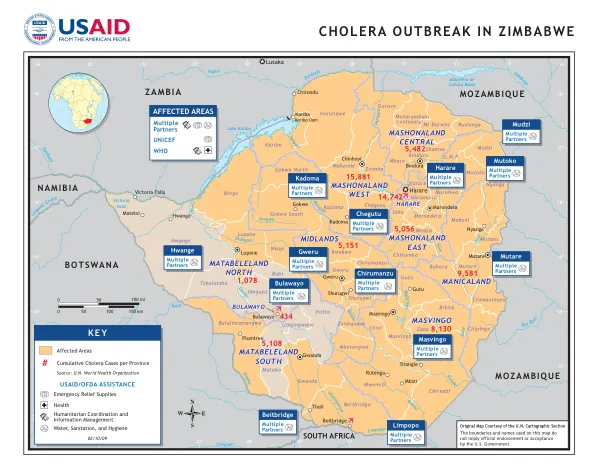
The cholera outbreak in Zimbabwe began in November 2008, with the first reported cases occurring in the country's capital, Harare.
2009 · 1 pages
Sign in to readA free account is required to download.
Abstract
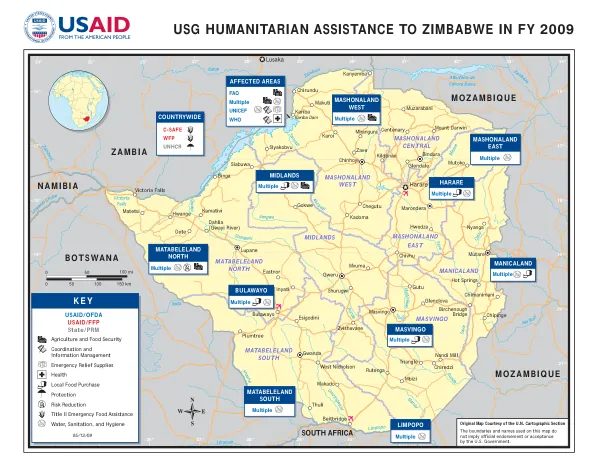
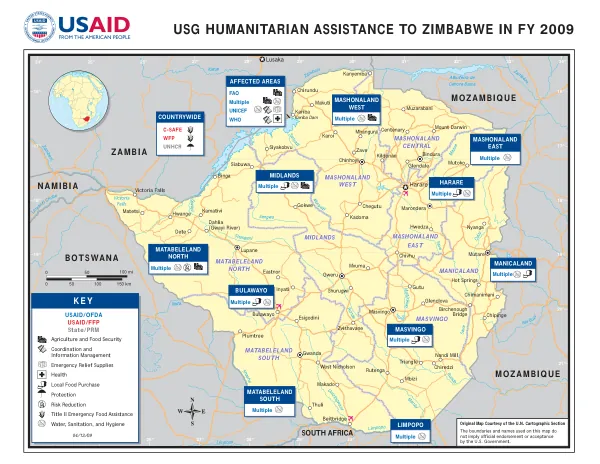
The outbreak was characterized by a rapid increase in the number of reported cases, with a cumulative total of 1,608 cases reported by November 2008. The provinces most affected by the outbreak were Harare, Bulawayo, and Mutare, with a significant number of cases also reported in the provinces of Gweru, Kadoma, and Chirumanzu. The cholera outbreak was a major public health concern, with the World Health Organization (WHO) and other humanitarian organizations providing emergency relief supplies and assistance to affected areas. The USAID/OFDA provided significant assistance to the affected provinces, with a focus on providing emergency relief supplies, water, sanitation, and hygiene (WASH) services, and humanitarian coordination and information management. The cumulative number of cholera cases per province was a key indicator of the outbreak's severity and spread. The provinces of Harare, Bulawayo, and Mutare reported the highest number of cases, with a cumulative total of 1,801 cases reported by November 2008. The provinces of Gweru, Kadoma, and Chirumanzu also reported a significant number of cases, with a cumulative total of 1,759 cases reported by September 2008. The cholera outbreak in Zimbabwe was a major humanitarian crisis, with significant consequences for the affected communities. The outbreak highlighted the need for improved water, sanitation, and hygiene services, as well as the importance of effective humanitarian coordination and information management in responding to public health emergencies. The USAID/OFDA assistance played a critical role in responding to the outbreak, with a focus on providing emergency relief supplies and WASH services to affected areas. The cholera outbreak in Zimbabwe was a complex and multifaceted crisis, with significant consequences for the affected communities. The outbreak highlighted the need for improved public health infrastructure, as well as the importance of effective humanitarian coordination and information management in responding to public health emergencies. The cumulative number of cholera cases per province was a key indicator of the outbreak's severity and spread, with the provinces of Harare, Bulawayo, and Mutare reporting the highest number of cases.
Related documents